Where Saskatchewan Deer Yard in Deep Snow
When that first serious blanket of deep snow hits Saskatchewan, it can feel like the entire landscape shifts, and suddenly, those familiar deer haunts seem utterly empty. The challenge isn't just dealing with the cold; it's figuring out where the deer have gone, because trust me, they haven't just vanished. They've adapted, seeking out critical survival spots, and understanding these winter havens is key to both finding them and appreciating the incredible resilience of Saskatchewan's whitetails and mule deer. This guide will walk you through precisely where deer tend to yard up when the snow gets deep, why these areas are so vital, and how you can use this knowledge to your advantage.
Understanding Deer Winter Survival Strategies in Saskatchewan
Deer are incredibly hardy animals, but deep snow presents a massive challenge to their survival. It's not just about finding food; it's about expending as little energy as possible to stay warm and evade predators. When the snow piles up, everything changes, and their priorities shift dramatically towards conservation and shelter.
The Immediate Impact of Snow Depth on Deer Behavior
Even a foot or so of wet, heavy snow can drastically alter a deer's daily routine. Their short legs aren't built for plowing through waist-deep drifts, and every step in deep snow becomes an energy drain. Think about trying to walk through deep snow yourself – it's exhausting, right? For deer, this energy expenditure means less time feeding and less reserve for escaping danger. So, their first instinct is to find areas where movement is less restricted or where they can simply bed down and wait it out.
When temperatures plummet to those classic Saskatchewan lows, the problem is compounded. Staying warm requires even more energy, and if they're constantly breaking trail, they're burning through vital fat reserves. This immediate need for energy conservation drives them to specific habitats that offer both easier travel and thermal protection, often congregating in groups to minimize individual exposure. You might not see them moving much, which can be frustrating for a hunter trying to cut fresh sign, but they are there, hunkered down. How Deep Snow Moves Deer Into Cover is something every hunter needs to grasp.
Food Sources Under a Blanket of Snow
Normally, deer browse on a wide variety of plants, from tender shoots to agricultural crops. But when snow covers the landscape, a lot of that food simply becomes inaccessible. Imagine trying to graze on a stubble field when it's buried under two feet of snow – impossible. This forces deer to switch their diet to woody browse: the twigs, buds, and bark of trees and shrubs that protrude above the snowline.
Species like aspen, willow, and various conifers become critical food sources. They’ll also hit any remaining standing crops if the snow isn't too deep to prevent access, or if the farmer left some sections unharvested. These food sources are often less nutritious than their fall diet, so deer have to consume more of it, further emphasizing the need for efficient movement and minimized energy waste. It’s a constant battle between finding enough calories and burning too many just to get to them.
Thermal Cover and Shelter from Winter Winds
Saskatchewan winters are legendary for their biting winds and extreme cold. For a deer, simply having food isn't enough; they need shelter. Thermal cover is paramount. This means dense stands of evergreens like spruce or pine, or thick willow thickets and aspen bluffs that create a microclimate warmer than the surrounding open country. These areas block the wind, trap snow, and sometimes even capture a bit of solar radiation, offering a vital respite from the elements.
When the mercury drops and the wind howls, deer will pack into these sheltered spots, often bedding down close together to share body heat. They’re not just looking for a place to hide; they’re looking for a place to survive. A mature spruce bush, for instance, might be 10-15 degrees warmer inside than out in the open prairie, making all the difference between life and death during a prolonged cold snap. This is often where you'll find them holding tight for days on end, only venturing out during brief lulls in the weather.
Identifying Key Winter Deer Yard Locations
When winter really sets in and the snow builds, deer don't just wander aimlessly. They gravitate towards specific types of terrain that offer the best combination of thermal cover, accessible food, and protection from the elements. These "yarding" areas are often well-known to experienced hunters, and for good reason: they're where deer survive.
Dense Bush Pockets and Aspen Bluffs
In Saskatchewan's forest fringe and parkland regions, dense bush pockets and mature aspen bluffs become absolute magnets for deer when the snow gets deep. Think about those areas with thick underbrush, tangled willow, and tightly packed aspens – that's prime real estate. The interlocking branches and dense canopy offer incredible thermal protection, breaking the wind and insulating the ground, often leaving patches of shallower snow or even bare ground in sheltered spots.
These bluffs and bush pockets provide immediate cover, allowing deer to bed down out of the wind and minimize heat loss. They can often browse on the woody stems and twigs within these same areas without expending too much energy. If you’ve ever walked into a dense aspen bluff on a bitterly cold day, you know how much warmer it can feel. Deer certainly know this, and they will stack into these areas like cordwood, sometimes leaving intricate networks of trails that become easier to travel once established. Scouting these kinds of areas, perhaps using a mapping tool like GoHunt to identify dense tree cover, becomes crucial. You'll often find these bluffs nestled within larger agricultural landscapes, creating those essential pockets of refuge. Hunting a Saskatchewan Bush Bluff is a prime example of where you'll find them.
South-Facing Slopes and River Valleys
While dense cover is critical, sun exposure also plays a huge role. South-facing slopes, whether they're on a rolling prairie hill, within a river valley, or on the edge of a large bush block, are invaluable. These slopes catch the most direct sunlight, which can help melt snow, expose food, and provide a precious bit of warmth for deer bedding down. The combination of thermal cover on the north side of a ridge and a sunny, south-facing slope can create an ideal wintering microclimate.
River valleys, like the Hunting the Qu'Appelle Valley Coulees or a Hunting a Saskatchewan River Valley, are classic winter yarding areas. Their topography naturally offers protection from wind, and often feature a mix of dense bush, conifer stands, and open areas that catch the sun. Deer will drop into these valleys, finding shelter in the timbered draws and feeding on browse along the riverbanks or in the sheltered coulees. The sheer elevation changes and varied terrain create diverse options for shelter and food, making them critical habitats when the snow is deep across the flatter surrounding landscape. These valleys often act as natural highways for deer movement, even in deep snow, as they offer the path of least resistance.
Standing Crop and Unharvested Fields
As a last resort, or when available, standing crops or unharvested fields can also become temporary winter havens, especially if they are close to substantial thermal cover. While not a "yard" in the traditional sense of dense cover, these fields offer a concentrated, high-calorie food source that can be irresistible to deer struggling to find browse. A standing corn or canola field, for example, can hold deer not just for food, but also for the surprisingly good thermal and visual cover it provides.
Deer will often venture into these fields at night or during low-light hours to feed, then retreat to the nearest dense bush or treeline for shelter during the day. However, if the snow isn't too deep, they might even bed down within the crop itself, especially if it offers enough overhead cover to break the wind and snow. These situations often occur during early winter or during mild periods within a deep snow season. Hunters should pay close attention to the edges of these fields, particularly where they meet thick cover, as this is where deer will funnel in and out. Hunting a Standing Canola Field Edge or Hunting a Pea Field After Harvest might not be traditional winter yarding, but they definitely draw deer in when other food sources are buried.
Strategies for Locating Deer in Deep Snow Conditions
Finding deer when the landscape is buried under deep snow requires a shift in tactics. You can't just expect them to be where they were in September. You need to think like a deer, conserve your own energy, and rely on keen observation and smart scouting.
Reading Sign in the Snow: The Winter Whiteboard
Deep snow, while challenging, also acts as nature's whiteboard, making deer sign incredibly obvious. Fresh tracks are like a neon sign, telling you exactly where deer have been and how recently. Look for heavily used trails, especially those leading into and out of dense thermal cover. These will be packed down, almost like miniature roads, as deer prefer to use established paths rather than breaking new ones. The clearer and more defined these trails are, the more deer are using them.
Beyond tracks, look for browse lines – the distinct height at which deer have been eating twigs and buds, often at their maximum reach above the snow. Bark stripping on certain trees can also indicate heavy use. And of course, fresh beds in the snow are the ultimate indicator of recent presence. Pay attention to their size and orientation; deer will often bed with their back to the wind, facing downhill or towards a likely escape route. A tool like GoHunt can help you mark these signs on a map, building a picture of their winter movements. Reading Sign After Fresh Saskatchewan Snow is a skill that becomes even more valuable when the snow is deep.
Scouting with Technology and Patience
Modern technology can be an invaluable asset when trying to pinpoint winter deer yards. Satellite imagery on mapping apps like GoHunt allows you to identify areas of dense coniferous forest, thick aspen bluffs, or sheltered river valleys that might otherwise be overlooked from the road. You can often spot these prime thermal cover locations from the comfort of your home, saving countless hours of trudging through deep snow. Look for areas with a mix of dark timber and south-facing slopes. Scouting With Satellite Imagery in Saskatchewan has changed the game for many hunters.
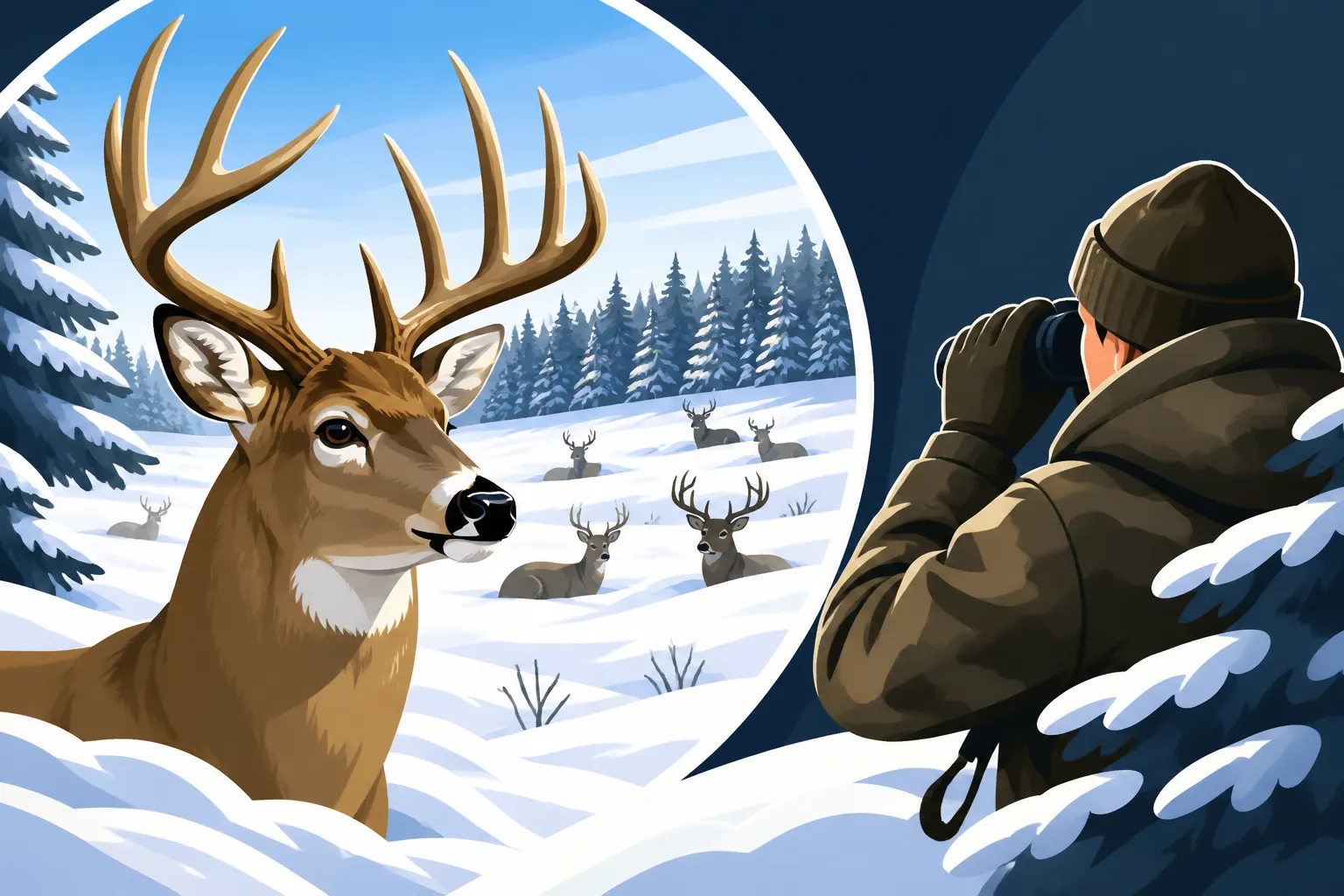
Once you’ve identified potential areas, a patient approach is key. Deer are highly stressed in deep snow conditions, and too much pressure can push them out of crucial wintering grounds, potentially leading to their demise. Consider glassing distant slopes and bush edges from a vantage point, using binoculars or a spotting scope, rather than blindly crashing through the brush. Focus your efforts during the warmer parts of the day, when deer might be more inclined to move for a brief period of feeding or to shift bedding sites in the sun.
Low-Impact Pressure and Ethical Considerations
When deer are concentrated in winter yards, they are particularly vulnerable. It’s crucial to hunt these areas with a low-impact approach. Avoid busting into the middle of a known yarding area unless absolutely necessary, as this can scatter deer and force them to expend precious energy moving to less ideal cover. Think about still-hunting very slowly along the edges of dense cover, allowing your eyes and ears to do the work. Or consider setting up in a sheltered spot overlooking a known travel corridor or feeding area.
If you do harvest an animal, prioritize quick and efficient field dressing and meat care. The cold temperatures are excellent for preserving meat, but getting the animal out of deep snow can be a monumental task. Have a plan for extraction that minimizes further stress on yourself and the environment. Also, be mindful of the sheer effort deer are expending to survive. Choosing to pass on a smaller animal or waiting for a less strenuous hunt can be an ethical consideration, especially during the harshest conditions. Hunting Saskatchewan Winter Weather Safely isn't just about your safety, but the deer's well-being too. Meat Care in Saskatchewan's Cold Snaps is also something you'll need to master.
The Role of Snow Depth in Deer Survival and Long-Term Health
Deep snow isn't just a temporary inconvenience for deer; it's a significant environmental stressor that can have profound impacts on individual animals and entire herds, shaping their behavior and even their population dynamics for seasons to come.
How Deep is "Deep"? Defining the Threshold
For deer, "deep snow" isn't a single measurement; it's a dynamic variable that changes based on consistency, crusting, and duration. Generally, anything over 18-24 inches (around 45-60 cm) for an extended period starts to become critical for adult deer, significantly impeding their movement and access to food. For fawns, even shallower snow can be devastating. When a hard crust forms on top, it can be even worse, as their legs can break through the crust, causing abrasions and making travel even more difficult and painful.
| Snow Depth (Inches) | Impact on Deer Movement | Impact on Food Access | Hunter Strategy |
|---|---|---|---|
| 0-6 | Minimal impact | Most forage accessible | Hunt normal patterns, look for fresh tracks. |
| 6-12 | Slight hindrance, slows down | Lower vegetation covered | Focus on sheltered areas, increased browse on woody stems. |
| 12-18 | Moderately restricted, energy drain | Significant portion of ground forage buried | Deer seek established trails and thermal cover more frequently. |
| 18-24 | Severely restricted, difficult travel | Most ground forage inaccessible, heavy reliance on woody browse | Deer concentrate in dense yards, minimal movement outside. |
| 24+ | Extremely difficult, critical energy drain | Only highest browse and sheltered spots available | Deer become highly vulnerable; focus scouting on known yards, minimize disturbance. |
It's not just the depth, but how long it stays. A week of deep snow is one thing; a month or two can push deer to their limits. This prolonged stress forces them to rely entirely on those core wintering areas, making these locations even more critical for both their short-term survival and the long-term health of the herd. Understanding these thresholds helps hunters appreciate the severity of winter for these animals.
Survival Versus Opportunity: A Hunter's Perspective
From a hunting perspective, deep snow shifts the narrative from finding deer spread across the landscape to locating their survival strongholds. You’re not just looking for a buck; you’re looking for where deer are trying to survive. This means focusing your efforts on those dense bluffs, south-facing slopes, and river bottom thickets where deer gather. It’s less about chasing them and more about carefully approaching their sanctuaries.
This is where detailed scouting, even from a distance, becomes paramount. Using tools like GoHunt to analyze terrain and cover can help you pinpoint these critical areas without putting unnecessary pressure on the deer. The hunting itself might involve more still-hunting in tight cover or sitting in strategically placed blinds on the edge of these winter yards. It's about patience and respect for the challenging conditions the animals are enduring. Hunting Whitetails at Thirty Below requires this kind of strategic thinking.
Long-Term Implications for Deer Herds
A winter with sustained, deep snow can have lasting consequences for Saskatchewan's deer populations. Harsh winters often lead to higher winter kill, particularly among fawns, older animals, and those in poorer condition. This can result in a noticeable dip in deer numbers the following year, affecting hunting opportunities. On the flip side, mild winters with minimal snow can allow populations to boom, setting the stage for more robust hunting seasons down the line.
Understanding these dynamics is crucial for responsible hunting. A particularly tough winter might mean fewer mature bucks the next season, or a general reduction in herd health. This knowledge helps us appreciate the cyclical nature of wildlife populations and encourages ethical hunting practices that prioritize the long-term health of the resource. Protecting these vital wintering areas and minimizing disturbance in deep snow aren't just good hunting strategies; they're essential conservation efforts. What a Hard Saskatchewan Winter Culls can be a stark reminder of nature's power.
Disclaimer
This article is for general informational purposes only and does not constitute professional advice. Laws, prices and regulations vary by location and change over time. Consult a qualified professional for guidance on your specific situation.