Asking a Saskatchewan Landowner for Permission
Driving down a dusty Saskatchewan grid road, spotting a massive whitetail buck slipping into a poplar bluff, and feeling that hesitation before pulling into the farmyard lane is an experience every prairie hunter knows. Since the province updated its land access laws, stepping onto private property without explicit consent is illegal, regardless of whether signs are posted. This guide provides a straightforward protocol for identifying property owners, making a respectful doorstep presentation, and securing access privileges that last for seasons to come.
Navigating Saskatchewan’s Land Access Laws and Mindset
Securing access across the agricultural landscape requires a clear understanding of provincial property laws and the perspective of the agricultural producers who work the land. Approaching a producer with an awareness of their legal obligations and daily operational pressures sets the foundation for a productive relationship.
Understanding the Legal Framework and Shift in Trespass Laws
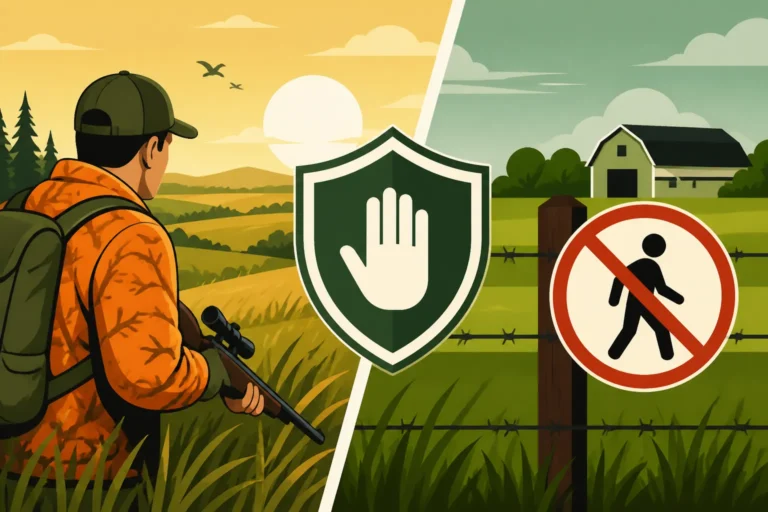
For decades, many hunters operated under the assumption that if a quarter section was not posted with signs, it was open for foot traffic. That dynamic changed significantly with the updated Saskatchewan Landowner Permission Law. Today, the burden of responsibility rests entirely on the hunter to secure explicit consent before entering any private land, whether for big game, upland birds, or waterfowl. Failing to obtain permission can lead to strict enforcement, fines, and formal complaints under Saskatchewan Trespass Penalties for Hunters.
From the producer’s perspective, this legislation is less about keeping people out and more about knowing who is on their property. Farmers manage expensive machinery, maintain livestock herds, and deal with bio-security concerns like weed seeds or disease transfer between fields. When you approach a producer acknowledging that you respect their ownership rights, you immediately set yourself apart from irresponsible users who have caused issues in the past.
Identifying Land Boundaries and Finding Ownership Information
Before you knock on a door, you must know exactly whose door you are approaching and which specific parcel of land you want to hunt. Saskatchewan is surveyed on a township and range system made up of sections and quarter sections. Relying on guesswork based on where a fence line stands is a recipe for awkward mistakes.
Traditionally, hunters relied solely on paper Rural Municipality (RM) maps purchased at local municipal offices. While paper maps are still a fixture on truck dashboards, modern digital tools have simplified the process of mapping field borders. Using digital mapping apps like onX Hunt allows you to view real-time GPS locations superimposed over tax parcel boundaries, identifying the specific quarter section you are looking at. Cross-referencing property boundaries using GoHunt or municipal land registries gives you the owner’s legal name, making your initial conversation far more professional. Combining these digital resources with offline tools is thoroughly detailed in our guide on Reading Saskatchewan Crown Land Layers on onX.
| Aspect of Permission | Best Practice | Common Pitfall | Key Consideration |
|---|---|---|---|
| Initial Timing | Early evening on non-harvest days, mid-summer or pre-season | Knocking during peak harvest or at 5:00 AM | Respect farming schedules and family downtime |
| Location Identification | Exact legal land description (e.g., SW-14-32-15-W3) | Vague descriptions like “that brush patch near the creek” | Producers manage land by legal quarter sections |
| Method of Travel | Explicitly ask if driving stubble is allowed | Assuming vehicle access is permitted everywhere | Rutted fields create severe problems for farm equipment |
| Field Etiquette | Close every gate, pick up all trash, leave no trace | Driving through unharvested or wet standing crops | A single mistake ruins access for everyone |
| Follow-Up | Send a thank-you text, share processed meat, offer farm help | Disappearing after the season until next year’s opener | Relationships are built year-round |
The Etiquette of Knocking on Doors in Farm Country
Driving up a producer’s lane is the moment where most access requests succeed or fail. Landowners receive dozens of inquiries every autumn, and making a positive first impression requires good timing, a clean presentation, and clear communication.
Timing and Preparation Before You Drive Up the Lane
Timing your visit is just as important as how you present yourself. Pulling into a farmyard when headlights are flashing across the living room window at 9:00 PM or during early morning chores at 5:00 AM is a quick way to get turned away. The best time to ask for permission is during the summer months or early autumn weekends, well before the opening morning of the season. If you must ask during the season, late afternoon before supper is generally ideal, provided harvest isn’t in full swing.
Pay attention to what is happening on the farm. If combines are roaring through the fields and grain trucks are kicking up dust down the lane, producers do not have time to chat about hunting. Wait until the rush subsides. When you pull into the yard, drive slowly to avoid kicking up dust near the house or shop. Park in a clear area that doesn’t block fuel tanks, shop doors, or farm machinery. Always leave your dog in the truck, keep your hands visible, and turn off your radio before stepping out. Developing these instincts is part of mastering Saskatchewan Landowner Relations for Hunters.
Crafting Your Approach and Making a Good First Impression
First impressions happen in the first ten seconds. Dress neatly; avoid pulling up in muddy coveralls stained with blood from an earlier hunt. Remove your sunglasses and hat when approaching the door or speaking to someone in the shop so they can look you in the eye.
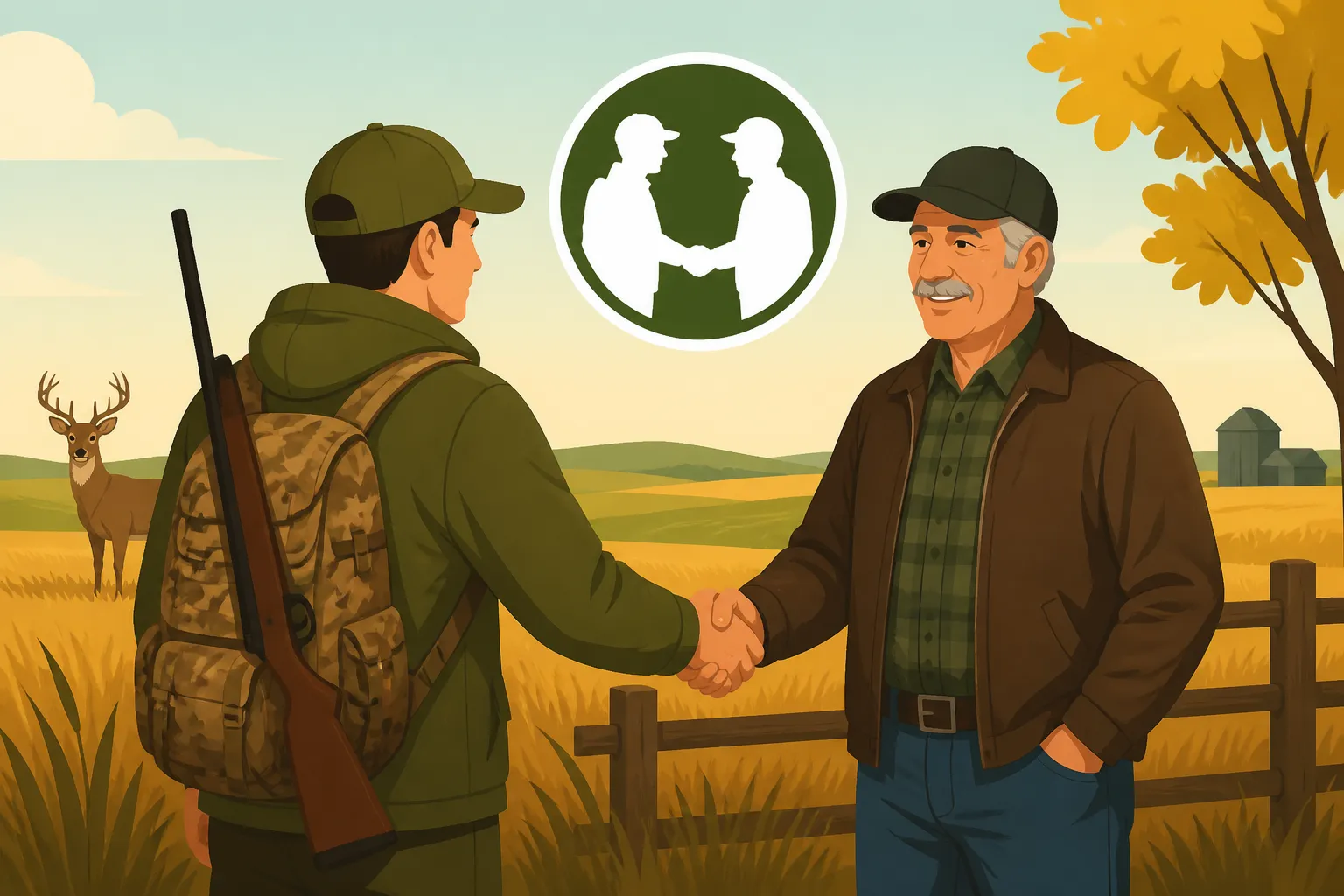
Start by introducing yourself clearly, mentioning where you live, and explaining why you are there. Be specific about the exact location you are interested in rather than asking for general permission across all their holdings.
- State your name and where you are from immediately.
- Specify the exact land parcel, such as a specific quarter section or shelterbelt line.
- Identify the species you plan to hunt and the gear you intend to use (e.g., archery vs. rifle).
- Specify the exact date range or days you are requesting access for.
- Mention who will be with you, keeping group sizes small.
For example, saying, “Hi, my name is Mark from Saskatoon. I’m bowhunting whitetails this fall and was wondering if I might get foot-access permission for the brushy quarter section on the east side of the grid road next week,” shows respect and clarity. If you are targeting a specific area like Hunting a Saskatchewan Quarter Section, naming it directly reassures the landowner that you know the property lines and won’t wander onto neighboring land.
What to Do After the Landowner Responds
Whether a landowner says yes, no, or offers a conditional response, how you handle their answer dictates your future access in the area. Producers talk to their neighbors, and a reputation for courtesy spreads just as quickly as a reputation for poor behavior.
Handling a Yes Respectfully
Receiving permission is a privilege that comes with clear responsibilities. If a landowner grants access, immediately clarify their rules and parameters. Never assume that a “yes” to walk a quarter section gives you permission to drive your pickup through a stubble field or bring three buddies along next weekend.
Ask specific questions about property conditions and boundaries:
- Are there livestock currently pastured on this parcel or nearby fields?
- Are there soft spots, hidden rocks, or buried utility lines I should avoid?
- Do you prefer that I park near the grid road approach and walk in?
- Is there anyone else actively hunting or working on this property?
- Would you like a text message notification before I arrive and when I leave?
Understanding specific operational limitations, such as What Hunt on Foot Only Means, preserves field roads and prevents rutting in wet conditions. If you shoot a deer and it moves across property lines, know the rules surrounding Retrieving Game From Private Land in Saskatchewan before stepping onto adjoining property. Always offer your contact details, write down your license plate number for their records, and consider sending a small thank-you gift or offering a share of clean game meat at the end of the season.
Handling a No Gracefully and Staying on Good Terms
A refusal can be disappointing, especially after scouting an area for weeks, but it must always be accepted with absolute grace. Landowners have many valid reasons for saying no: family members may be hunting the property, livestock might be pastured nearby, or they may have had a negative experience with careless visitors in the past.
Never argue, press for an explanation, or attempt to bargain once a producer has said no. Simply thank them for their time, wish them a good season or harvest, and leave your contact card in case their situation changes. Politely accepting a “no” leaves a positive impression, and it is not uncommon for a producer to grant permission in a subsequent season simply because you handled their initial refusal with maturity and respect.
Special Scenarios When Seeking Permission
Certain agricultural setups require additional caution and specific communication strategies. Recognizing these scenarios before you knock on a door prevents misunderstandings and keeps everyone safe.
Navigating Livestock, Standing Crops, and Working Machinery
Working around active farm operations requires extra spatial awareness. When land holds cattle or other livestock, producers are naturally protective. Uncared-for gates, loud engine noises, or shots fired near herds can cause cattle to stampede through fences, resulting in lost stock and expensive repairs. When asking to access land holding stock, review the strategies in Hunting Saskatchewan Ground With Cattle On It to prove you understand how to navigate pastures safely.
Similarly, standing crops represent a producer’s livelihood waiting to be harvested. Walking through unharvested canola, wheat, or standing corn can knock down grain and reduce crop yield. Never drive a vehicle through a standing or swathed field under any circumstances. If you are hunting a field edge, park neatly along a public approach without blocking tractors or grain trucks, especially when Hunting a Field Approach at Dusk. Navigating rural roads during unpredictable autumn conditions requires careful planning, as outlined in Saskatchewan Grid Road and Winter Access.
Utilizing Digital Tools to Verify Land Ownership
Using digital resources efficiently streamlines your scouting and permission requests. When driving grid roads, opening onX Hunt provides instant clarity on private versus public property boundaries, helping you avoid asking the wrong person for permission on Crown land or leased quarters.
Similarly, using mapping layers within GoHunt helps confirm access points, terrain features, and regional boundaries before you even set foot on the lane. Showing a landowner your map screen on a phone to confirm, “Is this the exact quarter boundary you’d like me to stay within?” visually reassures them that you are prepared, educated, and committed to staying within permitted boundaries.
Disclaimer
This article is for general informational purposes only and does not constitute professional advice. Laws, prices and regulations vary by location and change over time. Consult a qualified professional for guidance on your specific situation.