Hunting Mule Deer in Prairie Coulees
Hunting mule deer in Saskatchewan's vast prairie coulees can feel like trying to find a needle in a haystack, especially when those rolling hills seem to stretch endlessly under an immense sky. It’s easy to get overwhelmed by the sheer scale of the landscape and wonder where these elusive deer are actually hiding. This guide will dive deep into understanding these unique habitats, reveal proven scouting strategies, and share effective hunting techniques to help you consistently find and harvest mule deer in Saskatchewan’s beautiful, yet challenging, coulee country.
Understanding Prairie Coulees as Mule Deer Habitat
Saskatchewan's prairie coulees are far more than just wrinkles in the landscape; they are intricate ecosystems that provide vital shelter, food, and travel corridors for mule deer. These depressions, carved by ancient glaciers and erosion, offer a stark contrast to the open plains, creating microclimates and diverse vegetation that mule deer rely on year-round. Ignoring their complex structure or failing to appreciate how deer use them is a common mistake for hunters new to this terrain.
Anatomy of a Coulee System
Imagine a coulee not just as a single dip, but as a complex network of smaller draws, shelves, and benches. A typical prairie coulee might start as a shallow depression on the plateau, gradually deepening and widening into a significant valley with steep sides, eventually winding its way to a larger river system or a deeper creek bed. The bottom often hosts more robust vegetation, like willow thickets, aspens, or even small bluffs of chokecherry and saskatoon berries, providing crucial cover and browse. The slopes can vary from gradual to near-vertical, with different aspects (north-facing vs. south-facing) holding snow or drying out at different rates, influencing where deer might bed.
These intricate formations create natural travel corridors. Deer often use the edges of the slopes, the bottoms of the draws, and even the tops of the benches as highways to move from bedding areas to feeding grounds. Understanding these movement patterns is key. It’s not just about looking in the coulee, but understanding how deer navigate through and around its various features. Some coulees are isolated pockets, while others form extensive, interconnected systems that can stretch for miles, offering mule deer a vast and secure refuge. Knowing the size and complexity of the coulee system you’re hunting will dictate your approach.
Why Mule Deer Love Coulees
Mule deer are creatures of the open country, but they are also masters of using topography to their advantage, and coulees fit their lifestyle perfectly. The primary draw for them is the shelter these depressions provide from the elements. On a vast, windswept prairie, a coulee offers immediate protection from biting winter winds and scorching summer sun. The dense vegetation in the bottoms, or even just the shade of a steep north-facing slope, can make a significant difference in comfort and energy conservation.
Beyond shelter, coulees are also natural food factories. While the prairie above might be cultivated or grazed short, the coulee bottoms often hold a richer, more diverse array of browse and forbs that mule deer relish. Think about the willows, aspens, and various shrubs that grow along a coulee bottom or sidehill – these provide crucial forage, especially during the colder months when other food sources are scarce. They also offer crucial escape cover. When danger approaches on the open prairie, a mule deer can quickly drop into a coulee, using its twists and turns, and dense growth, to disappear from sight in moments. This combination of shelter, food, and security makes coulees indispensable to mule deer survival in Saskatchewan's prairie landscape.
Seasonal Movements and Coulee Use
Mule deer use coulees differently throughout the year, adapting their habits to the changing seasons and available resources. In spring, as new growth emerges, deer might be found grazing on tender shoots along the coulee edges or feeding in nearby fields before retreating into the coulee for cover. Summer sees them seeking shade and dense cover within the coulee bottoms to escape the heat and flies, often bedding down during the day and emerging to feed in the cooler hours.
As fall approaches and hunting season opens, their use becomes even more strategic. During the early archery season, you might find bucks still in bachelor groups, often tucked away in deep, secluded coulees. When the rut kicks in, typically in November, coulees become hotbeds of activity. Bucks will cruise these natural corridors, checking for does, and sparring. Does, in turn, use the coulees for security while seeking out bucks. During the harsh Saskatchewan winter, coulees become critical wintering grounds, offering vital thermal cover and pockets of available forage that are protected from deep snow and high winds. Understanding these seasonal shifts is crucial for timing your hunt and knowing where to focus your efforts, whether you're Hunting Saskatchewan's September Archery Opener or Hunting Saskatchewan's November Rut.
Scouting Strategies for Saskatchewan Coulees
Effective scouting is the backbone of successful coulee hunting. You can't just drive up and expect to stumble upon a trophy mule deer. The vastness of the prairie and the hidden nature of coulees demand a systematic and thorough approach, blending modern technology with good old-fashioned legwork. Without a solid scouting plan, you'll spend more time driving and less time hunting.
Using Topographical Maps and Satellite Imagery
Before you ever set foot in a coulee, the best place to start your scouting is from the comfort of your home. High-quality topographical maps and satellite imagery are your best friends here. Tools like GoHunt or OnX Hunt are indispensable for Saskatchewan hunters. They allow you to virtually explore vast tracts of land, identifying promising coulee systems, pinch points, and potential bedding or feeding areas without burning a drop of fuel. Look for areas where multiple coulees converge, creating larger blocks of cover, or where a coulee runs adjacent to prime feeding grounds like alfalfa fields or grain stubble. Pay close attention to the contours – shallow, open draws might be used differently than deep, timbered ravines.
On satellite imagery, zoom in to identify different vegetation types. Are there dense willow patches, scattered aspens, or just short prairie grasses? These details will tell you a lot about the quality of cover and potential food sources. Also, look for faint trails or worn-down paths that indicate heavy deer traffic, especially where they enter or exit the coulee. Identifying potential access points, whether it’s a grid road that cuts across a coulee or a remote two-track, is also vital for planning your hunting day. Using these digital tools, you can essentially pre-scout dozens of square miles, narrowing down your focus to the most promising areas before you even load your rifle. This step helps you prioritize your limited time on the ground. You can learn more about Reading Saskatchewan Crown Land Layers on onX to maximize these tools.
On-the-Ground Reconnaissance
Once you've identified promising areas using your maps, it's time for boots on the ground. There's no substitute for actually walking a coulee, observing the landscape, and getting a feel for how deer might move through it. However, be strategic. You don't want to blow out every deer in the coulee before opening day. Focus on areas you've pinpointed as potential bedding or travel corridors. Walk the rim of the coulee, using your binoculars to glass into the draws and pockets, looking for sign.
When you do venture into the coulee itself, move slowly and deliberately. Pay attention to the subtle changes in topography that create natural funnels or hidden benches where deer might bed. Look for tracks, scat, rub lines on small trees, and fresh browse. These telltale signs confirm deer presence and indicate their preferred routes and activities. Early morning or late evening walks, when deer are more active, can also give you direct sightings, helping you understand their patterns. This hands-on experience is critical for confirming what your maps suggested and uncovering hidden gems that only an in-person visit can reveal.
Reading Mule Deer Sign in Coulees
Mule deer are masters of leaving clues, and learning to read these signs is paramount for success in coulee country. Tracks are a primary indicator. Fresh tracks, especially those with distinct dewclaw marks indicating a heavier animal, are exciting. Look for trails that lead into and out of dense cover or connect a coulee bottom to an adjacent field. These are highways. Scat, or droppings, can tell you about their diet and how recently they were in the area. Fresh, moist scat means they’re around.
Rub lines on small shrubs or trees, particularly from October into November, are direct evidence of a buck's presence and activity. The height of the rub can give you an idea of the buck's size. Scrapes, though less common with mule deer than whitetails, can sometimes be found, usually in areas where bucks feel secure. But don't just look for isolated signs; look for patterns. A series of rubs leading to a bedding area, or tracks consistently using a specific pinch point, are far more valuable than a single track. Understanding Reading Whitetail Sign in Saskatchewan Bluffs can also provide valuable insight, as many principles apply to mule deer in similar habitats. The more sign you can piece together, the clearer picture you'll have of mule deer activity and how best to intercept them.
Effective Hunting Techniques for Mule Deer in Coulees
Once you’ve done your homework and understand the coulees you plan to hunt, it’s time to put those scouting insights into action. Mule deer hunting in coulees is often a game of patience, stealth, and using the terrain to your advantage. It’s a completely different beast than sitting in a blind over a food plot.
Spot and Stalk Tactics in Open Coulees
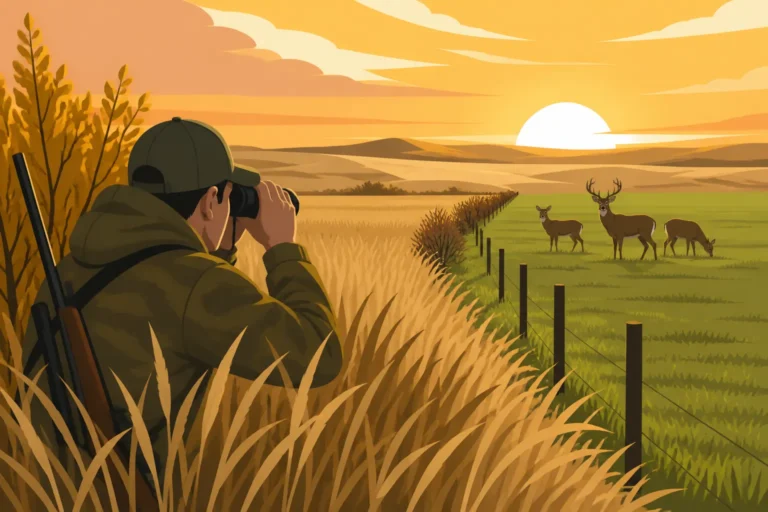
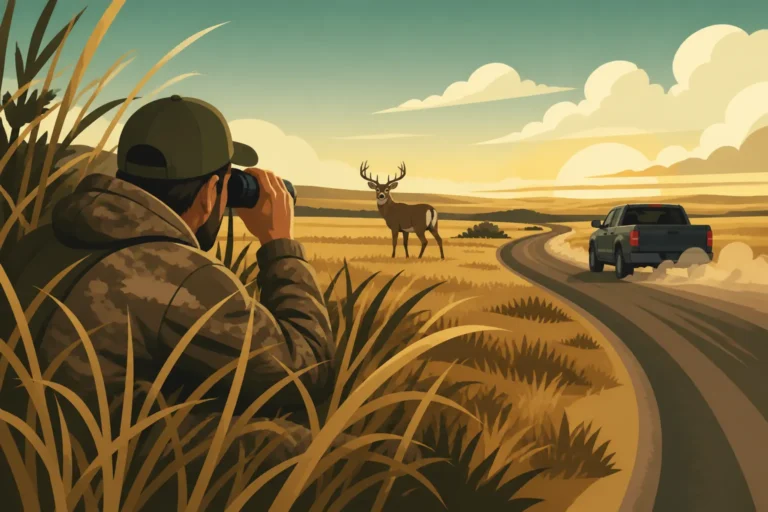
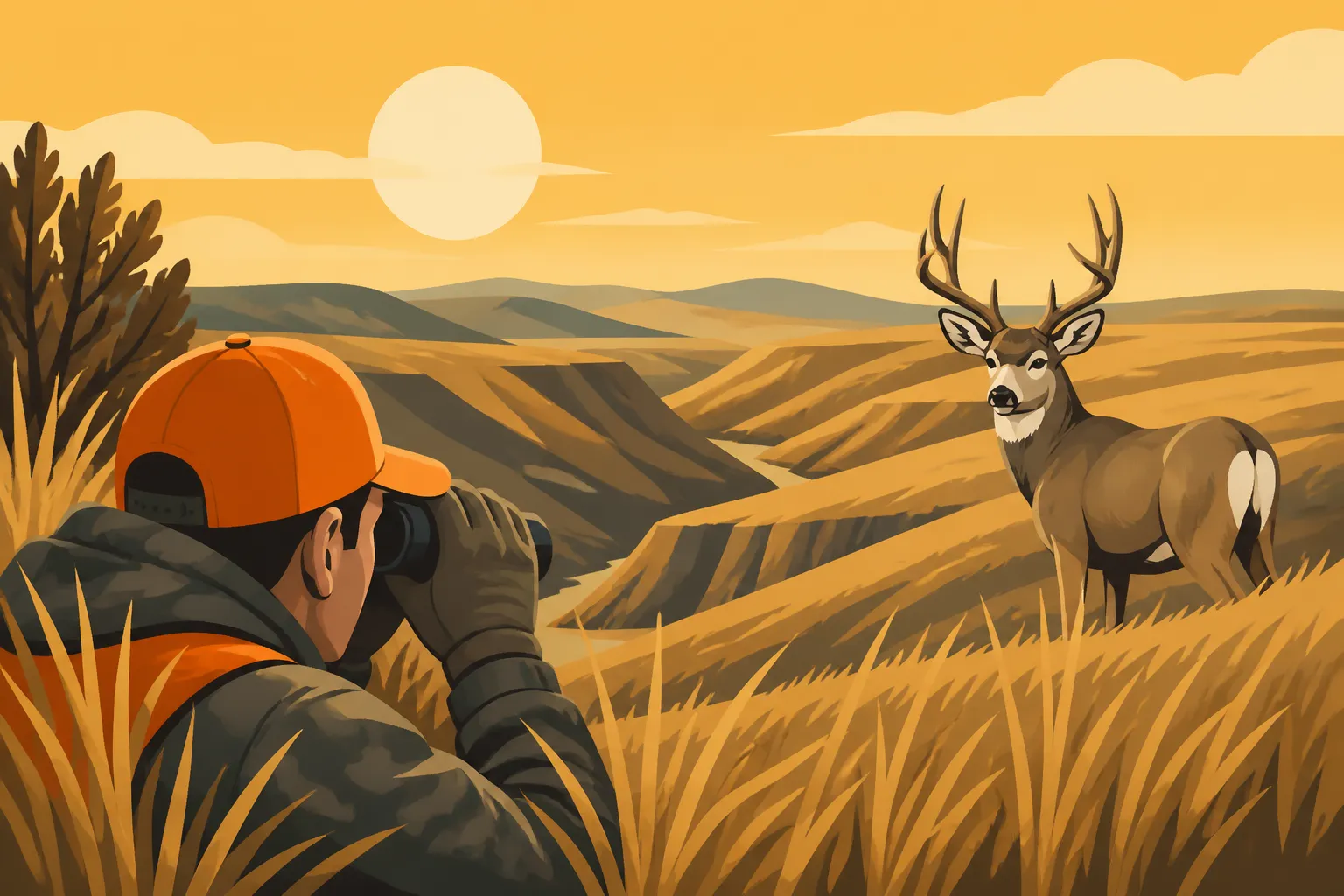
Spot and stalk is arguably the most effective method for hunting mule deer in Saskatchewan's prairie coulees. The open nature of many coulee systems, with their undulating terrain and sparse cover, lends itself perfectly to glassing from a distance. The strategy here is simple: find them, then figure out how to get to them. This often means long hours behind quality optics. A good spotting scope or high-powered binoculars are your most important tools. Position yourself on a high vantage point overlooking a coulee system, or a series of coulees, during the early morning or late evening when deer are most likely to be active or moving to and from bedding.
Once you spot a buck, the real challenge begins. Wind direction is paramount. Always approach with the wind in your favour. Use the coulee's natural contours – the folds, dips, and rises – to stay out of sight. This might mean crawling on your hands and knees or taking a circuitous route that adds significant distance to your stalk. Patience is key; a stalk might take hours, cover miles, and involve long periods of waiting for the deer to move or offer a better approach. You need to be mentally prepared for setbacks and the need to adjust your plan on the fly if the deer moves or the wind shifts. Practicing Spot-and-Stalk Mule Deer in Saskatchewan skills is absolutely vital for success.
Hunting Coulee Bottoms and Edges
While spot and stalk is great for finding deer, sometimes the densest cover or the most active travel routes are deep within the coulee bottoms or along their hidden edges. These areas often require a more hands-on approach, carefully still-hunting or setting up ambushes. Still-hunting involves moving slowly and deliberately through the coulee, taking a few steps, then pausing for several minutes to glass thoroughly, listening for any sounds of movement. This works well in coulees with thicker vegetation where deer might be bedded tight.
Setting up an ambush can be effective near pinch points, where a coulee narrows, or where trails clearly show deer moving between bedding and feeding areas. This could be on a bench overlooking a well-used trail or tucked into a cluster of brush in the bottom of a draw. Knowing when deer typically move through these spots, based on your scouting, is critical. This approach requires extreme stealth and the ability to stay still for extended periods. It's about letting the deer come to you, rather than trying to chase them down. You might also want to explore Hunting a Prairie Coulee Bottom for more specific techniques on these areas.
Working Wind and Thermals
Understanding and utilizing wind and thermals is non-negotiable for mule deer hunting in coulees. On the open prairie, the wind can be a constant, strong presence, but within the coulees, it can swirl and shift in unpredictable ways. Generally, cold air sinks and warm air rises. In the morning, as the sun heats the ground, thermals will rise up the coulee slopes. In the evening, as the air cools, thermals will reverse, flowing downhill and settling into the coulee bottoms.
Always approach from a direction that keeps your scent out of the deer's nose. This might mean waiting for the right time of day for thermals to be in your favour, or planning your route to skirt around certain sections of the coulee. A wind checker powder bottle is a vital tool to constantly monitor air currents. Mule deer, like all deer, rely heavily on their sense of smell. Ignoring the wind and thermals is a surefire way to spook deer before you even know they are there. This principle holds true whether you're stalking, still-hunting, or sitting on stand.
Gear and Preparation for Coulee Hunting
Hunting Saskatchewan's coulees isn't just about knowing where to go and how to hunt; it's also about being properly equipped for the challenging terrain and often unpredictable weather. Being unprepared can quickly turn an exciting hunt into a miserable, or even dangerous, experience.
Optics for Coulee Hunting
As mentioned earlier, optics are your most important tool for coulee hunting. You'll spend a lot of time behind glass, covering vast distances and picking apart subtle details in the landscape. High-quality binoculars, in the 10×42 or 12×50 range, are essential for general glassing. They should be clear, bright, and offer good light transmission, especially in low-light conditions. Beyond binoculars, a good spotting scope (20-60x or 25-75x) is an absolute game-changer. It allows you to really evaluate a buck at extreme distances, distinguishing between a legal animal and one you'd pass on, or confirming if what you’re seeing is indeed a deer and not just a rock or stump.
Equally important is a sturdy tripod for both your binoculars and spotting scope. Trying to handhold high-magnification optics for extended periods is a recipe for shaky images and eye strain. A lightweight but robust tripod will allow you to hold your glass steady, revealing details you'd otherwise miss. Don't skimp on optics; they are an investment that directly impacts your success rate in this vast, open country. Brands like GoHunt often review optics that perform well in conditions like those found in Saskatchewan. When considering your gear, remember that Glassing a Saskatchewan Coulee for Mule Deer demands the best.
Footwear and Clothing for Varied Terrain
The terrain in Saskatchewan's coulees is notoriously varied and often challenging. You'll encounter steep, slippery slopes, uneven footing, dense brush, and potentially muddy or snowy conditions. Your footwear is paramount. Invest in comfortable, waterproof, ankle-supporting boots with aggressive tread. You'll be covering many miles, and ill-fitting or inadequate boots will lead to blisters and fatigue, effectively ending your hunt early. Make sure they are well broken-in before your hunt.
Layering is the key to clothing in Saskatchewan. The weather can change dramatically from early morning to midday, and from one day to the next. Start with a moisture-wicking base layer, add insulating layers (fleece or down), and top it off with a waterproof and windproof outer shell. This system allows you to adapt to changing temperatures and activity levels, shedding layers when hiking and adding them back when glassing or sitting still. Choose quiet fabrics that won't rustle and game-appropriate colours (earth tones, camo patterns) to blend in with the environment. Remember to also bring blaze orange for safety, adhering to Saskatchewan Blaze Orange Rules.
Essential Pack Items for Remote Coulees
When you venture into remote coulees, you need to be self-sufficient. Your day pack should contain essentials for safety, comfort, and success. Beyond your rifle and ammunition, always carry a good first-aid kit, a headlamp with extra batteries, fire-starting materials, and sufficient water and high-energy snacks. A rangefinder is crucial for accurately judging distances in varied terrain, which is vital for ethical shots. Navigation tools are also critical; a reliable GPS device or a smartphone app with offline maps (like GoHunt or OnX Hunt) can prevent you from getting disoriented, especially in unfamiliar or extensive coulee systems.
Other valuable items include a knife, game bags for meat care, cordage, and a small tarp or emergency blanket. Consider a small pair of pruning shears to clear shooting lanes if necessary. If hunting in colder weather, hand warmers and a small insulated pad to sit on can make long glassing sessions much more bearable. Being prepared for any eventuality means you can focus on the hunt, rather than worrying about what you forgot.
Post-Harvest and Winter Considerations
The hunt doesn't end with the shot. Especially when dealing with mule deer in potentially rugged coulee terrain and often cold Saskatchewan weather, post-harvest care and winter considerations are critical for both successful recovery and meat quality.
How Crop Fields Influence Coulee Deer
Saskatchewan's agricultural landscape plays a huge role in mule deer movement, especially as crops are harvested. While coulees provide cover, deer will often venture into adjacent stubble fields – wheat, barley, pea, or canola – to feed. After harvest, these fields become prime foraging grounds, offering waste grain and nutritious plant remnants. This creates predictable patterns where deer move from the security of the coulee into the fields at dawn and dusk, and back into the coulee for bedding during the day.
Understanding this interaction is crucial. When fields are still standing, deer might hide within the crop itself, but once harvested, the coulee becomes their primary daytime refuge. Savvy hunters will observe these field-to-coulee transitions, either by setting up an ambush along a well-used trail leading from the coulee to the field, or by glassing the field edges at first light. Conversely, if deer are being pressured in the fields, they will retreat deeper into the coulees earlier in the day and emerge later. This dynamic relationship between coulees and croplands offers excellent opportunities, particularly during the late season. For more on this, check out Hunting a Swathed Grain Field at Dusk or Hunting a Pea Field After Harvest.
Hunting Coulees After a Snowfall
A fresh snowfall can be a game-changer for coulee hunting, often simplifying the tracking process and highlighting deer activity. New snow reveals fresh tracks, making it easier to determine direction of travel, size of the deer, and how recently they passed through. This can be incredibly helpful for confirming bedding areas or travel corridors that were harder to decipher on bare ground. When Hunting Mule Deer After a Snowfall, pay close attention to where deer are moving.
However, snow also brings challenges. Deep snow can push deer into more sheltered, often denser, parts of the coulees, where cover is thicker and travel is easier. It also makes walking tougher for hunters, potentially impacting your stealth and stamina. Watch for deer "yarding up" in protected areas, especially south-facing slopes that might melt faster, offering exposed forage. The pristine white blanket also makes deer stand out more, aiding in glassing, but it can also make them more alert to movement against the white background. Use the fresh snow as an information tool, but be mindful of how it changes both deer behaviour and hunting conditions.
Safety and Access in Winter Conditions
Hunting coulees in late fall or winter in Saskatchewan demands extra safety precautions. Cold weather, particularly the infamous prairie winds, can be brutal. Hypothermia is a real risk. Ensure you have proper layered clothing, insulated boots, and emergency warmth items like chemical hand warmers or even a small stove. Carry enough water to stay hydrated, as dehydration is still a risk even in cold weather. Having a Winter Truck Kit for a Saskatchewan Hunt is non-negotiable, complete with shovels, traction aids, extra warm clothes, and emergency food.
Access to coulees can become challenging in winter. Snow drifts can block grid roads, and some two-track trails might become impassable, even with a 4×4. Always inform someone of your hunting plans, including your exact location and expected return time. Carry a reliable communication device, like a satellite messenger, as cell service can be spotty or non-existent in many remote coulee areas. When retrieving game, consider how challenging it will be to get a deer out of a deep coulee bottom in snow or ice. Sometimes, it's safer to quarter the animal and pack it out in pieces. Always prioritize safety and have a plan for unexpected situations when Hunting Saskatchewan Winter Weather Safely.
Common Challenges and How to Overcome Them
Hunting mule deer in Saskatchewan’s coulees, while rewarding, presents its own unique set of hurdles. Being aware of these common challenges and having strategies to overcome them will significantly increase your odds of success and make your hunt more enjoyable.
Dealing with Private Land and Access
A significant portion of Saskatchewan's prime mule deer habitat, including many coulee systems, is on private land. This can be one of the biggest frustrations for hunters. Unlike public land, you cannot simply walk onto private property without permission. Ignoring this rule can lead to trespassing charges and give all hunters a bad name. The key to accessing these areas is respectful communication and prior planning.
Start well in advance of the season. Research land ownership using tools like GoHunt or ISC online mapping and identify landowners. Then, approach them in person, if possible, or via phone, politely asking for permission. Be prepared for rejections; not all landowners grant access. However, many farmers and ranchers are open to ethical hunters, especially those who offer to help with chores or respect their land and livestock. Always be clear about your intentions, follow any specific rules they might have, and leave the property exactly as you found it, if not better. Building good relationships with landowners can secure hunting spots for years to come. Remember, Getting Private Land Permission in Saskatchewan is a relationship, not a transaction.
Managing Long Shots and Steep Angles
Mule deer in coulee country often present themselves at considerable distances or in challenging topographical situations. The open nature of the prairie and the deep valleys of the coulees mean that shots of 300 yards or more are not uncommon. This demands proficiency with your rifle and an understanding of bullet ballistics. Practice regularly at extended ranges, not just at 100 yards. Know your rifle's capabilities and your own. A rangefinder is absolutely essential for accurate distance estimation, especially when shooting across or down into a coulee, where distances can be deceiving.
Steep angles also affect bullet trajectory. When shooting downhill or uphill at a steep angle, gravity has less time to act on the bullet, meaning it will hit higher than it would on a flat shot at the same horizontal distance. Many modern rangefinders have angle compensation features that provide an "adjusted for angle" distance, which you should use for your holdover. If your rangefinder doesn't have this feature, invest in an app or a simple calculator to help you understand these adjustments. Never take a shot beyond your ethical limits. A missed shot or, worse, a wounded animal, is a far greater disappointment than not pulling the trigger.
Handling Mule Deer After the Shot in Tough Terrain
Successfully taking a mule deer in a deep coulee is only half the battle; the extraction can be an even greater challenge. Often, a buck will fall in the bottom of a steep, brushy coulee, far from any easy access point. This is where planning ahead truly pays off. First, mark the location precisely with GPS or by noting distinct landmarks. Then, assess the easiest, safest route to get to the animal.
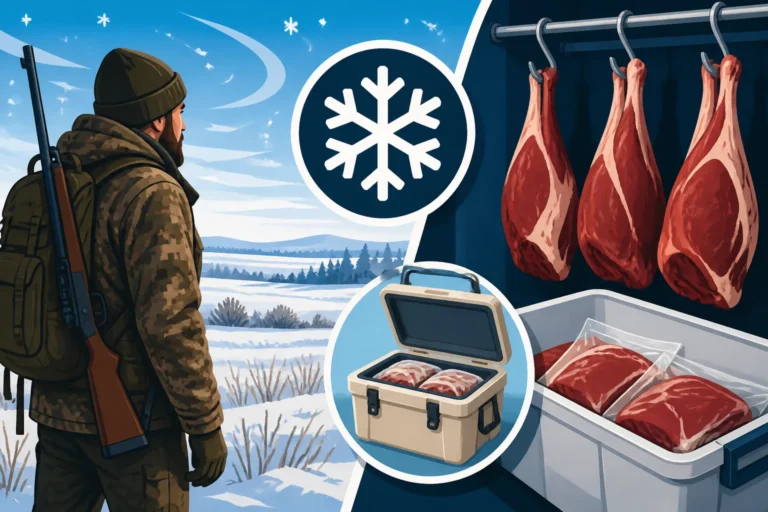
Field dressing quickly and efficiently is crucial, especially in warmer weather or if you're deep in a coulee. Quartering the animal is often the most practical solution for getting it out. This involves breaking the deer down into manageable pieces (quarters, backstraps, tenderloins, neck meat, cape) and packing them out in game bags. This is much easier than trying to drag a whole deer up a steep, muddy, or snowy slope. If you have partners, coordinate the pack-out. If you're alone, be prepared for multiple trips. Having good quality game bags and a sturdy pack frame will make this process significantly easier. Don't forget the importance of Meat Care in Saskatchewan's Cold Snaps to ensure your hard-earned venison stays in prime condition.
Disclaimer
Hunting is a challenging and rewarding pursuit, but it comes with inherent risks. This guide provides information for educational purposes only and is not a substitute for professional instruction, adherence to local laws, or personal responsibility. Always prioritize safety, obtain all necessary licenses and permits, and follow ethical hunting practices. Conditions in Saskatchewan can be unpredictable, so be prepared for all weather and terrain, and always inform someone of your hunting plans. The author and publisher assume no liability for any accidents, injuries, or legal infractions that may occur during your hunting activities.