Booking a Spring Snow Goose Trip
The call of thousands of snow geese descending into a stubble field is one of the most incredible spectacles in the hunting world, but planning a trip to experience it in Saskatchewan can feel like trying to herd those very birds. From understanding the unique regulations to navigating equipment needs and choosing between guided and DIY options, it's a huge undertaking. This guide will walk you through everything you need to know about successfully booking and executing a spring snow goose trip in Saskatchewan, ensuring you're ready for the exhilarating chaos.
Why Spring Snow Goose Hunting in Saskatchewan is a Bucket List Item
There's a reason why hunters from all over North America, and even beyond, set their sights on Saskatchewan for spring snow goose hunting. It's not just a hunt; it's an immersive experience that overwhelms the senses and truly tests your abilities. The sheer scale of the migration through the province offers an opportunity unlike almost anywhere else.
The Sheer Volume of Birds
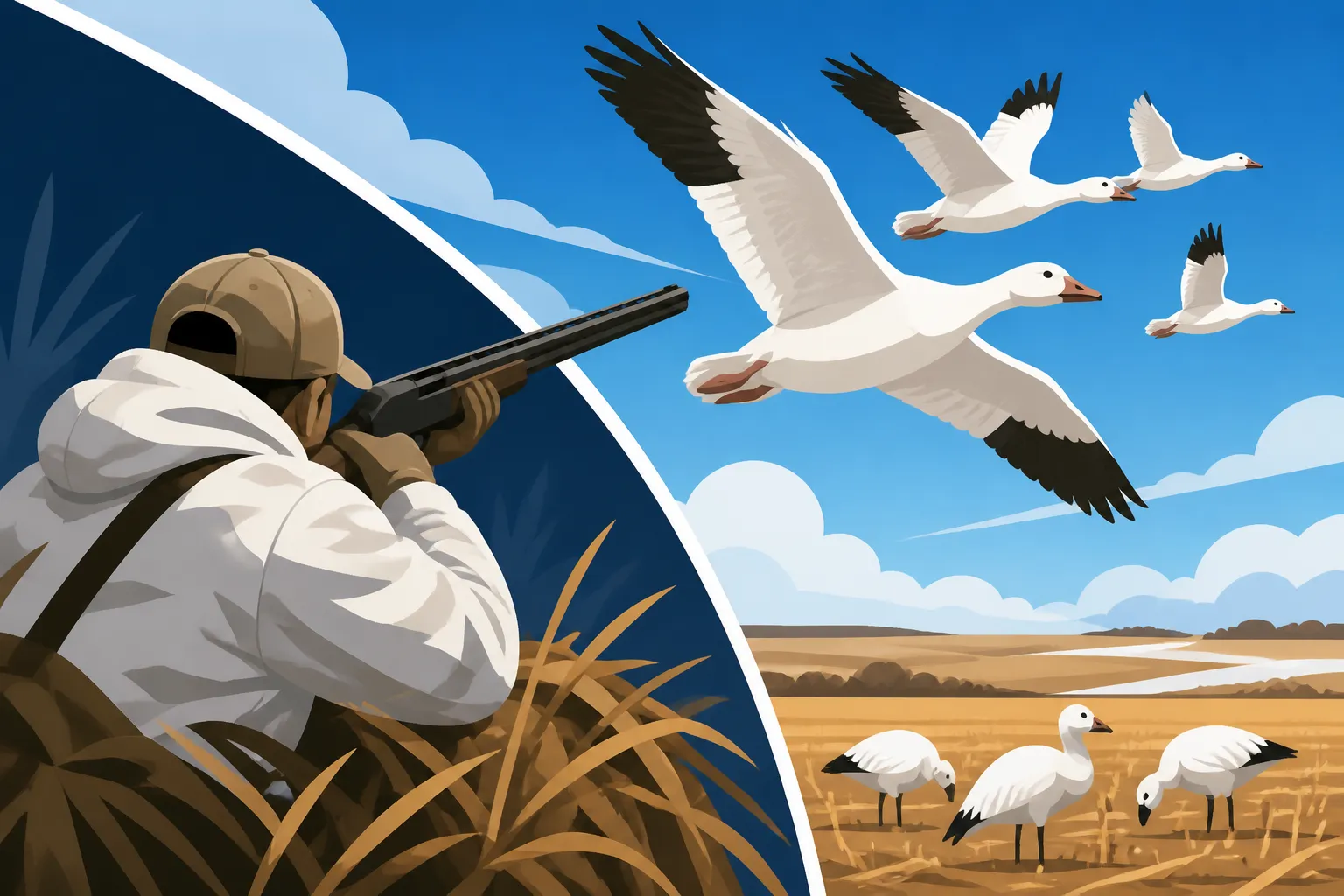
Imagine looking up and seeing not just dozens or hundreds, but thousands of geese swirling above you. That's the reality during Saskatchewan's Snow Goose Migration. As the vast prairies thaw and meltwater creates temporary wetlands, millions of snow geese, along with blues and Ross' geese, pause their northward journey to refuel on the abundant waste grain left in the fields from the previous harvest. This incredible concentration of birds provides hunters with a truly unique opportunity. The sight and sound of these massive flocks are something you'll never forget, a living, breathing landscape of white and grey against the vast blue sky. It's a testament to the wildness of the Canadian prairies and a primal experience that connects you directly to the rhythms of nature.
A Unique Hunting Challenge
Don't let the sheer numbers fool you into thinking it's easy. Snow geese are notoriously wary, and successfully decoying them requires skill, patience, and often a substantial amount of equipment. They've been hunted all the way from their wintering grounds, making them incredibly educated by the time they reach Saskatchewan. This isn't your typical duck hunt from a blind over a dozen decoys. This is a game of grand scale, involving enormous spreads of decoys, often numbering in the hundreds or even thousands, intricate calling strategies, and meticulous concealment. It's a hunt that demands precision, adaptability to changing weather conditions, and a deep understanding of bird behavior. The challenge lies not just in getting them to commit, but in making sure your setup is perfect enough to fool birds that have seen it all before.
Understanding the Logistics of a Spring Snow Goose Trip
Venturing out for spring snow geese requires more than just a shotgun and shells. The logistics can be complex, especially if you're traveling from out of province or are new to this particular style of hunting. Knowing the rules and having the right gear are paramount to a safe and successful trip.
Key Regulations and Season Dates
Before you even think about buying a plane ticket or packing your gear, you need to understand Saskatchewan's specific hunting regulations. Spring snow goose season typically runs from late March through May, depending on the zone and specific conditions of the migration. This extended season allows for flexibility, but it's crucial to consult the provincial hunting guide for the most accurate and up-to-date Spring Snow Goose Season Rules. Non-resident hunters, particularly those from outside Canada, will have particular requirements, including needing a federal migratory game bird permit in addition to their provincial licence.
One of the most critical regulations to be aware of is the mandatory use of Non-Toxic Shot Requirements for Waterfowl. Steel, bismuth, or other approved non-toxic loads are required for all migratory bird hunting in Saskatchewan. This is a federal regulation, and it's strictly enforced. Make sure you stock up on the right ammunition well in advance, as specialized non-toxic shot can sometimes be harder to find or more expensive than traditional lead shot. Understanding bag limits, possession limits, and legal shooting hours is also vital. These details are clearly outlined in the annual hunting guide and are designed to ensure sustainable hunting practices.
Essential Gear and Equipment
When it comes to spring snow goose hunting, your gear list is likely going to be longer than for almost any other hunt. The sheer scale of operations demands it. First and foremost, you'll need a reliable shotgun, typically a 12-gauge, capable of handling 3-inch or 3.5-inch magnum shells. Beyond that, the decoy spread is king. You'll either need access to a massive spread of decoys yourself – think hundreds to thousands of full-body, windsock, or Sillosock decoys – or be part of a group that collectively owns them. Transporting and setting up such a spread is a monumental task.
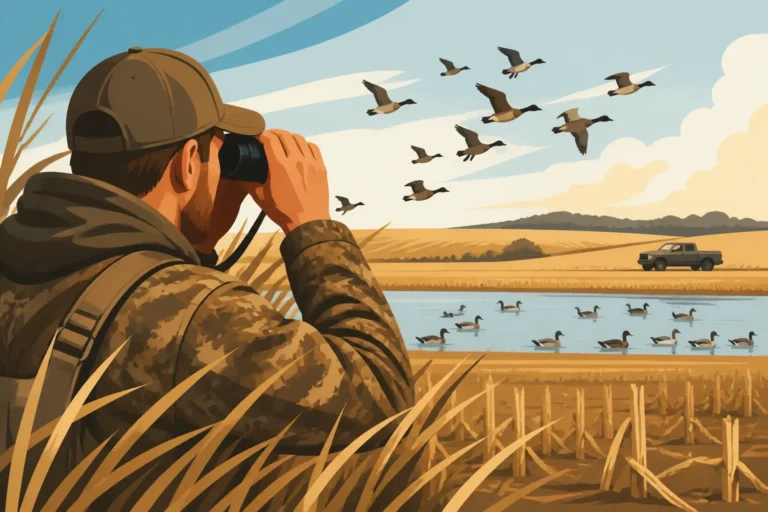
Concealment is another critical factor. Snow geese have incredible eyesight, so white camouflage is often necessary, especially when hunting in fields with snow cover or light-colored stubble. Lay-down blinds or even simple white sheets can be effective, but they must be completely invisible to overhead birds. Electronic calls are generally legal for snow geese during the spring conservation season, and they can be a huge asset in attracting distant birds. Many hunters also bring powerful binoculars for Scouting Fields for Saskatchewan Waterfowl, as locating active feeding areas is key. Don't forget layers of warm clothing, as spring in Saskatchewan can still bring bitterly cold winds and even snow, especially when Hunting Saskatchewan Winter Weather Safely.
The Pros and Cons of Booking a Guided Trip
For many hunters, especially those new to spring snow goose hunting or traveling from a distance, booking with an outfitter is the most straightforward and often most successful path. It removes many of the logistical headaches and leverages local expertise.
When an Outfitter is Your Best Bet
If you're looking to maximize your chances of success, minimize your personal gear investment, and simply enjoy the hunt without the immense planning burden, a guided trip is probably for you. Outfitters specialize in Saskatchewan Waterfowl Outfitter Packages that handle nearly everything. This includes securing private land permission, which can be a huge hurdle in Saskatchewan, as well as providing massive decoy spreads, electronic calls, and expert calling. They'll have a crew to set up and take down the hundreds or thousands of decoys, saving you hours of grueling physical labor. This is particularly appealing for non-resident hunters who, by law, often must book with an outfitter for certain species, though migratory birds have more flexible rules.
Furthermore, an outfitter provides invaluable local knowledge. They know the migration patterns, where the birds are currently feeding, and how to adapt to changing weather conditions. For those who can only commit a few days to a trip, an outfitter's efficiency in finding and setting up on birds is unmatched. It truly allows you to focus solely on the shooting experience. When considering options, you might look at platforms like BookYourHunt, which often lists various outfitters and their spring snow goose offerings, giving you a good starting point for comparison and inquiry. While What a Guided Waterfowl Trip Costs can be a significant investment, the convenience and expertise often make it worthwhile, especially for a bucket list hunt like this.
What to Look for in a Spring Snow Goose Guide
Choosing the right outfitter is critical to a successful and enjoyable experience. First, look for guides with a strong reputation and proven success rates specifically for spring snow geese. Don't be afraid to ask for references from past clients and check online reviews. Inquire about the size of their decoy spreads – bigger is often better for these birds – and the quality of their calling equipment. Ask about their typical daily routine: how early do they get to the fields, how long do they hunt, and what happens after the morning flight?
Comfort in the field is also important. Will they provide good quality lay-down blinds, or are you expected to bring your own? What kind of accommodations are included in their Saskatchewan Waterfowl Outfitter Packages? Some guides offer basic lodging, while others provide full-service camps. Communication is key; a good outfitter will be transparent about their services, costs, and what you can expect. Remember, How Many Days a Non-Resident Bird Hunter Gets may influence your package choice, so ensure the outfitter can accommodate your desired trip length. Always check that the outfitter is properly licensed and insured in Saskatchewan, as this protects both you and their operation.
| Feature | Guided Trip | DIY Trip |
|---|---|---|
| Decoy Spreads | Provided, often hundreds to thousands of decoys | Must own or rent, significant investment and transport |
| Field Permission | Handled by outfitter, established relationships | Requires extensive scouting and knocking on doors |
| Local Expertise | Guide's knowledge of bird movement and feeding | Requires significant research and on-the-ground scouting |
| Gear Investment | Minimal personal gear, outfitter provides blinds, calls | High personal investment for decoys, blinds, E-callers |
| Physical Effort | Crew sets up/takes down decoys, less personal labor | Extremely demanding setup and takedown daily |
| Time Commitment | Focus on hunting, less time on logistics | Hours spent scouting, securing access, setting up |
| Cost | Higher upfront package cost, but all-inclusive | Lower upfront, but hidden costs in gear, fuel, time |
| Learning Curve | Guided learning experience | Steep learning curve through trial and error |
Planning Your DIY Spring Snow Goose Adventure
For the seasoned waterfowler or the adventurous budget-conscious hunter, a do-it-yourself (DIY) spring snow goose trip to Saskatchewan can be incredibly rewarding. It requires immense effort and planning, but the satisfaction of calling in your own flocks is unparalleled.
Securing Permission and Scouting Fields
The biggest hurdle for a DIY group is almost always securing private land access. Saskatchewan is predominantly privately owned, especially in the prime agricultural zones where snow geese concentrate. Unlike some areas where public hunting land is abundant, you'll be knocking on doors, asking farmers and landowners for permission to hunt their fields. This takes time, politeness, and persistence. It’s a good idea to arrive a day or two early just for this purpose. Start with fields that have obvious signs of goose activity, like heavy droppings or disturbed stubble. Always be respectful, offer to share contact information, and ensure you leave gates as you found them. Some hunters find success using mapping tools and apps, such as those offered by GoHunt, to identify land ownership and scout potential areas from afar before making contact.
Beyond permission, intense Scouting Fields for Saskatchewan Waterfowl is absolutely non-negotiable. You can't just guess where the birds will be. You need to drive countless grid roads, use binoculars and spotting scopes, and observe where the main flocks are feeding. Snow geese are highly mobile and will move from field to field based on food availability, pressure, and weather. What was hot yesterday might be empty today. Effective scouting is a daily, often twice-daily, commitment that determines your success. You're looking for large concentrations of birds, ideally with fresh droppings, indicating they've been using that field heavily.
Decoy Spreads and Calling Strategies
Once you have permission and a scouted field, the real work begins: setting up your decoy spread. For spring snow geese, you're going to need a lot of decoys. We're talking hundreds, often a thousand or more, to create the illusion of a massive, safe feeding ground that will draw in wary birds. This could include full-body decoys, silhouette decoys, and especially windsock decoys, which are light, portable, and create realistic movement in the slightest breeze. Hunting Snow Geese Over a Big Spread is the name of the game, and your spread should mimic a natural feeding pattern, with landing zones and loafing groups. Setting up a spread this large is physically demanding and can take hours in the dark before first light.
Your calling strategy will also be crucial. While electronic calls are legal for spring snow geese, knowing how to use them effectively, along with occasional mouth calling, is an art form. You need to mimic the excited chatter of feeding geese, the high-pitched "keks" and "hons" that signal a safe haven. Varying your calling, especially as birds approach, is key. When Hunting a Swathed Grain Field at Dusk or Hunting a Standing Canola Field Edge, geese might react differently than in a bare stubble field. Combine effective calling with impeccable concealment in your lay-down blinds, and you significantly increase your chances of convincing those wary birds to commit to your spread. Remember that patience is a virtue; sometimes it takes hours of calling and waiting for the right flock to come along.
Disclaimer
This article is for general informational purposes only and does not constitute professional advice. Laws, prices and regulations vary by location and change over time. Consult a qualified professional for guidance on your specific situation.