Wildlife Safety in Saskatchewan Bear Country
Venturing into Saskatchewan's wild spaces for a hunt is an exhilarating experience, but it comes with a deep responsibility for your own safety and an understanding of the powerful wildlife that calls this province home. Many hunters feel a natural apprehension about encountering large animals, especially bears or an aggressive moose, and it's completely valid to want to be prepared. This comprehensive guide is here to equip you with the knowledge and strategies you need to stay safe while enjoying your hunting adventures in Saskatchewan's beautiful, yet wild, backcountry.
Understanding Saskatchewan's Bear Country and Its Inhabitants
Saskatchewan is a vast province, and its northern and central regions, particularly the boreal forest and its fringes, are prime habitat for a variety of large, potentially dangerous wildlife. While the focus often falls on bears, it's crucial to remember that moose, and even wolves, can pose risks under certain circumstances. Knowing where these animals live, how they behave, and what to expect is the first step in prevention and preparedness.
Black Bears: The Primary Concern
When we talk about "bear country" in Saskatchewan, we're primarily referring to black bears. These incredible animals are found across the province's forested regions, from the deep boreal forest of the north right down into the aspen parkland and forest fringe areas that border agricultural lands. While most black bears are shy and will avoid human contact, they are powerful, unpredictable animals, especially if surprised, feeling threatened, or habituated to human food sources. You'll find them in areas rich with berries, along creek bottoms, in dense poplar bluffs, and often traversing old cutlines and logging roads. Understanding What a Northern Black Bear Weighs can really put their size into perspective – these are not small animals. Remember that Saskatchewan is also known for its colour phase black bears, so don't assume every bear will be black; they can range from cinnamon to blonde!
Moose and Wolves: Other Wildlife to Be Aware Of
While less common than black bear encounters, it's vital not to overlook other large animals. Moose, particularly cows with calves or rutting bulls, can be incredibly dangerous. They are often found in wetlands, near sloughs, and in dense bush where browse is abundant. They don't have good eyesight but have an incredible sense of smell and hearing. If a moose feels cornered or threatened, it can charge, and its sheer size and power make it a formidable opponent. Hunters pursuing Moose Hunting Saskatchewan's Farmland and Forest or in the deeper bush should always be acutely aware of their surroundings. Wolves are also present in Saskatchewan's northern and even some central regions. While direct aggression towards humans is exceedingly rare, they are wild predators and should be given a wide berth. Knowing that Wolves in Saskatchewan's North exist and how they typically behave can help you understand their presence without undue fear. Generally, they are more interested in avoiding you than engaging.
Habitat Hotspots and Seasonal Behaviors
Recognizing where these animals are most likely to be active can significantly inform your planning. Bears are often drawn to berry patches in late summer and fall, and to areas with rich food sources before denning in winter. They'll also frequent areas with abundant fallen logs where they can forage for insects. Moose prefer willow thickets, regenerating forests, and aquatic vegetation. Any dense cover near a water source is potential prime habitat. During hunting season, especially the rut for deer, moose, and elk, animals are more active and less cautious, increasing the chances of an unexpected encounter. Similarly, if you are actively Baiting Black Bear in Saskatchewan, you are intentionally creating a hotspot for bear activity, and extreme caution must be exercised around those sites. Planning your hunt by Reading a Saskatchewan WMZ Map Before You Go can highlight these varied habitats.
Essential Gear and Preparedness for Bear Safety
Being prepared for the unexpected is key to safe hunting in bear country. It's not just about what you do during an encounter, but what you carry and how you think beforehand. No single piece of gear is a silver bullet, but a combination of tools and a prepared mindset significantly reduce risk.
Bear Spray: Your First Line of Defense
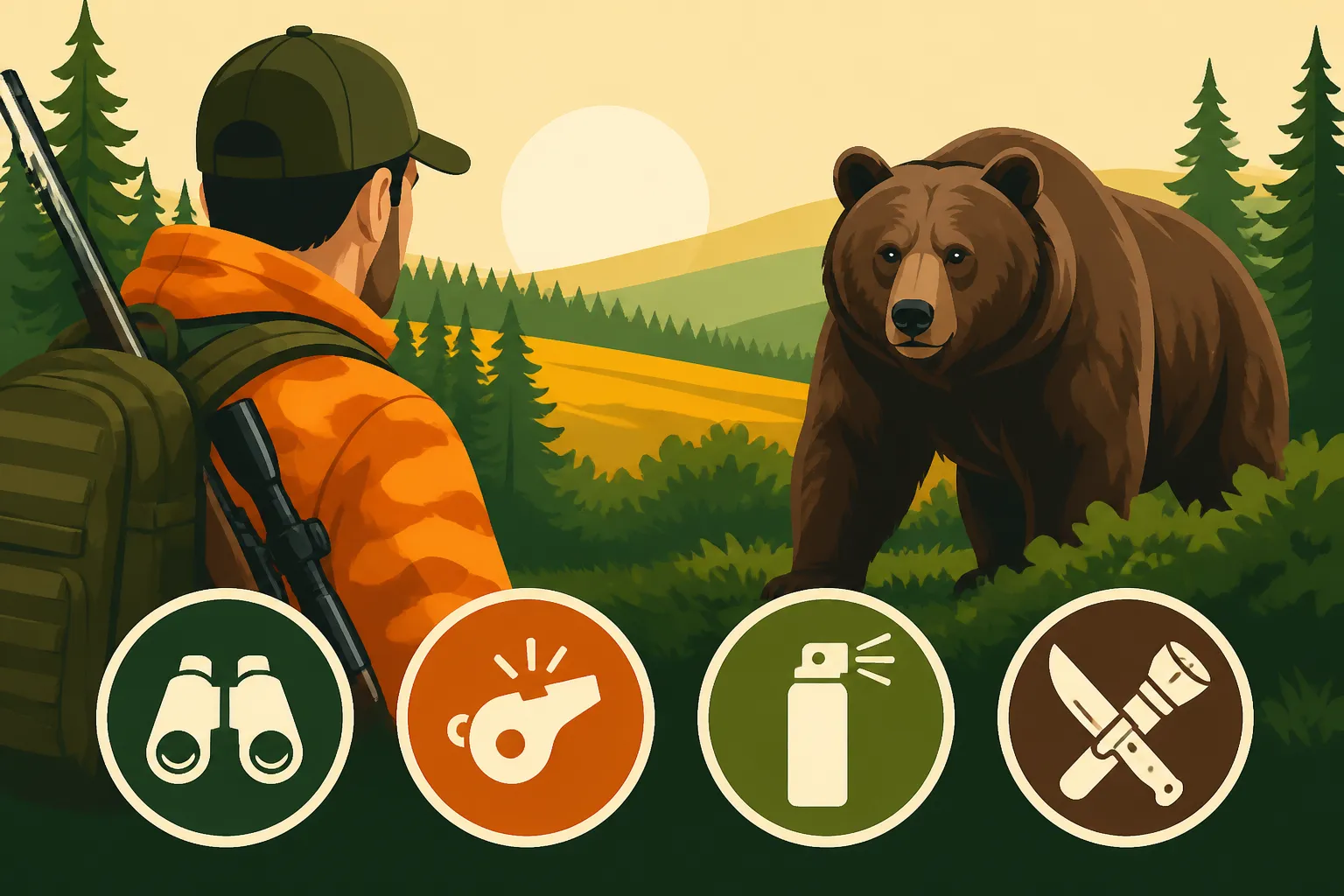
Bear spray is, without a doubt, one of the most effective non-lethal deterrents against aggressive bears. It's a powerful capsaicin-based aerosol that creates an irritating cloud, disorienting and deterring a charging bear. However, it's useless if you don't carry it correctly and know how to use it. It should be on your hip or chest rig, easily accessible with either hand, not buried in your backpack. Practice drawing and deploying a practice canister (or at least mimicking the motion) so it's second nature under stress. Familiarize yourself with the range and spray pattern. It's an essential item, whether you're deer hunting, or specifically Black Bear Hunting in Saskatchewan. Ensure your canister isn't expired, and check its pressure regularly.
Communication Devices and Navigation Tools
In remote Saskatchewan, cell service is often non-existent, especially in the northern reaches or deep within forest fringe areas. A satellite messenger or satellite phone can be a literal lifeline in an emergency, allowing you to call for help even without cell signal. Devices like the Garmin inReach or Zoleo are popular choices, offering two-way text communication and an SOS function. Always carry a reliable GPS unit (and know how to use it!), along with a physical map and compass as backup. A dead battery won't leave you stranded if you have traditional navigation skills. These tools are not just for bear safety, but for general wilderness preparedness, helping you avoid getting disoriented which can exacerbate any other stressful situation.
Food Storage and Scent Management
Food and strong scents are primary attractants for bears. This is where meticulous camp management comes into play. Never store food inside your tent. Use bear-resistant containers, hang food from a tree limb at least 10-12 feet high and 4 feet from the trunk, or store it in your vehicle if allowed and secure. This goes for anything with a scent: toiletries, garbage, even unwashed cooking pots. When field dressing game, especially if you've harvested an animal, plan to do it away from your camp or trail. Double-bag offal and pack it out or disperse it far from high-traffic areas. The less appealing your area is to a bear's incredible sense of smell, the lower your risk of an unwanted visitor. Outfitters found on platforms like BookYourHunt often have strict camp rules for food and scent management, which are excellent examples to follow even on DIY hunts.
Bear Deterrents Comparison
Here's a quick look at common bear deterrents and their general applications in a hunting scenario:
| Deterrent | Primary Use | Pros | Cons | Notes |
|---|---|---|---|---|
| Bear Spray | Non-lethal deterrence at close range | Highly effective, no permanent harm, lightweight | Limited range, wind sensitive, practice needed | Always accessible, check expiration, use only for aggressive bears |
| Firearm | Last resort self-defense | Potential for lethal defense (if skilled) | Requires skill, accuracy, legal to carry, can wound | Ethical considerations, only for immediate, life-threatening danger |
| Noise Makers | Prevention/warning | Simple, can alert bears to your presence | Not effective on aggressive bears, can startle | Whistles, bells, shouting; best for prevention |
| Air Horn | Warning/startling | Loud, can be very startling to bears | Limited uses, bulky, can be surprising to you too | Good for startling bears at a distance |
Strategies for Preventing Encounters
The best bear encounter is the one that never happens. Proactive measures and smart habits in the backcountry are your strongest allies. This isn't just about bears; these strategies contribute to overall wildlife safety.
Making Noise and Traveling Smart
One of the simplest and most effective deterrents is making noise. Bears, for the most part, want to avoid you. By making your presence known, you give them a chance to move away before you stumble upon them. Talk loudly, sing, or carry a small bell on your pack (though this can get annoying for some, a whistle for bursts of sound is good). This is especially critical when moving through dense bush, along creek banks, or in areas with poor visibility, such as during Spring Bear Hunting Saskatchewan's Cutlines where visibility can be limited. If you're walking into the wind, sound travels behind you, making it even more important to be vocal. Traveling in groups also increases noise and makes you appear larger, further reducing the likelihood of a surprise encounter.
Reading the Landscape and Wildlife Sign
A seasoned hunter constantly reads the land for signs of game, and this skill is invaluable for wildlife safety too. Look for fresh bear scat, tracks in mud or snow, rubbed trees (bears often rub their backs on trees to mark territory or scratch themselves), or overturned rocks and logs where they've been foraging. If you see signs that a bear has been in the immediate area recently, increase your vigilance. Similarly, fresh moose tracks or heavily browsed willows might indicate a cow and calf are nearby. Using scouting apps like those offered by GoHunt can help you identify dense cover or food sources where animals might congregate, allowing you to plan your approach accordingly and potentially avoid high-traffic areas. If you're on an active Hunting Saskatchewan's Boreal Forest Fringe expedition, these signs are commonplace, so knowing what's fresh and what's old is key.
Camp and Harvest Site Management
Your camp is your sanctuary, but it can quickly become an attractant if not managed correctly. As mentioned, food storage is paramount. But also consider waste management: all garbage, no matter how small, should be stored securely or packed out. Burn nothing but paper products in a campfire, as food scraps and plastic can leave enticing odors. When you make a harvest, particularly a big game animal like a deer or moose, think about how you will process it. If possible, field dress the animal away from your camp and away from major trails. The scent of blood can draw predators. If you need to leave meat overnight, hang it securely. When bringing meat back to camp, ensure it's in sealed bags and stored safely.
What to Do During an Encounter
Despite all precautions, encounters can happen. The key is to remain calm, assess the situation, and react appropriately based on the animal's behavior. Panic is your enemy.
Responding to Black Bear Encounters
First, try to identify if the bear is aware of you. If not, and you can safely and quietly retreat, do so. If the bear sees you:
- Stand your ground: Do not run. Running can trigger a chase response.
- Make yourself look big: Raise your arms, open your jacket, stand on a log if possible.
- Make noise: Shout, clap your hands, use an air horn or whistle. Assert your presence.
- Speak in a calm, firm voice: Let the bear know you're human.
- Back away slowly: Avoid direct eye contact. Give the bear an escape route.
- If the bear charges: Many charges are bluff charges. Stand your ground, continue making noise. If it makes contact, use your bear spray when it is within effective range (typically 15-30 feet, check your canister). Spray in short bursts, aiming for the bear's face.
- If the bear attacks (and it's a predatory attack, rare for black bears): Fight back aggressively with anything you have. Aim for the face and eyes.
The best defense is often a good offense in these rare, worst-case scenarios. Having a Winter Truck Kit for a Saskatchewan Hunt can prepare you for many eventualities, but bear spray and knowing how to use it is for the immediate, critical moments.
Navigating Moose Encounters
Moose are not typically aggressive, but they are incredibly powerful and territorial, especially during the rut or when cows have calves. Unlike bears, moose are more likely to stomp or kick than bite.
- Give them space: If you see a moose, particularly a cow with a calf or a bull during the rut, give it a very wide berth. Change your route if necessary.
- Watch their body language: Ears laid back, hair standing up on the neck, or head down can indicate agitation.
- Do not approach: Never try to get closer for a better photo or view.
- If charged: Running from a moose is generally futile due to their size and speed. If a moose charges, try to put a large object like a tree or vehicle between you and the animal. If knocked down, curl into a ball to protect your head and vital organs. They are more likely to stop once they perceive the threat is gone.
Dealing with Wolf Encounters
Encounters with wolves are generally rare, as they are naturally wary of humans. Most often, you'll hear them before you see them, or you'll find their tracks.
- Stay calm: Do not run.
- Stand tall and make yourself appear large: As with bears, raise your arms.
- Make noise: Shout firmly.
- Maintain eye contact: Unlike bears, direct eye contact can be an effective deterrent for wolves.
- Back away slowly: Do not turn your back.
- If aggressive: While extremely rare, if a wolf approaches aggressively, fight back with anything you have.
These animals play a vital role in Saskatchewan's ecosystem, and understanding their natural caution is important. If you find yourself needing to get out of a sticky situation, whether it's an animal encounter or a vehicle issue, remember the advice in What to Do If You Get Stuck in the Bush.
Remember, the goal of wildlife safety isn't to instill fear, but to foster respect and preparedness. By understanding the animals you share the landscape with, carrying the right gear, and knowing how to react, you can ensure your hunting trips in Saskatchewan are not only successful but also safe and memorable.
Disclaimer
This article is for general informational purposes only and does not constitute professional advice. Laws, prices and regulations vary by location and change over time. Consult a qualified professional for guidance on your specific situation.