Scouting a Saskatchewan Wildlife Management Zone
That familiar feeling of staring at a map, or perhaps a screen showing a vast expanse of a Saskatchewan Wildlife Management Zone (WMZ), can be overwhelming. You know there are deer, moose, or birds out there, but finding them in such immense and varied landscape feels like a monumental task, especially when you're short on time or unfamiliar with the specific area. This guide is all about cutting through that uncertainty, offering practical, in-depth strategies for scouting a Saskatchewan WMZ effectively, blending both modern digital tools and tried-and-true field methods to boost your success.
Understanding Saskatchewan's Wildlife Management Zones (WMZs)
Before you even think about spotting a deer track or setting up a trail camera, you need a solid grasp of what Saskatchewan's Wildlife Management Zones are all about. They're not just arbitrary lines on a map; they're the foundational framework for how hunting is managed across the province, and understanding them is the first critical step in any successful scouting mission.
What Exactly is a WMZ and Why They Matter
A Wildlife Management Zone (WMZ) in Saskatchewan is essentially a geographical area defined by the Ministry of Environment for the purpose of managing wildlife populations and hunting opportunities. Think of them as large, distinct ecosystems or management units. Each WMZ has specific regulations regarding species, season dates, bag limits, and often even hunting methods. For example, what's legal in WMZ 37 might be very different from WMZ 7. This is done to tailor management strategies to local wildlife populations, habitat conditions, and human pressures. For a hunter, this means your choice of WMZ dictates what you can hunt and when. It's not uncommon for a WMZ to be vast, encompassing a mosaic of private farmland, Crown land, and sometimes even smaller protected areas. Ignoring these boundaries or regulations can lead to a quickly ruined hunt, or worse, legal trouble. They matter immensely because they literally define the playing field for your hunt, influencing everything from the likelihood of drawing a tag to the density of the game you're pursuing.
Deciphering WMZ Maps and Boundaries
Navigating WMZ maps can initially feel like trying to solve a complex puzzle, but with a bit of practice, they become invaluable. The provincial hunting guide provides the official maps, which are crucial for understanding the larger picture. These maps often show not just the WMZ lines but also major roads, towns, and sometimes even significant rivers or lakes. However, to truly decipher boundaries on the ground, you'll need more detailed tools. Modern mapping applications are absolutely essential here. These tools allow you to overlay WMZ boundaries onto satellite imagery and topographic maps, giving you a precise understanding of where one zone ends and another begins, right down to specific quarter sections or fence lines. It's not enough to know you're "in WMZ 42" generally; you need to know if that willow bluffy pocket you're eyeing actually falls within the correct legal zone, especially if multiple WMZs converge in an area. These digital overlays are also vital for determining different land ownership types, which can shift dramatically even within a single WMZ, dictating where you can freely hunt versus where you need to obtain permission.
Common Misconceptions About WMZ Rules
One of the biggest pitfalls for hunters is operating under incorrect assumptions about WMZ rules. A common misconception is that if you've hunted a WMZ for deer, the same rules apply to all other species or subsequent seasons. This is simply not true. While a WMZ defines an area, specific regulations can vary dramatically by species, method (archery vs. rifle), and even antler restrictions (e.g., antlered vs. antlerless draws). For instance, a WMZ might have an open season for antlered whitetail bucks but require a draw tag for antlerless deer, or perhaps have entirely different seasons and limits for moose or elk. Another frequent misunderstanding revolves around land access within WMZs. Just because an area is part of a WMZ doesn't automatically mean it's public land. Many WMZs are heavily comprised of private land, requiring explicit landowner permission before you can step foot on it with a firearm. Hunters often assume that if no "posted" signs are visible, access is implied, but Saskatchewan law requires permission regardless of signage on private property. Always double-check the current Saskatchewan hunting regulations guide, available online through the Ministry of Environment, as rules can change from year to year. It's your responsibility as a hunter to know the specific regulations for every WMZ and species you intend to pursue.
Pre-Season Digital Scouting: Your Armchair Advantage
Long before your boots hit the dirt, or more likely, the frosty stubble fields or snowy bush trails of a Saskatchewan WMZ, a tremendous amount of effective scouting can be done from the comfort of your home. This digital deep dive is your armchair advantage, allowing you to narrow down vast areas, identify promising habitat, and create a targeted plan for your on-the-ground efforts.
Leveraging Satellite Imagery and Topographic Maps
The power of modern satellite imagery is truly transformative for hunters. Gone are the days of relying solely on paper maps that might be years out of date. High-resolution satellite views allow you to visually dissect a WMZ, identifying potential game-holding features that would be impossible to see otherwise. Look for changes in vegetation — where dense bush meets open fields, how a willow run snakes through a section, or where a deep coulee cuts across the prairie. These are natural travel corridors, bedding areas, and food sources.
When you're Scouting With Satellite Imagery in Saskatchewan, pay close attention to the transitions:
- Field Edges: Where standing crops like canola, peas, or lentils meet bluffs of aspen or willow. These are prime feeding and bedding transition zones for deer and moose.
- Water Sources: Sloughs, dugouts, creek beds, and river bends are crucial, especially in drier years. Animals will gravitate towards reliable water.
- Topography: Use contour lines on topographic maps to identify ridges, draws, and high points that animals might use for travel or bedding, particularly for species like mule deer that utilize elevation. A slight elevation change can offer a thermal advantage or better visibility for bedding animals.
Zoom in and out, mentally walking the terrain. Imagine yourself as a deer, trying to find cover, food, and safe travel routes. This virtual reconnaissance will help you mark potential stand locations, access points, and areas to investigate further during your physical scouting trips.
Utilizing Online Tools like GoHunt and HuntStand
Beyond raw satellite imagery, specialized hunting apps and online platforms have revolutionized digital scouting. Tools like GoHunt and HuntStand offer an unparalleled level of detail and functionality, making them indispensable for breaking down a Saskatchewan WMZ. These platforms often combine multiple data layers, giving you a comprehensive view of the landscape.
Here's how they provide an edge:
- Property Ownership Overlays: This is arguably one of the most critical features for hunting in a province with significant private land like Saskatchewan. These overlays instantly show you property lines and often landowner names, saving you countless hours trying to determine who owns what. This knowledge is paramount for Knocking on Doors in Saskatchewan Farm Country to secure permission.
- WMZ Boundaries: As discussed earlier, these apps precisely delineate WMZ boundaries, ensuring you are always hunting legally within your chosen zone and avoiding accidental trespass into an adjacent zone with different regulations.
- Habitat Layers: Many apps include layers that highlight specific habitat types, such as forest, wetlands, cultivated land, or native grassland. This can help you quickly pinpoint ideal areas for species like elk in the forest fringe or sharp-tailed grouse on the prairie.
- Weather and Wind Forecasts: While not directly scouting, integrated weather tools can help you plan the optimal time for an in-person scouting trip or even predict game movement patterns based on upcoming conditions.
- Waypoints and Tracking: You can drop digital pins (waypoints) to mark potential bedding areas, rub lines, scrapes, water sources, and access routes. Many platforms also allow you to record your own tracks, helping you navigate unfamiliar territory and review your scouting efforts later.
When using a platform like GoHunt, take the time to explore all its features. It’s an investment in your hunt planning that pays dividends by maximizing your efficiency and minimizing wasted time on unproductive ground.
Identifying Key Habitat Features from Afar
Digital scouting isn't just about pretty pictures; it's about interpreting what those images tell you about game habitat and movement. Learning to identify key features from a bird's-eye view is a skill that develops with practice and becomes incredibly valuable.
Consider these elements:
- Edge Cover: Deer and moose love edges – the interface between two different habitat types. Look for where a dense bush line meets a cultivated field, or where a timber stand abruptly ends at a marsh. These edges provide security cover while allowing animals access to food.
- Funnels and Bottlenecks: Identify natural funnels or pinch points in the landscape. These could be narrow strips of cover between open fields, a small timber pocket in a large pasture, or a specific crossing point on a creek or river. Animals will naturally gravitate towards these constricted areas, making them prime spots for intercepting game.
- Bedding Areas: These are often dense, thick cover areas that offer security and protection from the elements. For whitetails, this might be a thick willow bluff, a patch of dense conifers, or even a standing cornfield. For mule deer, it could be a secluded coulee bottom or a brushy draw. Learn to recognize these dark, dense patches on satellite imagery.
- Food Sources: Beyond actively cultivated fields, look for natural food sources. In the forest fringe, this might be areas with berry bushes, poplar, or willow regeneration. On the prairie, it could be pockets of native grasses or browse. During winter, standing crops become even more critical food sources.
By understanding how animals utilize different habitat features, you can intelligently mark numerous potential spots on your digital map, creating a robust plan for your ground-level reconnaissance.
Boots-on-the-Ground Scouting Strategies
While digital scouting provides an incredible advantage, there's no substitute for putting boots on the ground. Saskatchewan's vastness and varied terrain demand firsthand observation to confirm your digital findings, uncover fresh sign, and truly understand animal movements in a specific WMZ.
Early Fall Scouting: The Pre-Rut Reconnaissance
The period leading up to the main hunting seasons in early fall, typically late August through September, offers a golden opportunity for reconnaissance. This is often when animals are still relatively predictable in their summer patterns, but also when subtle changes hint at upcoming rut activity. For many, this aligns with When Saskatchewan's Archery Season Opens, making it a perfect time to combine scouting with actual hunting.
Here’s what to focus on:
- Food-to-Bedding Routes: Deer and elk will be regularly moving between reliable food sources (ripe fields, native browse) and their bedding areas. Look for well-worn trails, fresh tracks, and droppings along these routes. These trails are often most visible at this time of year before heavy leaf fall or significant snow cover.
- Water Sources: In early fall, especially if it's been a dry summer, water sources are still critical. Identify active dugouts, sloughs, and creek bottoms that show signs of consistent animal use. This could be tracks in the mud, trampled vegetation, or even fresh scat nearby.
- Staging Areas: Deer and moose will often "stage" in thicker cover near field edges before venturing out into the open to feed at dusk. Scout for these pockets of thick brush that offer security cover, especially near standing crops or recently harvested fields.
- Early Rubs and Scrapes: While the full rut is still a ways off, dominant bucks might start making a few early rubs or scrapes to assert dominance. Finding these early signs, even sparsely, can indicate the presence of a mature buck in the area. Focus on Reading Whitetail Sign in Saskatchewan Bluffs or along the edges of larger bush blocks.
Remember to be stealthy. Wear appropriate scent control and move quietly, as you don't want to alert potential game to your presence before the season even truly begins.
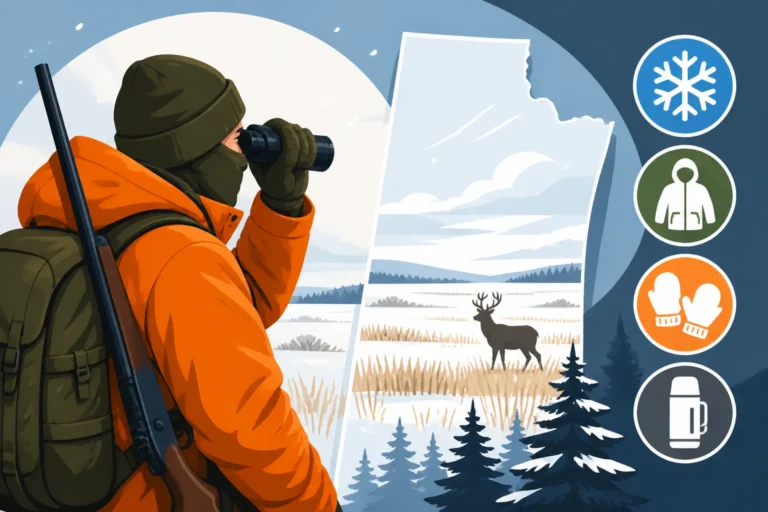
Reading Sign After Fresh Snow
There's something magical about a fresh blanket of snow for a hunter, transforming the landscape into an open book. A new snowfall can reveal secrets about animal movement that are otherwise hidden. This is especially productive during the later parts of the season, extending into Hunting the December Late Season Cold.
When tracking or just walking after a fresh snow, pay attention to:
- Tracks, Tracks, and More Tracks: This is the most obvious and arguably the most important sign. Fresh tracks tell you not only what animals are present but also their direction of travel, their size, and how recently they passed through. Look for variations in track size to differentiate between mature bucks and does, or between bull and cow moose.
- Trail Networks: Observe how animals are using the landscape. Do their tracks lead from a particular bluff to a specific field? Are they funneling through a narrow willow run to cross a frozen slough? Snow helps to highlight these consistent travel corridors that might be invisible on bare ground.
- Bedding Areas in Snow: Animals will often leave depressions in the snow where they've bedded down. These can tell you where they feel secure. Look for areas on lee sides of ridges or in dense thermal cover. This is especially helpful for understanding Where Saskatchewan Whitetails Bed in Snow. The size and depth of the bed can give you a clue about the size of the animal.
- Browsing and Feeding Sign: Fresh snow will often reveal where animals have been feeding. Nipped branches, disturbed stubble fields, or excavated ground where they've dug for forage are all indicators of active feeding areas. Pay attention to specific plant types that have been browsed.
Scouting after a fresh snow can be cold work, so be prepared with proper winter gear. It's also an excellent time to cover ground quickly and efficiently, as the evidence of animal activity is laid bare.
Knocking on Doors in Saskatchewan Farm Country
In Saskatchewan, a significant portion of hunting land is privately owned, particularly in the prime agricultural and aspen parkland regions. Therefore, Knocking on Doors in Saskatchewan Farm Country is not just a polite gesture; it's often a legal necessity and one of the most effective scouting strategies. Building relationships with landowners can unlock access to incredible hunting opportunities that are otherwise completely off-limits.
Here's how to approach it effectively:
- Timing is Key: Don't show up unannounced during harvest season when farmers are working around the clock. Instead, choose a time when they are less busy, perhaps a weekend afternoon or an evening well before the season. Respect their time.
- Be Prepared and Polite: Dress neatly, present yourself respectfully, and have a clear explanation of what you're asking for. Have your hunting license and ID readily available. Clearly state which WMZ you are interested in and what species you hope to hunt.
- Offer to Help: Farmers are often busy. Offering a small gesture of goodwill, such as helping with a chore or offering to keep an eye on their property for anything suspicious, can go a long way in building trust.
- Respect Their Rules: If a landowner grants you permission, adhere strictly to any rules they set. This might include specific access points, areas off-limits, or restrictions on vehicle use. Always clean up after yourself and close gates.
- Follow Up: A thank you note or a small gift (like some of your processed game meat, if they're agreeable) at the end of the season can cement a positive relationship for future years. This is about building long-term goodwill, not just a one-time permit.
Remember, a "no" is just a "no," and it's their right. Move on politely and try another landowner. The relationships you forge through this effort can be your most valuable scouting asset.
Seasonal Considerations for Effective Scouting
Saskatchewan's hunting seasons span several months, from the crisp days of early fall archery to the deep cold of late November rifle season. Game animals' patterns and habitat use change significantly with the seasons, meaning your scouting approach needs to adapt accordingly to be truly effective within a WMZ.
Scouting for Archery Season Opportunities
Archery season, often starting in early September, presents a unique scouting challenge and opportunity. Animals are still largely in their summer patterns, but the first hints of the rut are beginning to stir.
Key scouting considerations for archery:
- Predictable Patterns: Early in the archery season, animals often have predictable routines, especially regarding feeding and bedding. They might still be hitting specific crops like alfalfa or pea fields with regularity. Scout for these patterns and focus on intercepting animals along their travel corridors.
- Cover is Critical: With leaves still on the trees and dense vegetation, deer and moose have ample cover. Focus your scouting efforts on identifying the thickest bedding areas near food sources. Blinds and stands should be set up with maximum concealment in mind. Look for natural funnels or pinch points that force animals into close range within the denser cover.
- Water Sources: Depending on the year's rainfall, water can be a significant draw, especially early in the season when temperatures can still be warm. Scout for well-used trails leading to dugouts or natural springs.
- Early Bachelor Groups: For deer, you might still find bachelor groups of bucks together. While they haven't broken up for the rut yet, identifying these groups can give you insight into the quality of bucks in the area. Focus on scouting areas like Hunting Saskatchewan's September Archery Opener for these patterns.
Archery season scouting requires patience and a keen eye for subtle sign, as disturbance can easily push animals out of an area.
Adapting Scouting for the Rifle Rut
The rifle season, particularly the peak of the rut in early to mid-November, demands a completely different scouting mindset. Animal behavior shifts dramatically, becoming less about predictable feeding patterns and more about breeding activity. This period often coincides with prime Rifle Hunting Saskatchewan's Whitetail Rut.
Scouting tactics during the rifle rut should focus on:
- Rut Sign Overdrive: Look for fresh, aggressive rubs on larger trees and numerous scrapes along field edges and within the bush. Bucks are actively marking their territory and searching for does. These signs are indicators of heavy buck activity.
- Travel Corridors for Does: Bucks will be constantly cruising for does. Identify areas where does congregate or travel frequently, such as food plots, bedding areas, or traditional crossing points. Bucks will eventually show up here.
- Funnel Points and Choke Points: The rut makes animals move more broadly, so identifying funnels that constrict their movement becomes even more critical. This could be a narrow bush strip connecting two larger blocks of cover, a fence line, or a river crossing.
- Calling and Rattling Locations: During the rut, scouting isn't just about finding animals; it's about finding the best places to call them in. Look for locations that offer good visibility and acoustics, allowing your calls to carry, while also providing concealment for yourself. Open parkland areas or the edges of bluffs are excellent for Rattling Volume in Open Parkland.
- Stand-Sitting Potential: With bucks on the move, finding a stand location that overlooks a combination of food, cover, and travel routes can be highly effective. Consider spots like Hunting a Shelterbelt Between Two Fields or a bush edge overlooking a large field.
Scouting during the rifle rut means looking for evidence of intense buck activity and understanding how bucks will move to find receptive does, often covering much more ground than earlier in the season.
Late Season Scouting: Finding Wintering Areas
As December brings colder temperatures and deeper snow, late-season scouting shifts focus to identifying wintering habitat. Animals, particularly deer and moose, will consolidate into areas that offer critical thermal cover and accessible food sources. This aligns with Hunting the December Late Season Cold and requires understanding how animals adapt to harsh conditions.
Key areas to scout for late season:
- Thermal Cover: Dense stands of conifers (spruce, pine, fir) offer the best thermal protection from wind and cold. Look for these darker green patches on satellite imagery and confirm their density on the ground. South-facing slopes that catch more sun can also be important.
- Food Availability: While summer and fall foods are largely gone, animals will seek out remaining standing crops (especially corn or some types of canola), browse (willow, aspen, dogwood), or hay bales left out for livestock. Focus on areas like Hunting a Field of Standing Corn or the edges of dense bush next to agricultural fields.
- South-Facing Slopes: These areas will often melt off faster, exposing more forage, and provide warmer bedding areas than north-facing aspects.
- Sheltered Valleys and Coulees: For mule deer and sometimes whitetails, deep coulees and river valleys offer protection from brutal prairie winds and can concentrate animals. Hunting a Prairie Coulee Bottom can be highly productive in the late season.
- Limited Travel Routes: With deep snow, animals will conserve energy by using the path of least resistance. Look for game trails packed down in the snow, pipeline rights-of-way, old logging roads, or frozen creek beds as travel routes.
Late season scouting is about understanding survival. The tougher the conditions, the more animals will concentrate in prime wintering habitat, making these areas highly productive for focused scouting efforts.
Species-Specific Scouting Approaches
While some scouting principles are universal, tailoring your approach to the specific game animal you're pursuing in a Saskatchewan WMZ is crucial for maximizing your chances. Each species has distinct habitat preferences, movement patterns, and signs that experienced hunters learn to read.
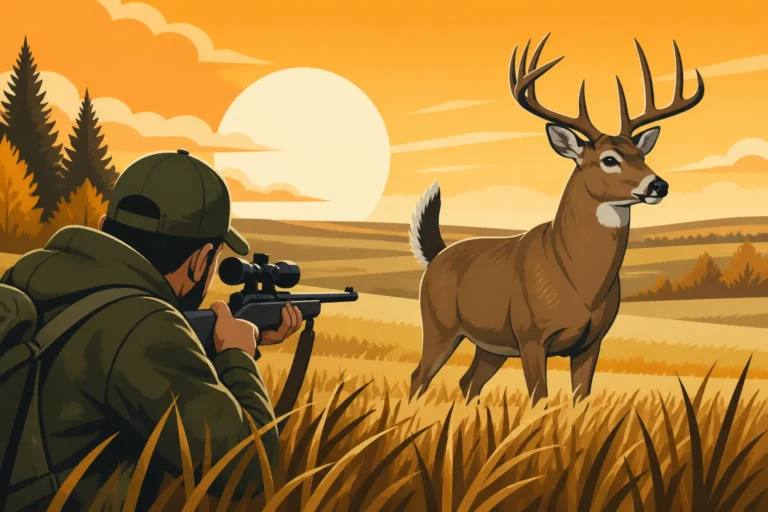
Whitetail Deer: Cover, Food, and Water
Saskatchewan's whitetail deer are incredibly adaptable, thriving in everything from the agricultural fringe to the deep boreal forest. However, their core needs remain consistent: thick cover for security, abundant food sources, and reliable water.
When scouting for whitetails:
- Focus on Edges: Whitetails are creatures of the edge. Look for where a dense bush line meets a cultivated field, where an aspen bluff borders a pasture, or where a willow thicket wraps around a slough. These transition zones provide quick access to food while offering immediate security. Areas like Hunting a Slough Edge for Whitetails are classic whitetail magnets.
- Identify Bedding Areas: Whitetails prefer thick cover for bedding, offering concealment and protection from predators and elements. This could be a dense stand of young aspens, a willow marsh, a thick conifer patch, or even tall standing crops. Look for well-used trails leading into these areas.
- Locate Food Sources: Depending on the season, food sources will vary. In early fall, it might be pea, lentil, or alfalfa fields. Later, standing corn or oats become crucial. Throughout the year, natural browse like willow, aspen, and various forbs are important. Pay attention to fresh browsing sign.
- Water Availability: While whitetails can get much of their water from forage, readily accessible water sources like dugouts, small creeks, and sloughs will concentrate them, especially in dry conditions or during periods of heavy feeding.
- Travel Corridors: Look for trails connecting these vital components (bedding, food, water). These are often worn paths, especially visible on bare ground or after a fresh snow. Funnels, fence lines, and creek bottoms often serve as natural travel corridors. When Reading Whitetail Sign in Saskatchewan Bluffs, pay attention to the intensity of rubs and scrapes, which indicate mature buck activity.
Mule Deer: Prairie Coulees and Open Country
Mule deer in Saskatchewan are primarily found in the province's southern prairie regions, where they navigate a landscape of rolling hills, open grasslands, and crucial coulee systems. Their scouting requires a different approach than their whitetail cousins.
For mule deer, focus your scouting on:
- Coulee Systems: These are the lifeblood of prairie mule deer. Deep, brushy coulees provide bedding, thermal cover, and travel routes across vast open landscapes. Hunting Mule Deer in Prairie Coulees is often the most productive strategy. Scout the sides, bottoms, and connecting draws of these coulees for fresh tracks, droppings, and browse.
- Bluffs and Breaks: Beyond the deep coulees, look for smaller bluffs, steep breaks, or isolated patches of cover within the open prairie. Mule deer will often use these for bedding during the day, especially if they offer good visibility of their surroundings.
- Water Sources: While mule deer are incredibly resilient, they still need water. Dugouts, natural springs within coulees, or stock ponds are key attractants, especially in arid areas.
- Feeding Areas: Mule deer are browsers, but will also graze. Look for areas with a mix of native grasses, forbs, and sagebrush. Crop fields bordering coulees can also draw them in for feeding, especially during the later seasons.
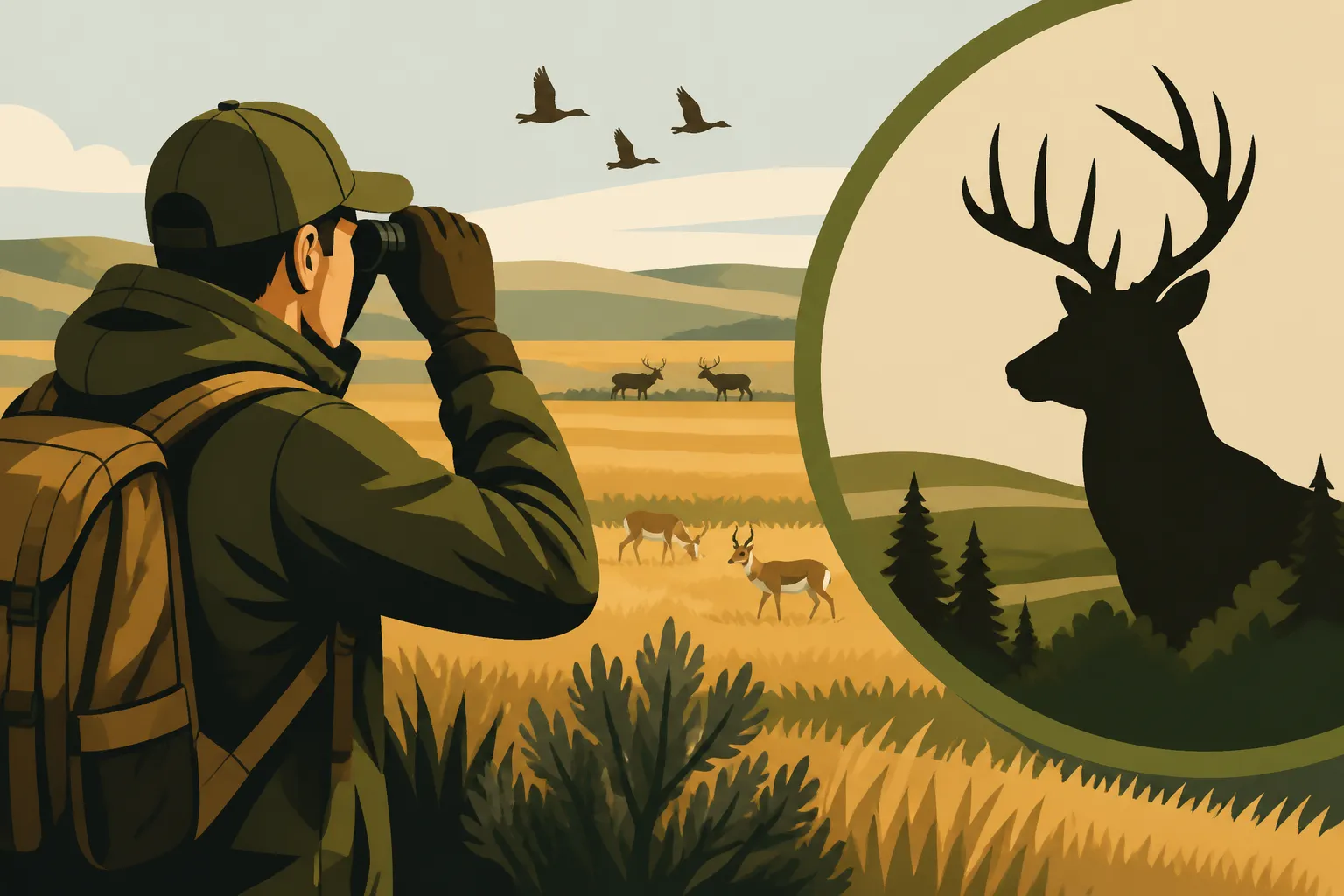
- Observation Points: Given their tendency to bed on high ground or in areas with good visibility, scouting for mule deer often involves extensive glassing from elevated positions. Identify prominent ridges or hills that offer panoramic views of coulee systems and open plains. This is paramount for Glassing a Saskatchewan Coulee for Mule Deer.
Scouting mule deer often involves covering large expanses of territory, primarily using optics to spot animals or identify key habitat features from a distance.
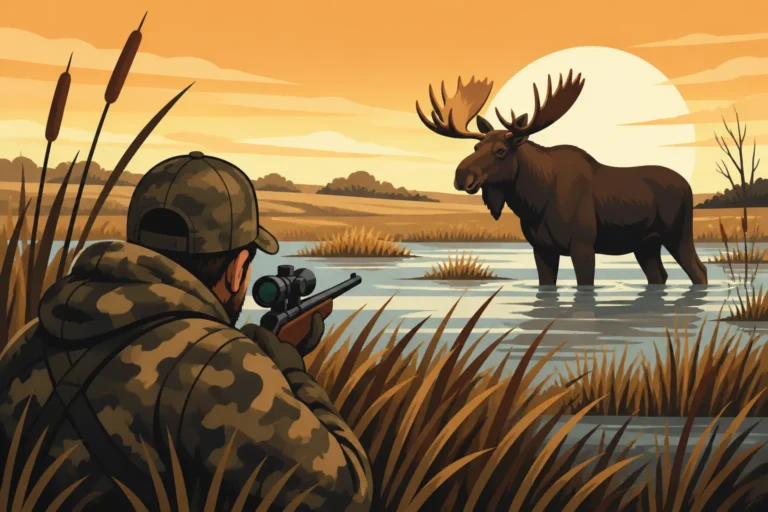
Moose and Elk: Forest Fringe and Farmland Pockets
Moose and elk, while different species, often share similar habitat preferences in Saskatchewan's mixed forest fringe and agricultural zones. Both require substantial cover, ample forage, and access to water, but the scale of their needs is often larger than deer.
When scouting for moose and elk:
- Forest Fringe is Key: This transitional zone where the boreal forest meets agriculture is prime habitat. Elk and moose will utilize the dense forest for bedding and security, then move into adjacent fields to feed, especially at dawn and dusk. Areas like Hunting the Forest Fringe for Big Bucks (or big bulls in this case!) are highly productive.
- Identifying Food Sources: Moose are primarily browsers, favoring willow, aspen, and various aquatic vegetation. Look for signs of heavy browsing in low-lying areas or along beaver ponds. Elk are grazers and browsers, often targeting agricultural fields (oats, barley, hay) or lush native grasslands.
- Water and Wet Areas: Moose especially are drawn to wetlands, bogs, and areas with standing water, particularly in warmer months. Elk will also utilize these areas, but less exclusively. Look for heavily used trails leading into and out of these areas.
- Travel Corridors: Both species are large and need established travel routes. Old logging roads, cutlines, pipeline rights-of-way, and wide game trails through dense bush are key. These routes provide easier passage and can be excellent ambush points.
- Rub and Walloping Areas: During the rut, bull moose will leave massive rubs on trees, stripping bark high up the trunk. Bull elk will create wallows, muddy depressions where they roll to spread scent. Finding these signs indicates significant rutting activity in the area. Calling a Bull Moose in the Rut or Bugling Elk on a Farm Edge are strategies that rely heavily on identifying these active areas.
- Damage Areas: Unfortunately, elk and moose can cause significant crop damage on farmland. Identifying areas where damage has occurred can lead you to hot spots where animals are consistently feeding. Permission from landowners in these areas might be easier to obtain.
Scouting for these larger animals often involves covering more ground, either on foot or with an ATV where legal, and looking for larger-scale sign and habitat features.
| Scouting Method | Pros | Cons | Best For |
|---|---|---|---|
| Digital/Remote | Time-efficient, covers large areas, year-round access, identifies ownership, pinpoints key features (GoHunt, HuntStand) | Lacks real-time info, can miss subtle ground sign, no scent/sound data, internet dependency | Initial area breakdown, finding Crown land, identifying access points, pre-season planning, landowner research |
| Boots-on-the-Ground | Confirms digital findings, reveals fresh sign (tracks, rubs, scrapes), provides real-time animal presence, allows scent/sound observation, builds landowner relationships | Time-consuming, physically demanding, limited area coverage, seasonal weather challenges | Confirming bedding/feeding areas, finding fresh rut sign, assessing pressure, validating trails, securing permission |
Disclaimer
The information provided in this guide is for general educational purposes only and is not a substitute for official regulations. Hunting regulations in Saskatchewan can change. Always consult the current Saskatchewan Hunters' and Trappers' Guide published by the Ministry of Environment before heading afield. It is the hunter's responsibility to understand and comply with all provincial and federal hunting laws.