Where Saskatchewan’s Elk Herds Winter
It can be incredibly frustrating to spend countless hours scouting for elk during the hunting season, only for them to seemingly vanish come winter. Their behavior changes dramatically, and understanding where Saskatchewan's elk herds winter is key to unlocking consistent success and even just knowing where they are for next season. This comprehensive guide will break down the specific wintering patterns and habitats of elk across our diverse Saskatchewan landscape, helping you pinpoint their locations when the snow flies and the temperatures drop.
The Seasonal Shift: Why Elk Winter Differently
Elk are incredibly adaptable creatures, but winter in Saskatchewan presents unique challenges that force them to alter their behavior and movements drastically. It’s not just about finding food; it’s about survival in the face of brutal cold, deep snow, and limited resources. Understanding this fundamental shift is the first step to finding them.
Prioritizing Food and Shelter in the Cold
As soon as the leaves start to fall and the first frosts arrive, elk begin to transition from their more scattered summer ranges into tighter, more concentrated wintering areas. This isn't a random move; it's a strategic one driven by two primary needs: caloric intake and protection from the elements. Summer provides an abundance of varied forage, allowing elk to roam widely. But come winter, that bounty disappears under a blanket of snow. Elk need to find areas where palatable browse—twigs, bark, evergreen foliage, and persistent grasses—is still accessible, or where human-provided food sources offer an easier meal.
Think about a typical Saskatchewan winter storm. Winds howl, and temperatures plummet well below freezing. Elk, especially cows and calves, simply cannot afford to burn excessive energy battling the elements or breaking trail through deep drifts to find sparse food. They seek out thermal cover: dense stands of timber, thick willow bottoms, or steep, south-facing slopes that catch more sun and offer a reprieve from the biting north winds. These sheltered spots help them conserve precious energy, allowing them to allocate more calories to simply staying warm and digesting whatever food they can find. It's a delicate balance, and their choice of wintering grounds is all about optimizing this equation.
The Impact of Snow Depth on Elk Movement
Snow depth is arguably the single most critical factor dictating where Saskatchewan's elk herds winter. A light snow year might see them spread out, accessing a wider variety of habitats, including more open aspen parkland bluffs or even stubble fields. However, a winter with heavy, persistent snow will funnel elk into very specific, often predictable, locations. Deep snow not only covers their food sources, making it harder to dig through, but it also physically impedes their movement. Every step through deep snow expends significant energy, energy they can ill afford to lose.
When the snow gets deep—say, over two feet—elk will instinctively move to areas with less snow accumulation, or where the snow is crustier and can support their weight better, or where they don't have to move much at all. This often means they gravitate towards river valleys, where wind scours certain slopes bare or deposits snow in specific patterns, or into dense conifer stands where the canopy intercepts some of the snowfall. You'll often find them along well-used trails they've packed down, creating their own "elk highways" between bedding and feeding areas. This concentration makes these spots prime locations for scouting. Conversely, vast, open plains with consistent, deep snow become largely uninhabitable for elk, pushing them into more protected terrain.
Key Wintering Habitats Across Saskatchewan
Saskatchewan's landscape is incredibly diverse, from rolling prairies to dense boreal forests, and so are the wintering habits of its elk. While the core needs of food and shelter remain the same, how they find those needs met depends heavily on the local ecosystem.
The Qu'Appelle Valley System: A Lifeline on the Prairie
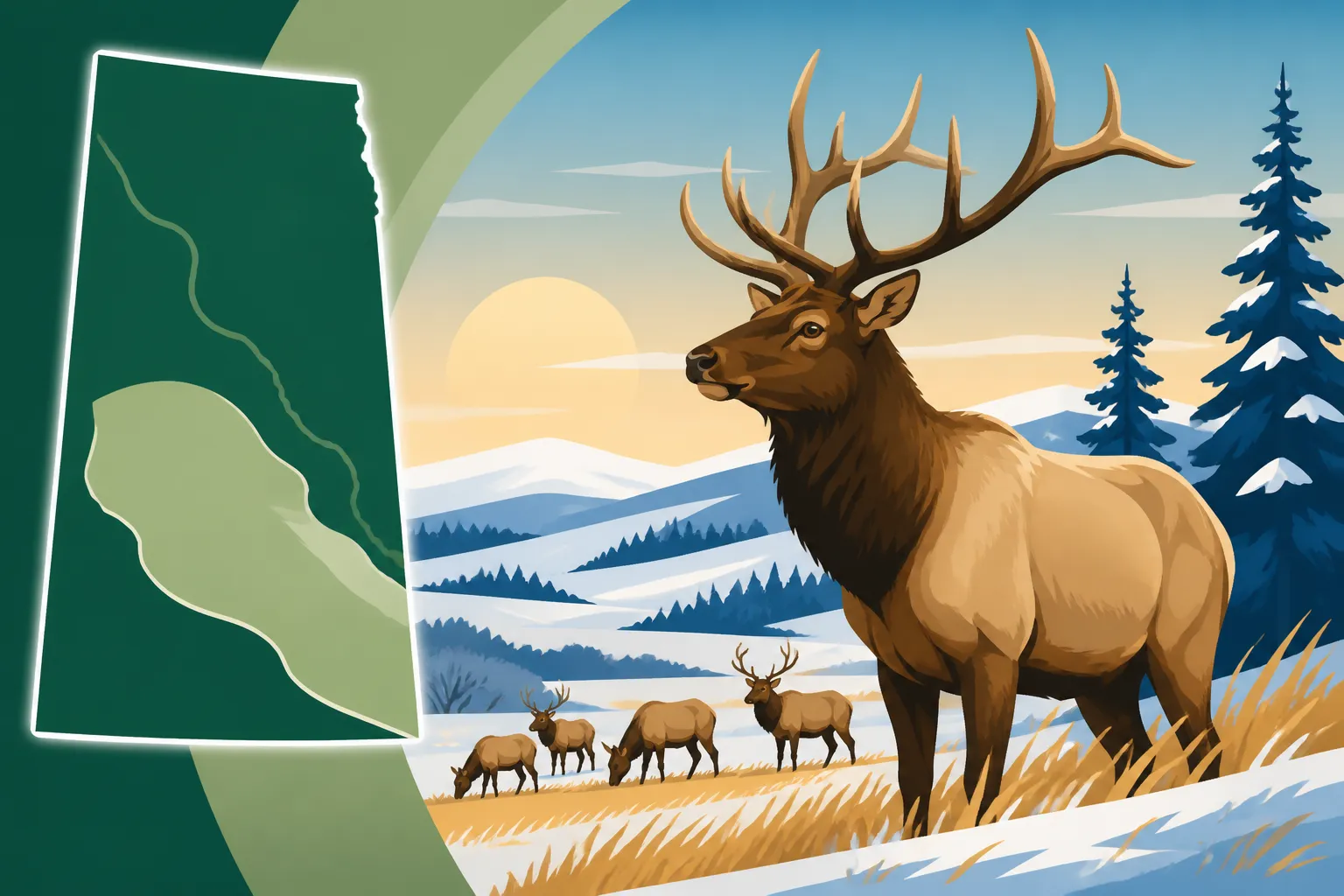
For elk in the southern and central parts of Saskatchewan, the deeply incised Qu'Appelle Valley system is an absolute magnet when winter sets in. This vast network of coulees, river breaks, and benchlands offers everything an elk needs to survive the cold months. The valley walls themselves provide excellent thermal cover, especially the steep, brushy slopes that face south, soaking up what little sunshine there is. The prevailing northwesterly winds often sweep the tops of these slopes, exposing patches of grass and reducing snow depth, making forage more accessible.
Within the valley bottom, thick willow and aspen bluffs provide dense cover, while the river itself—even if partially frozen—offers a consistent water source. Farmers often leave hay bales or graze cattle in these valleys, providing an irresistible attractant for elk seeking easy calories. You'll find elk moving between these sheltered draws and adjacent agricultural fields under the cover of darkness, venturing out to feed on grain stubble or hay before retreating to the safety and warmth of the valley during the day. Focusing your scouting efforts along these major river systems, especially where they intersect with agricultural land, can be incredibly productive for finding Hunting a Qu'Appelle Valley Slope.
Forest Fringe and Parkland Zones: Bluffs and Shelterbelts
Moving north into the aspen parkland and forest fringe regions, elk wintering patterns shift to utilize the unique blend of timber and agriculture. Here, large aspen and poplar bluffs, often interspersed with pockets of spruce, provide vital thermal cover and browse. These bluffs, particularly those on the lee side of prevailing winds, become crucial bedding areas. Elk will often spend their days bedded down deep within these timber pockets, emerging at dusk to feed.
The edges of these forest fringe areas, where the bush meets vast agricultural fields, are particularly important. Elk thrive on the nutritious forage available in swathed or standing grain fields. Many of these areas also feature shelterbelts—rows of trees planted by farmers—which, while man-made, mimic natural linear cover and provide excellent travel corridors and secondary bedding sites, especially during harsh weather. You can often find them Hunting a Shelterbelt Between Two Fields.
In these zones, look for areas where dense bush connects to fields. Elk will utilize these transition zones heavily. A good mapping app, like one from GoHunt, can show you these distinct habitat changes, helping you identify potential travel routes and feeding locations where these two ecosystems meet. The sheer number of calories available in grain can draw elk out of the deep bush, even during the coldest snaps, making these forest fringe farms incredibly attractive.
Remote Boreal Pockets: Traditional Elk Country
Further north, in the vast expanses of Saskatchewan's boreal forest, elk herds follow more traditional wintering patterns, relying on natural forest features and less on human agriculture. Here, dense spruce and pine stands offer unparalleled thermal cover, especially during heavy snowfalls. Areas with a mix of mature timber and younger regeneration can provide both shelter and browse. Elk will seek out areas where younger deciduous growth (like willow and aspen saplings) is abundant, as this provides a critical food source when other options are buried.
Large, unbroken tracts of timber, particularly those with undulating topography or where logging has created new growth, become vital. Old logging roads and seismic lines, while often cleared by human activity, can become packed-down travel routes through deep snow, making them easier for elk to navigate. Moose Hunting Saskatchewan's Farmland and Forest or even Black Bear Hunting in Saskatchewan often reveals these types of cover. Identifying these remote pockets requires extensive scouting, often utilizing aerial photos or satellite imagery from tools like GoHunt to spot dense timber stands and potential feeding clearings. While these areas are less impacted by agricultural draws, they are still subject to significant pressure from severe weather and available forage.
Factors Influencing Winter Elk Distribution
Beyond just the type of habitat, several dynamic factors influence precisely where Saskatchewan's elk herds will choose to spend their winter. These can change year to year, or even week to week, based on conditions.
The Allure of Agricultural Resources
One of the biggest draws for elk in agricultural regions during winter is the sheer abundance and accessibility of food. Standing crops like corn, pea fields after harvest, or even unharvested canola can provide an easily digestible, high-calorie meal that's difficult to pass up. Farmers' hay bales, left in fields or around dugouts, are another irresistible attractant. These concentrated food sources allow elk to spend less energy foraging, which is critical for survival in the cold.
This reliance on agricultural lands, however, often puts elk into direct conflict with landowners, as they can cause significant crop damage. This dynamic means that elk using these areas tend to be highly nocturnal, moving into fields under the cover of darkness and retreating to nearby cover at first light. Understanding these patterns is key. If you're Hunting Elk on Saskatchewan Grain Land, observing field edges at dawn and dusk can reveal travel routes and preferred feeding areas. This also highlights why Elk Damage on Saskatchewan Grain Farms is a consistent concern for many agricultural producers.
Pressure and the Need for Seclusion
Elk are wild animals, and like all big game, they respond to pressure. Hunting pressure during the fall and early winter seasons, snowmobiles, quads, logging activity, or even just regular human presence can push elk into thicker, more remote, or simply less accessible areas for winter. While they might tolerate some human activity, sustained pressure will force them to abandon otherwise good wintering grounds for more secluded spots.
This means that areas known for high hunter traffic might see elk move out quickly, seeking refuge in dense timber or vast private land where access is limited. Conversely, areas that offer thick cover adjacent to agricultural fields, but are harder for hunters to penetrate, can become sanctuaries. Knowing the local hunting pressure and access points for a particular Saskatchewan's Wildlife Management Zones is vital for predicting where elk might concentrate. The desire for seclusion often overrides the availability of the "best" food, pushing them into areas where they feel safe, even if it means slightly harder foraging.
Water Sources and Topographical Advantage
Access to water is, of course, a year-round necessity for elk, even in winter. While they can get some moisture from snow and the browse they eat, open water sources are always preferred. Unfrozen springs, creeks, and river sections are magnets, and elk will often bed relatively close to these areas. In agricultural settings, dugouts or sloughs that haven't completely frozen over can also be key. When Hunting a Saskatchewan Dugout at Dusk, you might find elk coming in for a drink before heading out to feed.
Topography also plays a crucial role. As mentioned earlier, south-facing slopes are invaluable. They receive more direct sunlight, melt snow faster, and provide warmer bedding sites. This can be especially true in the deeply carved valleys or rolling hills of areas like Hunting Elk in the Porcupine Hills or Elk in the Moose Mountain Country. These slopes also offer a visual advantage, allowing elk to see potential threats from a distance. The interplay of sun, wind, and terrain creates microclimates that elk are highly attuned to, making specific topographical features much more attractive as winter progresses.
Scouting for Wintering Elk
Finding wintering elk isn't just about knowing where they generally are; it's about pinpointing their exact locations and understanding their daily routines. The winter months offer unique advantages for scouting, primarily thanks to snow cover.
Reading Sign in the Snow
Snow transforms the landscape into a giant tracking board, and for the savvy hunter, it's an invaluable tool for Reading Sign After Fresh Saskatchewan Snow. Fresh snow will reveal recent elk activity like nothing else. Look for tracks: elk tracks are large and distinct, typically longer than deer tracks, and you'll often see the dew claws clearly in deeper snow. Pay attention to the direction of travel, the depth of the tracks (indicating how recently they were made), and whether they are travelling alone or as part of a herd. Following fresh tracks can lead you directly to their bedding or feeding areas.
Beyond tracks, look for other signs. Browsing on deciduous saplings or bark stripped from trees indicates feeding activity. Elk will rub antlers on trees, especially bulls, although this is less common in peak winter than during the rut. Bedding areas, often large, oval depressions in the snow, will tell you where they are resting. Look for droppings; fresh droppings indicate recent presence. A good pair of binoculars or a spotting scope can help you glass distant slopes and valley bottoms for these tell-tale signs, especially at first light when elk might still be moving. This is a crucial part of Scouting a Saskatchewan Wildlife Management Zone.
Utilizing Technology and Local Knowledge
In today's world, technology has made scouting more efficient than ever. Satellite imagery and topographical maps, readily available through apps like GoHunt, are essential for identifying potential wintering habitat from your couch. Look for the confluence of features we've discussed: dense timber adjacent to agricultural fields, deep river valleys with south-facing slopes, or large, secluded tracts of bush. Use the public land layers to see where you can legally access these promising areas.
However, don't underestimate the power of local knowledge. Talking to landowners, farmers, and even other hunters can provide invaluable, up-to-the-minute information on elk movements. Farmers, in particular, often know exactly where elk are wintering on their land or in nearby areas, especially if they're experiencing crop damage. Be respectful, offer to help with chores if you can, and always ask permission before venturing onto private property. Combine this on-the-ground intelligence with your technological scouting, and you'll dramatically increase your chances of finding Saskatchewan's elusive wintering elk herds. Understanding Saskatchewan's Elk Herds and Their Range requires a multi-faceted approach, blending observation, technology, and community insight.
Winter Elk Habitat Comparison
To summarize the key characteristics and preferred habitats for Saskatchewan's wintering elk, here's a quick comparison:
| Habitat Type | Key Characteristics | Typical Elk Behavior | Scouting Indicators |
|---|---|---|---|
| Qu'Appelle Valley System | Deep draws, river breaks, steep slopes, adjacent farmland | Utilizes valley for cover, feeds in fields nocturnally | Heavy tracks between valley and fields, bedding in brush |
| Forest Fringe/Parkland | Aspen bluffs, mixed bush, shelterbelts, agricultural edges | Beds in bluffs, feeds on crop residue/browse at edges | Tracks along shelterbelts, browsing on aspen |
| Remote Boreal Forest | Dense spruce/pine stands, cutlines, new growth | Seeks deep thermal cover, browses on young regeneration | Trails in deep snow, stripped bark on saplings |
| Agricultural Fields | Standing crops, hay bales, stubble, dugouts | Primarily nocturnal feeding, often retreats to nearby cover | Tracks in stubble, signs of damage to crops/bales |
Disclaimer
This article is for general informational purposes only and does not constitute professional advice. Laws, prices and regulations vary by location and change over time. Consult a qualified professional for guidance on your specific situation.