When Snow Geese Pass Through Saskatchewan
Oh, the elusive snow goose migration! It's one of those things that can leave even the most seasoned hunter scratching their head, trying to figure out when those massive flocks are going to descend upon Saskatchewan. You scout all summer, anticipate the fall, and then suddenly, they're either here in droves or seem to have completely bypassed your area, leaving you wondering if you missed the memo. It's incredibly frustrating when you dedicate time and resources only for the birds to be on a different schedule. This guide is all about helping you understand the typical patterns, key indicators, and factors that influence when snow geese actually pass through Saskatchewan, so you can better plan your hunts and be where the birds are.
Understanding the Snow Goose Migration Patterns in Saskatchewan
Saskatchewan is a critical staging ground for snow geese, a real bottleneck in their epic journey across North America. These birds don't just pass through quickly; they often spend significant time here, refueling and resting, which is why it's such a prime destination for waterfowl hunters. But "passing through" isn't a single event; it's a dynamic process that happens twice a year, each with its own rhythm and challenges. Understanding these distinct phases – the spring push north and the fall staging and southern journey – is key to predicting their arrival and departure.
The Spring Push North
When the ice starts to melt and the first hints of green emerge, snow geese are already on the move, pushing north towards their Arctic breeding grounds. This spring migration is a spectacle of sheer numbers, but it's often a much more rapid affair than the fall. The birds are driven by an innate urgency to reach their nesting sites as soon as conditions allow. They don't linger as long, their focus is less on feeding and more on making miles. You'll see massive flocks, sometimes thousands strong, moving with a purpose.
For hunters, the spring snow goose season is a unique opportunity, and it's generally governed by a different set of rules and a later season opening than other waterfowl. It's often viewed as a conservation effort to help manage populations, so bag limits can be very generous. However, predicting the exact timing can be tricky. A warm spell can bring them through incredibly early, while a late blizzard can halt their progress, sometimes pushing them back south or forcing them to stage in unusual spots. They follow the melt line, so as soon as the fields and potholes open up, they're not far behind. It's a chase, pure and simple, and you have to be ready to move with them. Learning about Spring Snow Goose Season Rules is crucial for anyone considering this hunt.
The Fall Staging and Southern Journey
While the spring migration is a sprint, the fall migration is more of a marathon, with several critical staging periods in Saskatchewan. This is when hunters often experience the best snow goose hunting, as the birds are more dispersed, spending weeks building up fat reserves for the long flight south. They arrive in waves, starting from late August and continuing well into November, depending on the year and the specific region of the province. The early arrivals might be smaller family groups or non-breeders, followed by the main contingents.
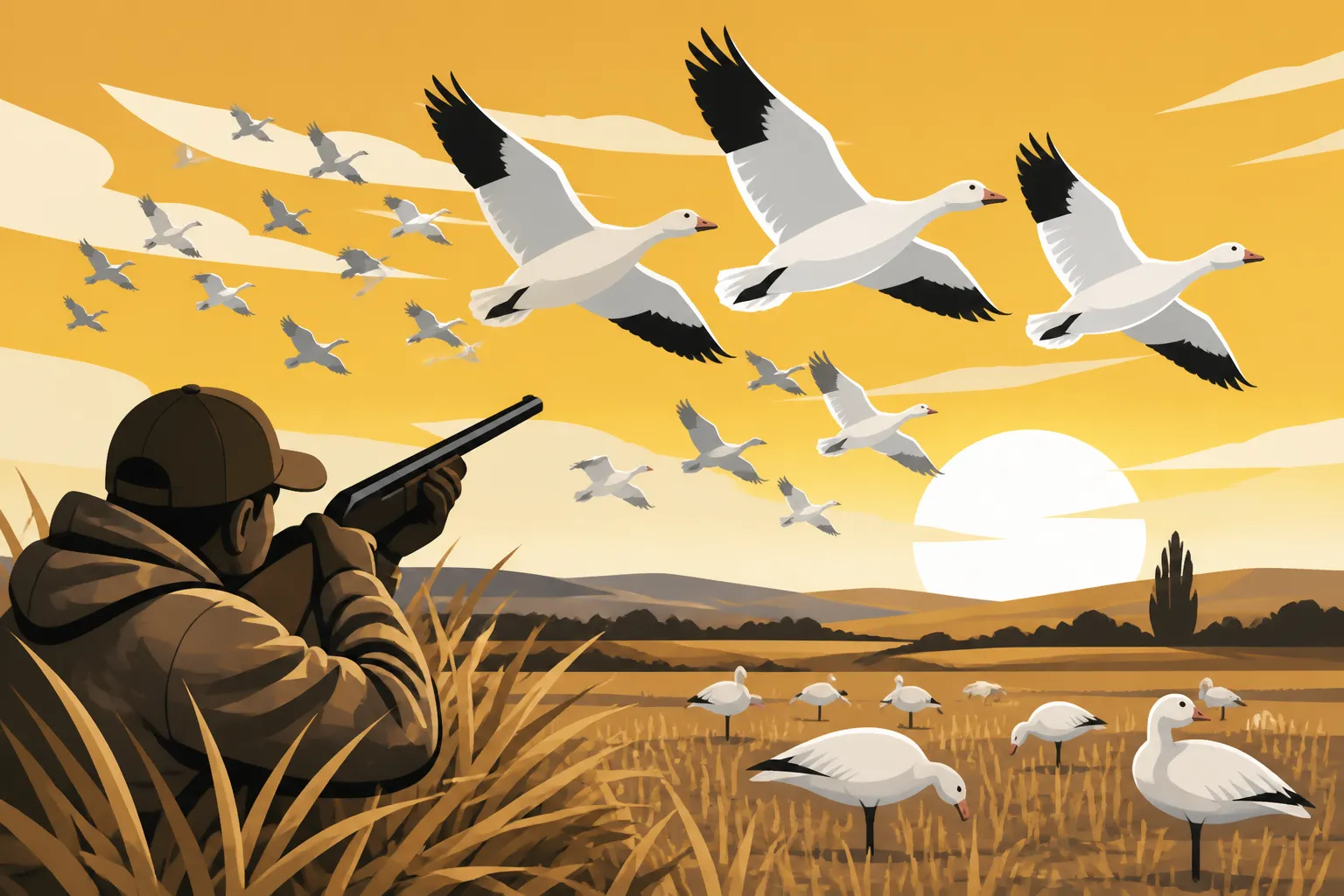
The sheer volume of birds during the fall can be astounding. Fields will literally turn white, and the sky can be filled with their calls. They spend their days gorging on waste grain in agricultural fields – peas, lentils, wheat, barley, you name it – before heading to large, undisturbed water bodies at night to roost. This pattern makes them more predictable in terms of general location, but pinpointing their exact feeding fields day-to-day requires diligent scouting. These birds are smart, and they quickly learn where pressure is, moving to new areas if disturbed too often. If you're looking to target these massive flocks, understanding Hunting Snow Geese Over a Big Spread is essential, as sheer numbers of decoys are often key.
Key Factors Influencing Snow Goose Migration Timing
Predicting the exact moment snow geese will show up or move on is like trying to nail jelly to a wall – it's incredibly difficult because so many variables are in play. It's not just a calendar date; it's a complex interplay of environmental cues that signal to these birds when to pack up and when to stay put. Ignoring these factors will almost certainly lead to frustration, and trust me, we've all been there, showing up too early or too late to the party.
Weather and Temperature Shifts
Hands down, weather is the single biggest determinant of when snow geese migrate. It's their internal GPS and thermometer, telling them when conditions are favorable for travel or when they need to hunker down.
-
For the Fall Migration: A strong cold front pushing down from the Arctic is the classic trigger. When those bitter northwest winds start blowing, and temperatures dip significantly below freezing, especially overnight, it’s a clear signal for the birds to move south. They might endure a few days of cold, especially if food is abundant, but sustained cold or early snowfalls that cover their food sources will get them moving in a hurry. Conversely, a prolonged warm fall, an "Indian summer" as we call it, can delay their departure significantly, keeping them in Saskatchewan well into November. This is often the time when you might even catch a late whitetail hunt and some goose hunting in the same trip! Learning about Hunting Saskatchewan Winter Weather Safely becomes paramount in these late seasons.
-
For the Spring Migration: It's the opposite. The geese are looking for the melting edge. As soon as temperatures rise consistently above freezing and snow cover recedes, they'll push north. A series of warm days can bring them up quickly, but a late-season cold snap or blizzard can send them retreating south for a few days, or at least halt their progress, leading to concentrated staging in areas where open water and food are temporarily available. Knowing Saskatchewan Goose Season Dates for both spring and fall will give you a general framework, but always watch the forecasts.
Food Availability and Habitat
Snow geese are voracious eaters, and their migration is heavily influenced by the availability of high-energy food sources. They need to pack on calories to fuel their long flights.
-
In the Fall: Saskatchewan's vast agricultural landscape provides an irresistible buffet of waste grain. Swathed barley, pea fields, lentils, and even standing corn (if present) are prime feeding grounds. The timing of the harvest plays a huge role here. An early, dry harvest means waste grain is exposed earlier, potentially bringing birds in sooner and holding them longer. A wet, late harvest might mean less accessible food or fields too muddy to feed in, pushing birds to different areas or even accelerating their departure if they can't get enough to eat. A good scout will pay close attention to harvest progress. This is where tools like GoHunt, with its mapping features and agricultural overlays, can be incredibly useful for pinpointing harvested fields and potential feeding zones.
-
In the Spring: While driven to breed, they still need to fuel up. Early green-up in winter wheat fields or patches of new growth can hold birds. However, spring availability is more often about open water and patches of exposed ground where they can find leftover grains or emerging vegetation. Large sheet water areas from melting snow, or even partially frozen dugouts, become crucial staging points. The presence of these resources directly impacts how long they stay and where they concentrate.
Biological Clocks and Breeding Urges
While weather and food are huge external factors, snow geese also operate on an internal, biological clock. This innate timing mechanism tells them when it's time to reproduce, which dictates their push north in the spring, and when to prepare for winter, influencing their southbound journey in the fall.
-
Spring Instinct: Their drive to reach the Arctic breeding grounds within a narrow window is incredibly strong. They need to arrive when the tundra is beginning to thaw but before predators have fully emerged, and they need enough time to lay eggs, hatch goslings, and raise them before the short Arctic summer ends. This biological imperative means they won't delay indefinitely, even if conditions are less than ideal. They will push through challenging weather if their internal clock says "go."
-
Fall Preparation: In the fall, once the goslings are grown and the molting process is complete, the birds begin to feel the urge to move south to milder climates and more consistent food sources for the winter. This isn't usually as rushed as the spring push. They spend weeks, sometimes over a month, in Saskatchewan's rich agricultural landscape, bulking up. This staging period is crucial for their survival through the winter and for their subsequent breeding success. They are often less jumpy and more focused on feeding during this time, making them a fantastic target for hunters who've done their homework.
Preparing for Your Saskatchewan Snow Goose Hunt
So, you've got a grasp of when these incredible birds tend to show up. Now, how do you translate that knowledge into a successful hunt? It's not enough to just know the general dates; you need a strategy, the right gear, and an understanding of the rules. There's nothing more disheartening than showing up to a prime location only to realize you've missed a critical regulation or don't have the tools to be effective.
Scouting and Recognizing Prime Time
Effective scouting is the bedrock of any successful waterfowl hunt, especially for snow geese. These birds move, and they move quickly based on food, pressure, and weather.
-
Pre-Season Homework: Start well before the season opens. Use mapping tools like GoHunt or satellite imagery to identify major flight corridors, large water bodies that might serve as roosts, and areas with extensive agricultural fields that will provide food. Pay attention to crop rotations if you can glean that information. Historically, pea and lentil fields are massive magnets, but wheat and barley stubble fields are also highly attractive after harvest.
-
In-Season Reconnaissance: Once the season approaches and opens, you need boots on the ground (or binoculars in hand). Drive the back roads, especially at dawn and dusk, looking for birds feeding or flying. Watch for the tell-tale white patches in distant fields. Pay attention to where birds are roosting – large lakes, sloughs, or even rivers. Observe flight patterns: where are they coming from in the morning? Where are they going to feed? Where are they returning to roost at night? This daily intelligence is priceless. You'll often find that the birds will establish a pattern for a few days, sometimes a week, before moving on. Knowing Scouting Fields for Saskatchewan Waterfowl effectively is the absolute game-changer.
-
Local Intel: Don't underestimate the power of local knowledge. Talk to farmers (after securing permission to hunt, of course!), gas station attendants, or other hunters. They often have an ear to the ground about where the birds are and when they started showing up. Local Facebook groups or forums can also be surprisingly helpful, though always take online information with a grain of salt.
Essential Gear and Decoy Spreads
Snow geese are notoriously wary, and their sheer numbers demand a specific approach to gear and decoy spreads. You can't just go out with a dozen mallard decoys and expect results.
-
Decoys, Decoys, Decoys: This is where the magic happens. For snow geese, bigger is almost always better. Think hundreds, if not thousands, of decoys. Full-body decoys are excellent but can be pricey and cumbersome. Wind socks, silhouettes, and even rags laid out in vast numbers create the illusion of a massive feeding flock. Mix in a few full bodies and maybe some movement decoys (flappers, spinners) to add realism. The goal is to mimic the natural spectacle of a giant snow goose feeding frenzy. If you want to know more about the specifics, check out Setting a Goose Spread in Swathed Barley.
-
Concealment is Key: With so many eyes in the sky, you need to be invisible. Layout blinds are the standard for field hunting. Ensure they blend perfectly with the field stubble or surrounding vegetation. Don't skimp on brushing them in with natural materials from the field itself. Even a slight outline can put wary birds off. Good camouflage clothing is also a must, especially in all-white patterns for spring snow goose hunting.
-
Calling: A good electronic caller loaded with various snow goose sounds (feeding, flying, clucking) is almost indispensable. Supplement this with some well-practiced mouth calls to add realism and respond to specific situations. The cacophony of a large snow goose spread needs to be replicated.
-
Shotguns and Ammo: Your trusty 12-gauge shotgun will do the trick, but ensure you're using appropriate non-toxic shot. Steel shot is common, but bismuth or tungsten-based alternatives offer superior performance at longer ranges, which can be critical for high-flying snows. Always check local regulations on shot size and material – Non-Toxic Shot for Saskatchewan Waterfowl is a key resource.
Navigating Regulations and Seasons
Saskatchewan has specific rules for hunting snow geese, and it's your responsibility to know them inside and out. Ignorance is no excuse, and violations can lead to hefty fines and loss of hunting privileges.
-
Licensing and Permits: You'll need your Saskatchewan hunting license, but also a federal migratory game bird permit. These are two separate but equally vital documents. Make sure they are current and valid for the season you are hunting. You can find details on acquiring The Federal Migratory Game Bird Permit.
-
Season Dates and Limits: Pay close attention to the specific dates for snow geese. Spring conservation seasons often have different dates and very liberal bag and possession limits compared to the regular fall season. These can vary by zone, so always consult the latest Saskatchewan hunting guide.
-
Blaze Orange: While often associated with big game, specific rules about wearing blaze orange might apply depending on the season and other species being hunted concurrently. Always err on the side of caution and check the regulations.
-
Landowner Permission: This is paramount in Saskatchewan. Almost all productive snow goose hunting takes place on private agricultural land. Always get explicit, documented permission from the landowner before you step foot on their property. This not only keeps you legal but also builds positive hunter-landowner relations, which are crucial for the future of hunting in the province. Getting Permission for a Goose Field is a crucial step that cannot be overlooked.
Maximizing Your Chances During Peak Migration
Once you've done your homework, scouted diligently, and gathered your gear, it's time to put it all into practice. However, simply being in the right place at the right time isn't always enough. Snow geese are smart, they learn quickly, and they face incredible hunting pressure across their migration route. To truly maximize your chances, you need to think strategically about how you approach your hunt and adapt to changing conditions.
Strategies for Early Season vs. Late Season
The dynamics of snow goose hunting can change significantly as the migration progresses. What works in September might not work in November, and vice-versa. Adapting your tactics is key to consistent success.
-
Early Fall Season (Late August – September):
- The Birds: These are often the first major waves of migrants, including a mix of adult birds and naive juveniles. They might be a little less wary initially, having not faced as much hunting pressure yet. They're also generally not as desperate for food, so they might be pickier about which fields they choose.
- The Weather: Typically warmer, meaning birds will fly high in the middle of the day. Early morning and late evening are often your best bets for lower, more committed flights.
- Strategy: Focus on fields with fresh harvest stubble, especially peas and lentils which are high-energy food sources. These fields will be a huge draw. A medium-sized spread (a few hundred socks/silhouettes with some full bodies) can be effective. Prioritize good concealment and quiet entry/exit. Don't over-call initially; let the spread do some of the work. If you're Hunting a Pea Field After Harvest, this is your prime time.
-
Mid to Late Fall Season (October – November):
- The Birds: By this point, the birds have seen it all. They've run a gauntlet of hunters from the Arctic all the way through Alberta, and they are wise. They will flare at the slightest imperfection in your spread or hide. Juveniles are still present, but the older birds lead the charge, and they are incredibly observant. They are also intensely focused on feeding to build fat reserves for the deep cold.
- The Weather: Cooler temperatures, often with strong winds and even snow. This can be your best friend. Low clouds and strong winds bring birds down, making them more susceptible to your spread.
- Strategy: Go big, or go home. This is where those massive spreads of 800-1000+ decoys really shine. Maximize movement with flags and flyers. Your hide needs to be absolutely perfect, and staying still is non-negotiable. Aggressive calling with an e-caller and mouth calls can be effective, mimicking the intense chatter of a large feeding flock. Focus on fields where birds were yesterday, or where a major cold front has just pushed new birds in. Look for areas with fresh snow; geese will often feed where stubble is exposed. You might even want to try Hunting a Swathed Grain Field at Dusk as conditions get colder and birds become more predictable in their feeding patterns.
Hunter Pressure and Finding Undisturbed Fields
One of the biggest frustrations in snow goose hunting, especially during peak migration, is dealing with other hunters. Saskatchewan is a popular destination, and some areas can see significant pressure, making the birds even warier.
-
Recognizing Pressure: Birds that "cup" their wings and start to commit, only to suddenly flare at 200 yards for no apparent reason, are often victims of high pressure. They've been shot at, harassed, and have learned to be exceptionally cautious. Heavily hunted fields will also show signs of multiple decoy spreads, tracks, and shell casings.
-
Finding Unpressured Birds:
- Go Remote: Sometimes the best solution is to get away from the easy-access roads. This might mean driving an extra hour, or even using a side-by-side or quad to access fields further off the beaten path. Birds learn road names just as fast as they learn to avoid shotgun blasts. Tools like GoHunt can help you identify sections of land that are harder to access, increasing your chances of finding undisturbed birds. Just be sure to always adhere to Quad and Side-by-Side Rules on Crown Land or respect private landowner boundaries.
- Knock on More Doors: Often, the fields that see less pressure are those where fewer hunters have asked for permission. Don't be afraid to travel to new areas and knock on more doors. Building relationships with landowners is invaluable, and sometimes they'll grant permission to fields they haven't allowed hunting on before.
- Hunt Mid-Week: If possible, try to hunt during weekdays. Weekends often see a surge in hunter numbers, pushing birds into harder-to-reach areas or making them nocturnal. Mid-week hunts can offer a completely different experience with much more relaxed birds.
- Be the First: If you identify a new field with fresh birds, try to be the first one in there. A fresh field, especially with good feeding activity, can offer an incredible hunt before the birds get wise to the pressure.
By understanding the migratory patterns, the environmental cues, and adapting your hunting strategy to the season and hunting pressure, you'll significantly increase your chances of connecting with these incredible birds during their passage through Saskatchewan.
| Migration Phase | Typical Timing | Driving Force | Behavior Focus | Hunter Strategy | Key Challenges |
|---|---|---|---|---|---|
| Spring North | Late March – Early May (variable) | Breeding Urge / Thaw Line | Making Miles / Reaching Nesting Grounds | Mobile / Follow the Melt / Scout Open Water | Fast Movement / Unpredictable Staging / Less Feeding |
| Fall South | Late August – Mid November (variable) | Food Reserves / Approaching Winter | Intensive Feeding / Staging | Field Hunting / Large Spreads / Extensive Scouting | Wary Birds / High Hunter Pressure / Weather Shifts |
Disclaimer
This article is for general informational purposes only and does not constitute professional advice. Laws, prices and regulations vary by location and change over time. Consult a qualified professional for guidance on your specific situation.