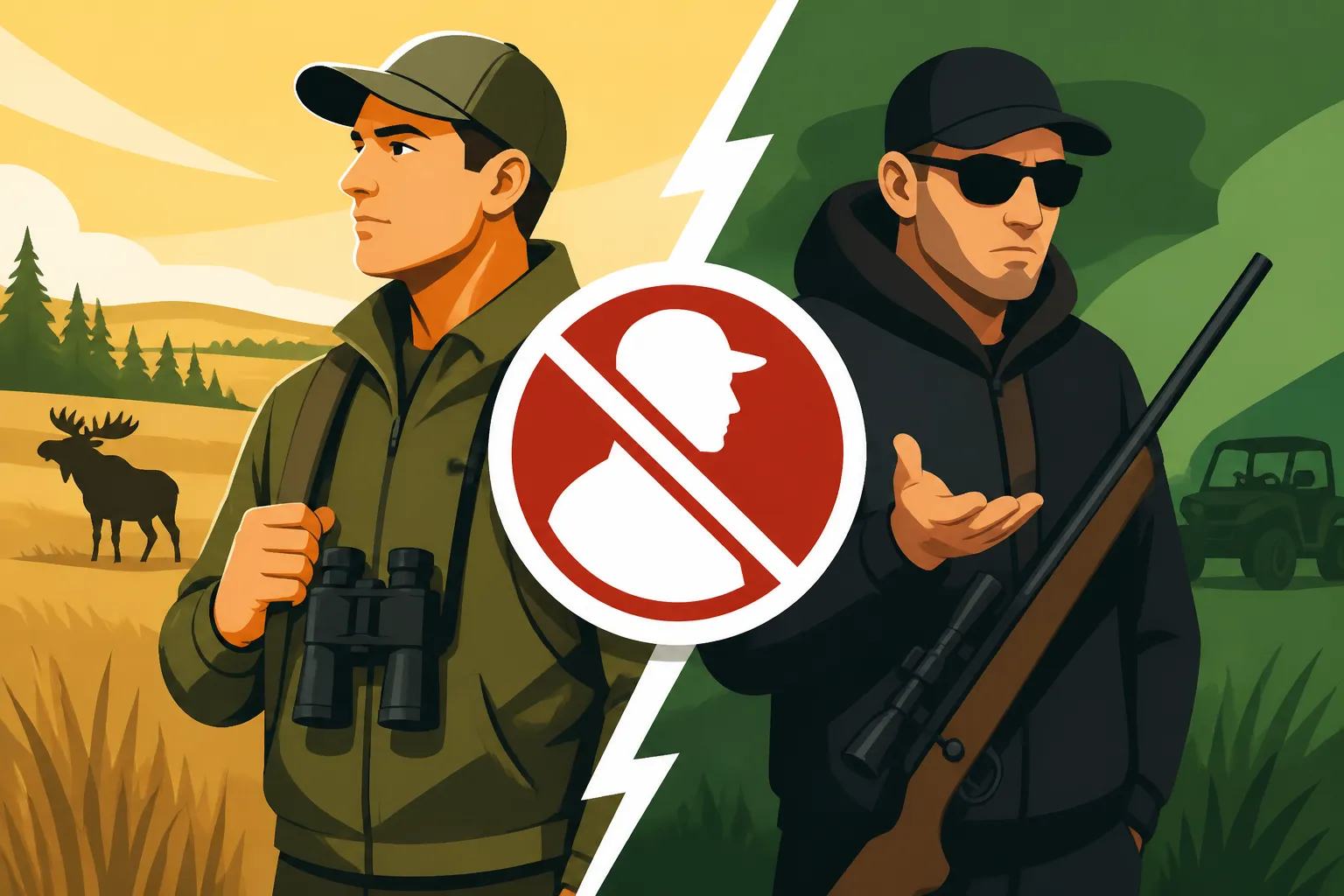
How to Recognise an Illegal Guide
It’s a dream for many hunters to experience the incredible opportunities Saskatchewan offers, whether it’s the massive whitetails of the forest fringe or the abundant waterfowl on the prairie. However, the excitement of booking a hunt can sometimes lead to overlooking critical details, and one of the most frustrating and potentially damaging mistakes is inadvertently engaging with an illegal hunting guide. Not only can this ruin your trip, but it can also land you in serious legal trouble, even if you were unaware of the guide's illicit activities. This guide will walk you through the tell-tale signs to help you identify and steer clear of unlawful guiding operations, protecting your hunt and your reputation.
Understanding What Makes a Guide Legal in Saskatchewan
Before you can spot an illegal guide, you need a solid grasp of what a legal guide and outfitter in Saskatchewan actually entails. This isn't just about someone knowing the woods; it's about a specific, regulated industry designed to protect both the hunters and the province's wildlife resources.
The Role of a Licensed Outfitter
In Saskatchewan, especially for non-resident hunters, the rules are very clear: if you're a non-resident of the province (or Canada, for that matter), you must book your big game hunt, and now many bird hunts, through a licensed outfitter. This isn't a suggestion; it's a legal requirement. A licensed outfitter isn't just a guide; they run a business that holds specific allocations of tags for certain species within designated wildlife management zones. They employ professional guides who also need to meet certain criteria. They're part of a regulated system that ensures fair chase, proper resource management, and a safe experience for clients. Without this structure, the province simply couldn't manage its wildlife populations or ensure ethical hunting practices, especially given the popularity of Whitetail Hunting in Saskatchewan and Waterfowl Hunting Saskatchewan's Grain Fields.
The Importance of Allocations and Licences
Every legal outfitter operates under a specific licence issued by the provincial government. This licence dictates which species they can offer, in which wildlife management zones, and for how many clients each season. These are known as outfitter allocations, and they are a finite resource. An outfitter might have allocations for a certain number of antlered whitetail deer in Zone X, a certain number of black bears in Zone Y, or a number of migratory bird hunter days. These allocations are carefully managed to ensure sustainable harvests and to support the outfitting industry. An illegal guide, by definition, has no such allocations. They are essentially operating outside the regulated system, which means any animals taken under their guidance are illegally harvested. For more details, you might want to read up on Saskatchewan Outfitter Licensing and Allocations.
Why Non-Residents Must Use an Outfitter
The rule requiring non-residents to use an outfitter is fundamental to Saskatchewan's hunting regulations. It's in place for several reasons: to control harvest levels, to provide economic benefit to the province through the regulated outfitting industry, and to ensure that hunters unfamiliar with local laws, terrain, and conditions have professional guidance. It also provides a level of accountability. If something goes wrong on a legal outfitted hunt, there's a licensed business to contact. With an illegal guide, you have no recourse, and you bear the full legal responsibility for any violations. If you're coming from outside Saskatchewan, understanding Rules for Non-Residents Hunting Saskatchewan is paramount.
Red Flags to Watch Out For Before You Book
The best defense against an illegal guide is a good offense: doing your homework before you ever commit. Many warning signs will appear during your initial research and communication. Pay close attention to these details.
Vague or Missing Documentation
A legitimate outfitter will be proud to share their credentials. They will have a clear business name, contact information, and most importantly, a Saskatchewan Outfitter Licence number. This is not something they should be secretive about. If you ask for their licence number or proof of their allocations, and they become evasive, vague, or simply don't provide it, that's a massive red flag. They should also be transparent about their insurance coverage, which protects both them and you in case of an accident. If they can't readily produce this information, or if they claim they "don't need it" for certain types of hunts, be extremely wary. Platforms like BookYourHunt or GoHunt often list this information or allow you to vet outfitters before booking, offering an extra layer of security.
Unrealistic Promises and Prices
We all love a good deal, but when it comes to guided hunts, if it sounds too good to be true, it almost certainly is. Illegal guides often try to lure clients with unbelievably low prices for prime dates or "guaranteed" tags for highly sought-after species like trophy moose or massive whitetails in November. These species are often draw-only or carry significant demand and cost for legal outfitters. Be skeptical of claims like "we always fill our tags, no matter what" or prices that are significantly lower than the industry average you see from established, reputable outfitters. Remember, a legal outfitter has significant overhead, including licence fees, staff wages, equipment maintenance, and land access costs. Someone drastically undercutting the market is likely cutting corners somewhere important, and that corner is usually legality.
No Formal Contract or Payment Process
A professional outfitter will always provide a written contract. This document outlines the services included, dates, prices, cancellation policies, what's expected of you, and what you can expect from them. It's a legal agreement that protects both parties. If a "guide" insists on cash-only payments, or asks for payment directly to a personal bank account without a formal business invoice, or tells you a handshake is "good enough," you should immediately disengage. A lack of a formal, written agreement means you have no legal recourse if they fail to deliver or if you run into problems. Similarly, an outfitter should have a clear deposit and payment schedule, not just demand lump sums without structure.
Lack of References or Online Presence
In today's connected world, most legitimate businesses have some form of online presence—a website, social media, or listings on hunting booking platforms. They will also be able to provide references from past clients. If a guide has no website, no social media presence, or can't offer any verifiable references beyond a vague "my buddies will tell you I'm good," that's a cause for concern. While some smaller operations might be more word-of-mouth, even they usually have a way for potential clients to connect with past hunters. A reputable outfitter is usually proud to showcase their successes and client experiences. Checking reviews on sites like BookYourHunt or GoHunt can offer independent verification.
Warning Signs During the Hunt
Even if everything seemed legitimate during the booking process, sometimes red flags only appear once the hunt is underway. It's crucial to stay vigilant and trust your gut if something feels off.
Accessing Land Illegally
One of the most common ways illegal guides operate is by hunting on private land without permission, or on Crown land in areas where they are not permitted to operate or without the necessary permits. Pay attention to how your guide talks about land access. Do they mention "sneaking in" or ignoring "No Trespassing" signs? Do they seem reluctant to tell you exactly where you are hunting, or avoid contact with landowners? This is a huge problem. In Saskatchewan, trespassing is a serious offense, and as the hunter, you are ultimately responsible for ensuring you are on legally accessible land. A guide who ignores Saskatchewan Posted Land Sign Rules or proper Saskatchewan Landowner Permission Law is putting you at risk of fines, confiscation of your harvest, and even having your hunting privileges revoked.
Ignoring Game Laws and Regulations
A legal guide's primary responsibility, beyond finding you game, is ensuring you hunt legally and ethically. An illegal guide, however, might pressure you into breaking the rules. This could involve:
- Shooting over limits: Encouraging you to take more animals than your tag allows, or more birds than the daily bag limit.
- Hunting outside legal hours: Pushing you to hunt before sunrise or after sunset, which is strictly prohibited for big game.
- Pursuing species not on your tag: Guiding you to shoot a bull elk when you only have a deer tag, for example.
- Using illegal methods: This could include baiting big game where it's not permitted, using illegal firearms or ammunition, or hunting from a vehicle.
- No evidence of sex requirements: Failing to ensure you leave evidence of sex on certain game species for transport and identification purposes.
Your own hunter education should have taught you the basic rules, and if your guide suggests anything contrary to what you know, speak up and refuse. Ignorance of the law is not a defence, and you could face significant Penalties for a Hunting Violation.
No Proper Tagging or Reporting
Every animal harvested in Saskatchewan requires proper tagging and, for certain species and zones, mandatory Chronic Wasting Disease (CWD) testing. A legal outfitter will ensure your tag is immediately and correctly validated, and they will explain the procedures for CWD testing. An illegal guide might try to circumvent these rules. If your guide tells you not to validate your tag, or suggests using someone else's tag, or shows no interest in the mandatory CWD submission for deer in specific zones (refer to Saskatchewan's CWD Testing Rules), then you are participating in illegal activity. Proper game management relies on accurate harvest data, and circumventing these rules undermines the entire system. Understanding Saskatchewan Tag Validation Rules is your responsibility as a hunter.
Shady Camp Conditions or Logistics
While not directly illegal, poor or unsafe camp conditions and logistics can be a strong indicator that you're dealing with an unprofessional, and potentially illegal, operation. A legitimate outfitter will prioritize your safety and comfort. This includes having proper cold storage for meat, safe vehicles and equipment, and clear emergency plans. If the guide seems disorganized, uses dilapidated equipment, doesn't discuss safety protocols, or has no plan for getting your meat processed or trophy caped and transported properly (e.g., Meat Care in Saskatchewan's Cold Snaps), it suggests they might not be adhering to other regulations either.
What to Do If You Suspect an Illegal Guide
Discovering you've inadvertently engaged with an illegal guide can be a stressful and potentially dangerous situation. Your first priority should be your safety, followed by responsible reporting.
Prioritize Your Safety
If you find yourself in a situation where you suspect your guide is illegal, and especially if you feel unsafe or pressured to break laws, your first and foremost concern must be your personal safety. Do not confront the guide aggressively, especially if you are in a remote area. Look for a safe opportunity to remove yourself from the situation. This might mean politely excusing yourself from the hunt, claiming illness, or finding a way to contact authorities discreetly. Remember, getting into an argument in the middle of nowhere with someone who is already breaking the law might not be the safest course of action.
Document Everything (Safely)
Once you are safe, or as safely as possible during the incident, try to gather as much information as you can. This is critical for authorities. Take mental notes, or if safe to do so, discreet photos or videos.
- Names and descriptions: Get the guide's name, any other individuals involved, vehicle descriptions (make, model, colour, licence plate numbers).
- Locations: Note specific locations where illegal activities occurred, landmarks, road numbers, or GPS coordinates if possible.
- Dates and times: Be precise about when you observed violations.
- Communication: Save any texts, emails, or booking confirmations that could serve as evidence.
- Specific violations: Detail exactly which laws you believe were broken (e.g., hunting private land without permission, shooting too many animals, hunting out of season).
This information will be invaluable to investigators.
Report to Authorities
Once you are in a safe position to do so, you should report your suspicions to the appropriate authorities. In Saskatchewan, the primary contact for reporting illegal hunting activities is the Turn In Poachers (TIP) line.
Turn In Poachers (TIP) Line: This is a confidential service that allows citizens to report illegal hunting, fishing, trapping, and environmental violations. You can typically find their toll-free number on the provincial government's environment or hunting regulations website. Reporting to TIP ensures that trained conservation officers investigate the situation.
It's important to understand that while you might have been misled, participating in an illegal hunt can still have legal consequences for you as the hunter. However, cooperating fully with authorities and providing them with detailed information about the illegal guide can mitigate your situation. The goal is to stop these illegal operations, which undermine ethical hunting and conservation efforts. Reporting helps protect Saskatchewan's wildlife and the integrity of the hunting community. For details on how to report, check out Saskatchewan's Turn In Poachers Line.
Here's a quick comparison of what to look for:
| Feature | Legitimate Outfitter | Illegal Guide |
|---|---|---|
| Licensing | Holds a valid Saskatchewan Outfitter Licence & allocations | No formal licence, evasive about credentials |
| Documentation | Provides written contract, clear invoices, insurance proof | "Handshake deal," cash only, no formal paperwork |
| Pricing | Generally competitive with industry standards, transparent | Unusually low prices, "too good to be true" deals |
| Reputation/Presence | Website, social media, references, listed on platforms | Hard to find online, vague references, avoids scrutiny |
| Land Access | Clear permissions, respects posted signs, landowner relations | Sneaky access, ignores signs, vague about locations |
| Game Laws | Strictly adheres to all provincial hunting regulations | Pressures hunters to break limits, hunt illegally |
| Tagging/Reporting | Ensures immediate tag validation, discusses CWD testing | Ignores tagging, avoids CWD info, encourages deception |
| Safety/Logistics | Professional camp, safe equipment, emergency plans | Disorganized, unsafe practices, poor meat care |
This article is for general informational purposes only and does not constitute professional advice. Laws, prices and regulations vary by location and change over time. Consult a qualified professional for guidance on your specific situation.