What a Saskatchewan Guide Cannot Do
The dream of a Saskatchewan hunt often involves visions of vast wilderness, big game, and the invaluable assistance of a seasoned guide. While an outfitter or guide is an incredible asset, especially for non-residents, it's a common misconception that they handle absolutely everything. This comprehensive guide will meticulously break down the specific limitations of what a Saskatchewan guide cannot do for you, ensuring you understand your own responsibilities and how to prepare for a successful and legal hunt.
Understanding the Legal Limits of Guiding in Saskatchewan
When you hire a guide in Saskatchewan, you're tapping into their expertise, local knowledge, and logistical support. However, they operate within a strict legal framework, and there are fundamental aspects of hunting law and land access that they simply cannot override or manage on your behalf. Understanding these boundaries is crucial for every hunter.
No Trespassing Authority on Private Land
One of the most important things to remember is that a guide does not possess any inherent authority to trespass on private land, regardless of how good their intentions or how promising a field looks. Saskatchewan's private land rules are quite clear: if land is posted with "No Hunting," "No Trespassing," or similar signs, or if it's cultivated land, you must obtain explicit permission from the landowner or occupant before entering. A guide might have established relationships with local landowners and can often facilitate permission, but they cannot grant it themselves, nor can they lead you onto private property without the necessary consent.
Imagine you're driving with your guide, and you spot a magnificent whitetail buck in a distant stubble field. The fence line has a "No Hunting" sign prominently displayed. Even if your guide knows the landowner, they cannot simply say, "It's fine, we'll just go in." They must contact the landowner, explain the situation, and secure permission. If permission is denied, that buck, no matter how tempting, is off-limits. This is why cultivating good Saskatchewan Landowner Relations for Hunters is so important, even when you have a guide. Your guide is there to help you navigate these situations, but the ultimate authority rests with the landowner and the law. Always respect posted land; a guide cannot negate these legal markers.
Licensing and Tagging Protocol
Your guide is there to assist you, but they are not a proxy for your legal hunting documentation. They cannot purchase your Saskatchewan hunting licenses for you, nor can they physically validate your tag after you've harvested an animal. Each hunter is individually responsible for obtaining the correct licenses and permits for the species they intend to hunt. This includes your Wildlife Habitat Certificate, any big game draw licenses, and migratory bird permits if applicable. Websites like BookYourHunt often detail the types of licenses required for specific packages, but the actual procurement is up to you.
Once you've successfully harvested an animal, it's your personal responsibility to immediately attach and validate your tag according to Saskatchewan regulations. Your guide can certainly instruct you on the proper procedure, show you where on the animal the tag needs to be placed, and remind you of the specific steps. However, they cannot physically perform the act of tagging for you. The tag is issued in your name, and you must ensure it's correctly applied and validated. Failure to do so could result in serious legal penalties, and that responsibility falls squarely on the hunter, not the guide. This individual accountability ensures the integrity of the harvest reporting system.
Firearms and Ammunition Regulations
Saskatchewan has clear rules regarding legal firearms and ammunition for hunting specific game species, as well as regulations concerning the transport and storage of firearms. While a reputable guide will be intimately familiar with these rules and will advise you accordingly, they cannot circumvent them for you. For instance, they cannot declare your firearm at the Canadian border if you're a non-resident; that's your personal legal obligation when Bringing Firearms Into Saskatchewan.
Similarly, a guide cannot provide you with a firearm or ammunition if you are not legally permitted to possess it. If you're bringing your own rifle, bow, or shotgun, you must ensure it meets all legal specifications for the species you're hunting and that you have all necessary documentation for its possession and transport. Your guide's role is to ensure your hunt is conducted safely and legally within these parameters, not to bend the rules. They will expect you to arrive with appropriate and legal equipment, or if you're renting from them, they'll ensure you're legally able to use it, but they can't make illegal equipment legal. Understanding Legal Firearms and Bows for Big Game is paramount before your trip.
Respecting Ethical Boundaries and Fair Chase
Beyond the explicit legal statutes, there are deeply ingrained ethical codes and principles of fair chase that every hunter and guide in Saskatchewan is expected to uphold. A guide, no matter how keen to help you secure a trophy, cannot compromise these standards.
Fair Chase Principles
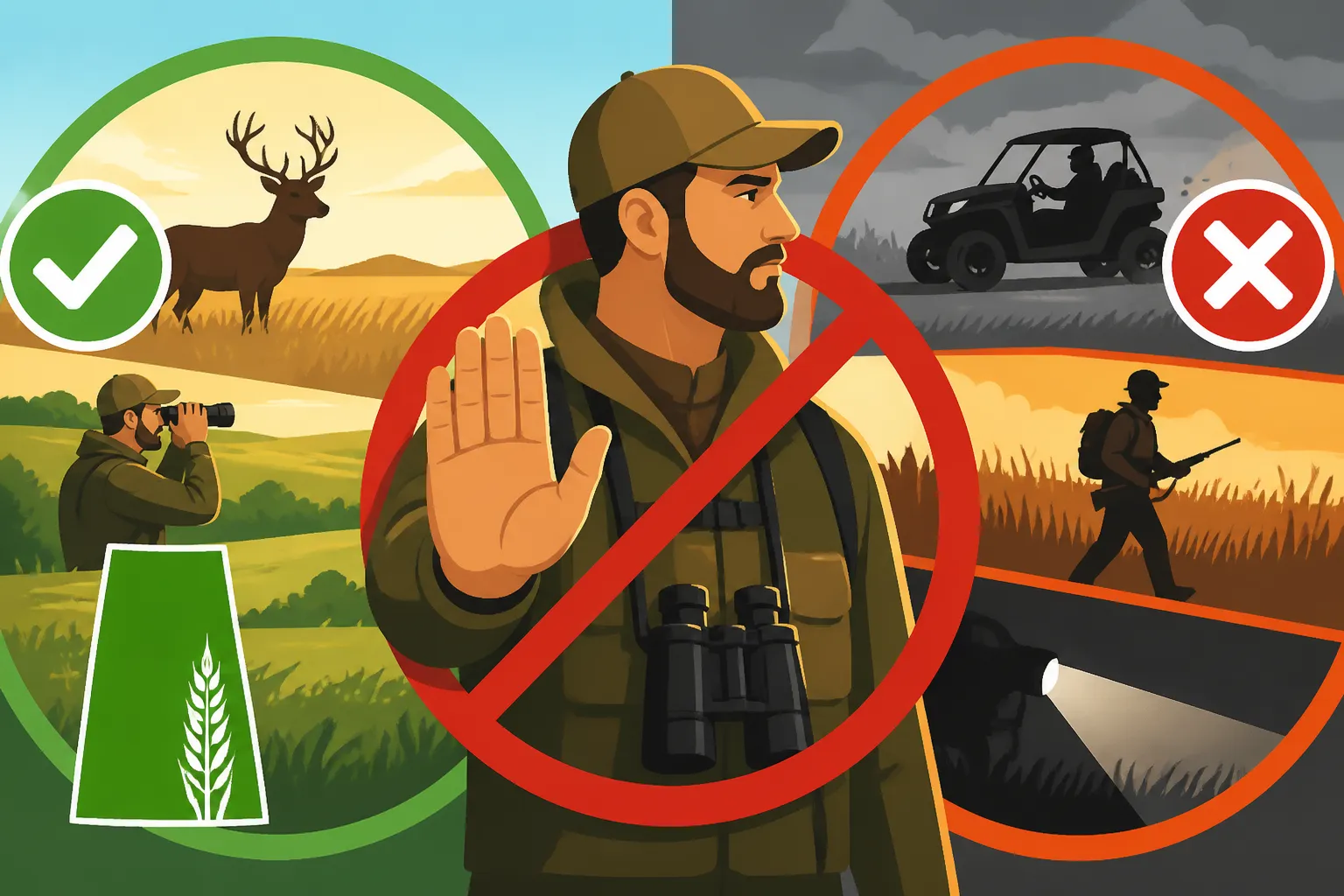
Fair chase is the foundation of ethical hunting, meaning that the hunter does not have an unfair advantage over the game animal. This includes things like not hunting from a moving vehicle, not using artificial lights to spot or shoot game, and ensuring that the animal has a reasonable chance of escape. While a guide might use certain tactics like calling, rattling, or setting up blinds in strategic locations, they will not engage in practices that violate fair chase.
For example, if you wound an animal, a guide will dedicate time and effort to tracking and retrieving it, but they won't suggest cornering it with a vehicle or pursuing it illegally. They also won't allow you to shoot at an animal from the road or within restricted distances from dwellings. Their reputation and livelihood depend on adhering to these ethical standards. If a guide suggests something that feels "off" or gives you an uneasy feeling, it's likely because it infringes on these vital principles. A good guide will always prioritize the integrity of the hunt over the certainty of a kill.
Game Retrieval Beyond Reasonable Effort
Once an animal is hit, especially if it's a marginal shot, the dedicated effort to retrieve it begins. A good guide will exhaust every reasonable effort to track and recover wounded game, often spending hours or even days on a trail. However, there's a limit to what constitutes "reasonable effort," and a guide cannot indefinitely chase a wounded animal across properties where permission is denied, or through impassable terrain that poses a significant safety risk.
There are unfortunate instances where an animal is simply unrecoverable due to difficult terrain, severe weather, or the animal traveling an immense distance onto un-huntable land. While heartbreaking, your guide cannot violate laws or endanger themselves and others for a retrieval that is realistically impossible. They will help you make the best decision in these difficult situations, often advising when further pursuit becomes futile or unsafe. Understanding Meat Care in Saskatchewan's Cold Snaps is also part of this, as a quick, ethical retrieval is paramount for preserving the meat.
Respecting Wildlife Management Zones and Limits
Saskatchewan is divided into numerous Wildlife Management Zones (WMZs), each with specific regulations regarding species, season dates, and bag limits. Your guide will operate within these zones, but they cannot allow you to hunt outside the designated zones for your license, or exceed the legal bag limits, regardless of opportunity. If your license is for a specific WMZ, your hunt must take place within its boundaries.
For example, if you have a license for an antlered whitetail in WMZ 52, your guide cannot take you across the boundary into WMZ 53, even if they know of a giant buck there and you still have a tag. Similarly, if your tag allows for one antlered whitetail, your guide cannot permit you to harvest a second, even if another trophy walks by. They are bound by the regulations of the specific zone and the limits of your permit. This also applies to any antler restrictions or specific harvest rules for that zone, ensuring sustainable management of the White-Tailed Deer, Saskatchewan's Signature Animal population.
Your Personal Responsibilities as a Hunter
While guides provide immense support, the act of hunting itself, from preparation to the moment of truth, rests squarely on your shoulders. There are many aspects that a guide simply cannot do for you, as they are inherently personal to your abilities and preparedness.
Physical Preparedness and Endurance
Saskatchewan hunting can be physically demanding, whether you're navigating dense bush, walking vast stubble fields, or sitting for long hours in cold weather. Your guide can provide transportation to a certain point, help carry some gear, and lead you to promising areas, but they cannot undertake the physical exertion for you. You are expected to arrive in adequate physical condition to handle the demands of the hunt.
Imagine a scenario where your guide spots a magnificent bull moose deep in a muskeg bog, a mile off the nearest cutline. They can point the way and lead the charge, but they cannot physically carry you through the tough terrain or make you fit enough to endure the trek. Similarly, sitting for hours in a cold blind requires personal fortitude and proper attire, which your guide can suggest, but not enforce. Hunting Saskatchewan Winter Weather Safely highlights the importance of this personal preparedness. Platforms like GoHunt often emphasize pre-hunt physical conditioning for successful hunting trips, and it's a critical component that cannot be outsourced.
Marksmanship and Shot Placement
This is perhaps the most fundamental personal responsibility of any hunter: the ability to make a clean, ethical shot. Your guide can position you for the best possible shot angle, estimate yardage, and offer calm instruction, but they cannot pull the trigger or release the arrow for you. The accuracy of the shot, and ensuring it's placed in the vitals for a quick, humane kill, is entirely up to you.
A guide can only put you in a position to succeed; the execution is yours alone. They expect you to have practiced thoroughly before your hunt and to be proficient with your chosen weapon. Missing an animal, or worse, wounding one due to poor marksmanship, is not the guide's fault or responsibility. While they will work tirelessly to track a wounded animal, a guide cannot guarantee a perfect shot, nor can they prevent a bad one. Knowing your limits and being prepared to pass on a shot that isn't clean is a sign of a responsible hunter. Practicing your Shooting Distances on a Saskatchewan Hunt before you go is essential.
Gear and Clothing Choices
Your guide will undoubtedly provide a recommended packing list, advising on the types of clothing, footwear, and personal gear suitable for Saskatchewan's varied conditions. They might even lend you an item or two in a pinch. However, they cannot pack your bags for you or force you to wear appropriate clothing. It's your responsibility to arrive with the necessary gear, dressed for the weather, and with functional equipment.
Thinking about those late November hunts in Saskatchewan, where temperatures can plummet to bitter cold, having the right layers, insulated boots, and proper outerwear is paramount for comfort and safety. A guide cannot keep you warm if you show up in inadequate clothing. They can offer advice on Dressing for Saskatchewan's November Cold or suggest Boots for Sitting Still in Deep Cold, but the ultimate choice and responsibility for your personal comfort and safety fall to you. Showing up unprepared can not only make your hunt miserable but can also put you and your guide at risk.
What a Guide Cannot Control or Guarantee
Even the most experienced and dedicated guide cannot control every variable in the hunting world. There are external factors and inherent uncertainties that are simply beyond anyone's influence.
Weather and Wildlife Behavior
Hunting is an outdoor pursuit heavily influenced by the natural world. Your guide can check forecasts, understand prevailing winds, and predict general animal movements based on experience, but they cannot control the weather. A sudden blizzard, an unseasonable warm snap, or heavy rain can drastically alter animal behavior and hunting conditions, making a successful harvest far more challenging.
Similarly, they cannot force wildlife to appear, or to behave predictably. Animals are wild creatures with their own instincts and patterns, which can change day-to-day. A guide might have scouted a specific area thoroughly and know it's a high-traffic zone for deer or moose, but there's no guarantee that animals will be there on your specific hunting day. They can put you in the best opportunity zone, but nature always has the final say. Hunting Saskatchewan Winter Weather Safely explains some of these challenges.
Success Rates and Guarantees
While many outfitters proudly advertise high success rates, it's crucial to understand that a "guarantee" in hunting is a rare and often misleading promise. Your guide cannot guarantee you will harvest an animal, let alone a trophy animal. What they can guarantee is a dedicated effort, access to prime hunting areas (where legally permitted), comfortable accommodations, and their expert guidance.
A guide's role is to maximize your chances of success by leveraging their knowledge, scouting, and equipment. They will work tirelessly to find game, but hunting is inherently unpredictable. If an outfitter suggests a 100% guarantee of a kill, especially on wild, free-ranging game, it should raise a red flag. Reputable outfitters and guides, often found on platforms like BookYourHunt, will transparently discuss their historical Success Rates on Saskatchewan Whitetail Hunts and what those numbers truly mean, emphasizing effort and opportunity over certainty.
Actions of Other Hunters or Users of the Land
Saskatchewan's landscape is shared, not just by wildlife, but by other hunters, landowners, recreational users, and industrial operations. Your guide cannot control the actions of these other parties. Another hunter might spook the very buck you've been stalking, or a trapper might be checking their line in your general hunting area, or a farmer might unexpectedly start moving equipment in a field you planned to hunt.
While guides strive to find secluded areas and manage expectations, encounters with other people are part of hunting public or accessible private land. A guide can help you navigate these situations safely and courteously, but they cannot prevent them. This is especially true on Crown Land, where "first come, first served" often applies. Respecting others' presence and practicing good hunting etiquette is important for everyone involved. Opening Weekend Crowds on Saskatchewan Public Land can be a real factor in some zones.
Financial and Administrative Limitations
Beyond the hunting itself, there are financial and administrative aspects of a hunting trip that a guide or outfitter typically doesn't cover or directly manage, and which remain your personal responsibility.
Licence Purchase and Draw Applications
As mentioned earlier, your guide cannot buy your licences for you, nor can they apply for Saskatchewan's big game draws on your behalf. These are administrative tasks that require your personal information and direct payment through the Saskatchewan Hunting, Angling and Trapping (HAL) account system. While an outfitter might assist non-residents with understanding the process or providing necessary documentation, the application itself is your responsibility.
For draw species like moose or elk, the draw system involves priority pools and specific application deadlines. Your guide can advise you on which zones might offer the best odds based on your priority, or which specific hunts align with their operations, but they cannot actually submit the application for you. You need to create your own Setting Up a Saskatchewan HAL Account and manage your draw applications well in advance of the hunting season. Knowing Saskatchewan's Big Game Draw Deadlines is key.
Personal Travel Costs and Logistics
While your guide or outfitter package might include transportation from a local airport to their camp, or transport around the hunting area, they generally do not cover your initial travel costs to get to Saskatchewan. This includes flights, rental cars, or fuel for your personal vehicle. These expenses are separate from the outfitter's fees and are your responsibility to budget for and arrange.
Furthermore, any personal travel outside the scope of the guided hunt, such as sightseeing before or after the hunt, or trips to local towns for supplies, would also be your responsibility. Your guide's focus is on the hunt itself, and while they might be helpful with local recommendations, they are not your personal travel agent for the entire duration of your stay. When Planning a Saskatchewan Hunting Trip, make sure you account for all these associated travel logistics.
Meat Processing and Taxidermy Shipping
After a successful harvest, a guide will typically help with the field dressing and retrieval of your animal from the bush to their camp or a processing facility. However, the subsequent processing of the meat (cutting, wrapping, freezing), as well as any taxidermy work or shipping of trophies (capes and antlers) home, are generally not included in the basic guiding fee. These are additional services with their own costs.
Many outfitters have relationships with local butchers or taxidermists and can facilitate these services, often delivering your animal or trophy to them. But the cost of these services, and the arrangements for shipping, are your financial responsibility. You'll need to discuss these options with your guide or outfitter beforehand to understand what's available and what the approximate costs might be. For non-residents, understanding Taking Meat and Antlers Across the Border involves specific paperwork and regulations that you'll need to manage, often with your outfitter's guidance.
Here's a quick overview of typical guide vs. hunter responsibilities:
| Aspect of the Hunt | Guide's Role (Can Do) | Hunter's Role (Cannot be done by guide) |
|---|---|---|
| Land Access | Facilitate private land permission, access Crown Land | Obtain personal permission on private land, trespass |
| Licenses & Tags | Advise on requirements, assist with validation process | Purchase licenses, apply for draws, validate own tag |
| Firearms & Safety | Advise on legal limits, ensure safe practices | Own/possess illegal firearms, shoot unsafely |
| Ethical Hunting | Promote fair chase, track wounded game earnestly | Engage in unfair chase, abandon wounded game quickly |
| Physical Effort | Lead into terrain, carry some gear | Be physically unprepared, expect to be carried |
| Shot Execution | Position for shot, estimate range, provide calm advice | Make the actual shot, guarantee accuracy |
| Gear & Clothing | Recommend packing list, offer limited emergency gear | Pack own gear, dress appropriately for weather |
| Success Guarantee | Maximize opportunity, provide expert knowledge | Guarantee a kill, control wildlife behavior |
| Travel Logistics | Transport within hunt area, from local airport | Cover personal travel to Saskatchewan, extra excursions |
| Post-Harvest Services | Field dress, retrieve, connect with processors | Pay for meat processing, taxidermy, shipping |
Working Effectively with Your Saskatchewan Guide
Understanding these limitations isn't about diminishing the value of a guide; it's about empowering you as a hunter to be fully prepared and engaged. A good guide is an invaluable resource, but they are partners in your hunting journey, not handlers. By knowing what falls under their purview and what remains your responsibility, you can have a more successful, enjoyable, and ethical hunting experience in Saskatchewan.
Communication is Key
Before, during, and after your hunt, open and honest communication with your guide is paramount. Ask questions about anything you're unsure of, from daily itineraries to what to do if you wound an animal. Clearly express your expectations, but also listen to their advice and expertise. Good communication helps bridge any gaps between what you think a guide can do and what they actually can. This proactive approach ensures everyone is on the same page and helps mitigate misunderstandings that could arise during the intensity of a hunt.
Discuss logistical details well in advance, whether it's specific dietary needs, physical limitations, or even preferred hunting methods. A reputable outfitter will be happy to answer your questions, helping you feel confident and prepared. Platforms like BookYourHunt often facilitate direct communication channels with outfitters to hash out these details before you commit.
Respecting Their Expertise and the Local Environment
Saskatchewan guides spend countless hours in the field, observing wildlife, understanding patterns, and navigating the local terrain. They possess a deep well of knowledge about the Saskatchewan's game species and the Hunting Saskatchewan's Forest Fringe or Hunting Saskatchewan's Southern Prairie they operate in. While you might have your own hunting experiences, remember that their local expertise is why you hired them. Trust their judgment, especially when it comes to animal identification, shot selection, and safety protocols.
They also have a vested interest in the long-term health of the wildlife populations and the hunting opportunities in their area. This means they will adhere strictly to regulations and ethical practices, and they'll expect you to do the same. Respecting their guidance not only enhances your chances of success but also contributes to the sustainable future of hunting in Saskatchewan.
Financial Etiquette and Appreciation
A guide's work is physically demanding, often involves long hours, and requires significant expertise. Beyond the agreed-upon package price, it's customary to show appreciation for their hard work and dedication, especially if they've gone above and beyond. This usually takes the form of a tip. While a guide cannot demand a tip, nor can they tell you how much to give, it's an important part of the hunting culture.
Researching Tipping a Saskatchewan Guide before your trip will give you a good idea of what is considered appropriate. Be prepared to offer this gesture of appreciation for their efforts, regardless of whether you harvest an animal. Remember, they work just as hard, if not harder, when the hunting is tough. Knowing these financial etiquettes contributes to a positive relationship with your guide and the wider hunting community.
Ultimately, a Saskatchewan guide is a professional who is there to enhance your hunting experience, provide expert assistance, and ensure a safe and legal hunt. By understanding their limitations and embracing your own responsibilities, you position yourself for a truly memorable and rewarding adventure in the Saskatchewan wilderness. Choosing the right outfitter, perhaps through resources like GoHunt or BookYourHunt, is the first step in building that successful partnership.
Disclaimer
This article is for general informational purposes only and does not constitute professional advice. Laws, prices and regulations vary by location and change over time. Consult a qualified professional for guidance on your specific situation.