Camping on Saskatchewan Crown Land
One of the biggest hurdles hunters face when planning a trip into Saskatchewan's vast wilderness, especially if you're not booking with an outfitter, is figuring out where you can legally pitch a tent or park your camper for a few nights. It’s not always as straightforward as just pulling off the road, and the rules around Crown land can feel a bit like navigating a maze. This guide is here to demystify camping on Saskatchewan Crown land, helping you understand where you can go, what the rules are, and how to make your hunt camp a comfortable and legal base of operations.
Understanding Saskatchewan's Crown Land
Saskatchewan is truly blessed with an incredible amount of public land, often referred to as "Crown land," and it's a huge part of what makes hunting here so special for residents. But not all public land is created equal, and knowing the difference between various types of land ownership is key to a successful, stress-free hunt.
Defining Crown Land in Saskatchewan
Essentially, Crown land in Saskatchewan refers to land owned by the provincial or federal government. This land is held in trust for the public, which means it’s generally accessible for various recreational activities, including hunting, fishing, and yes, camping. However, the term "Crown land" is a broad umbrella, covering everything from vast tracts of northern boreal forest and wetland systems to smaller parcels of provincial forest, some pasture lands, and even certain wildlife habitat lands.
The sheer diversity means that the regulations, accessibility, and even the type of landscape you encounter can vary dramatically. It's not a monolithic block where one set of rules applies everywhere. Knowing which agency manages a particular parcel of Crown land is often the first step in understanding what you can and cannot do there, especially when it comes to things like vehicle access or extended stays. Many hunters dream of setting up a remote camp in the Hunting Saskatchewan's Boreal North, and Crown land often provides that opportunity, but it demands a good understanding of the local specifics.
Distinguishing Crown Land from Private Land
This is where many hunters, especially those new to Saskatchewan, can get into a bind. Visually, from a gravel road, a piece of Crown land might look identical to an adjacent private pasture or crop field. There are no flashing neon signs marking the boundaries, and assumptions can lead to unintentional trespassing. Private land, as the name suggests, is owned by individuals or corporations, and accessing it for any purpose, including hunting or camping, always requires explicit permission from the landowner. Saskatchewan has very clear Saskatchewan Landowner Permission Law that hunters must respect.
The problem arises when hunters either don't know how to identify the boundaries or simply assume that unposted land is fair game. This is a common frustration, as land ownership maps aren't always readily available or easy to interpret for someone unfamiliar with the local area. A field of standing crop might be privately owned, but the small bluff of trees beside it could be Crown land. Without checking, you're taking a risk. This distinction isn't just about avoiding legal trouble; it's about fostering positive relationships with landowners, which is vital for maintaining hunting access across the province.
Why Hunters Care About Crown Land
For many resident hunters, Crown land is the backbone of their hunting opportunities. It provides public access to game-rich areas, allowing for a more DIY approach to hunting that doesn't rely on costly outfitters or leases. It means the freedom to scout, set up remote camps, and explore vast territories without needing to knock on doors or navigate complex private land agreements.
Crown land is often where you'll find the most challenging yet rewarding hunts, far from the pressure of roadsides and well-traveled trails. Whether you're chasing Moose in Saskatchewan's Farmland and Forest in the northern bush or trying to call in a coyote in stubble fields, Crown land provides the space and solitude many hunters crave. It's also critical for species that require large territories, like elk or bears, offering them refuge and allowing for healthy populations to thrive away from human development. Access to Public Hunting Land in Saskatchewan means more opportunities for everyone, from seasoned veterans to those just starting out.
Rules and Regulations for Camping on Crown Land
Navigating the regulations for camping on Saskatchewan Crown land can feel a bit like wading through thick brush – you know there's a path, but it's not always obvious. Understanding these rules is paramount, not just for legal compliance, but for safety and ensuring these lands remain accessible and healthy for future generations of hunters and outdoor enthusiasts.
General Camping Rules and Length of Stay
One of the most common questions revolves around how long you can actually stay put on a piece of Crown land. Generally, you can camp on most provincial Crown lands, including provincial forests and some wildlife lands, for up to 14 consecutive days in one location. This isn't a hard and fast rule for every single parcel, mind you, but it’s a good benchmark. The intent is to prevent permanent settlements or extended squatting, ensuring fair access for everyone. After 14 days, you’re expected to move your camp to a new location at least a few kilometres away, or off Crown land entirely.
It’s important to distinguish between general Crown land and designated provincial parks or recreation sites. While some provincial parks might have areas for backcountry camping, they usually come with their own fee structure, registration requirements, and stricter rules. Most hunters, when they talk about Crown land camping, are referring to the more primitive, dispersed camping opportunities outside of these established parks. Always check the specific regulations for the particular Saskatchewan's Wildlife Management Zones you plan to hunt and camp in, as rules can sometimes have local variations or be updated. You don't want to arrive at your preferred spot only to find out you've misunderstood the limits.
Fire Restrictions and Safety
Anyone who has spent time in Saskatchewan's dry prairies or dense forests knows how quickly a small spark can turn into a raging inferno. Therefore, fire safety on Crown land is not just a recommendation; it's a critical responsibility, often backed by strict legal consequences. During fire season, which typically runs from spring through late fall, fire bans can be put in place, often without much advance warning if conditions change rapidly. These bans can range from restricting open campfires to prohibiting all burning, including small cooking fires.
It’s your responsibility to know if a fire ban is in effect before you light anything. Checking the provincial wildfire management website or local RM (Rural Municipality) advisories is crucial. When fires are permitted, they must be contained in a safe fire pit, kept small, and never left unattended. Always have water or a shovel nearby to extinguish it completely before leaving, even for a short walk. The rule of thumb: if it’s too windy, too dry, or you’re unsure, simply don’t light a fire. A portable propane stove is often a safer and more reliable option for cooking, especially during iffy conditions. Think about the devastation a wildfire causes and the impact it has on wildlife and other hunters – it's just not worth the risk.
Vehicle and Access Rules
Ah, vehicle access. This is another area that can trip up even experienced hunters. While much Crown land allows vehicle access, it's frequently limited to established roads and trails. Off-roading, driving through wetlands, or creating new trails is generally prohibited and can result in significant fines and environmental damage. These rules are in place to protect sensitive ecosystems, prevent erosion, and maintain the integrity of the landscape. Vehicle Rules on Saskatchewan Crown Land are something every hunter needs to be familiar with.
In some areas, access might be restricted to ATVs or side-by-sides, particularly in the northern forest fringe or deeper bush country where maintenance roads are common. However, even these vehicles often have specific regulations regarding their use on Crown land, including noise restrictions, registration requirements, and the need to stay on designated trails. Always check for signs, gates, or specific zone regulations that might limit access. The general rule is: if it looks like you shouldn't drive there, you probably shouldn't. Park your vehicle responsibly, leaving it accessible but not blocking any thoroughfares or potential emergency routes. This is particularly relevant when you're looking for that perfect spot to set up a Hunting a Saskatchewan Quarter Section or a deep backcountry camp.
Garbage and Waste Management
This one should be a no-brainer, but unfortunately, we've all seen the unfortunate evidence of those who didn't get the memo: pack it in, pack it out. Every single piece of garbage you bring onto Crown land, from food wrappers to spent cartridges, must leave with you. This isn't just about aesthetics; it's about protecting wildlife from ingesting harmful materials, preventing pollution, and preserving the natural integrity of the environment for everyone to enjoy.
That includes organic waste, too. While an apple core might seem harmless, it's not native to every environment and can attract animals, alter their natural foraging habits, or introduce non-native seeds. Human waste should be properly managed by digging a cathole at least 6-8 inches deep and 200 feet from water sources, trails, and campsites. If you're camping in a group or for an extended period, consider packing out solid human waste, especially in high-use areas. Leave your campsite cleaner than you found it. This ethos of "Leave No Trace" is not just a nice idea; it's fundamental to sustaining Saskatchewan's Wildlife Habitat Protection Act Explained and allowing continued access for all.
Finding and Identifying Crown Land
It's one thing to know the rules, but quite another to actually locate and confidently identify Crown land in the first place. For many hunters, this is the biggest obstacle. Fortunately, modern tools and local knowledge can bridge this gap, helping you pinpoint those prime hunting and camping spots.
Using Online Mapping Tools
In today's world, there's no excuse for guessing where property lines lie. Tools like onX Hunt and GoHunt have revolutionized how hunters approach public land access. These apps, accessible on your smartphone or computer, overlay detailed property ownership information onto satellite imagery and topographic maps. With a few taps, you can clearly see private land boundaries, various types of Crown land (like provincial forests, PFRA pastures, or Wildlife Lands), and even land that requires special permission.
I can't stress enough how much a good mapping app transforms your scouting and hunting experience. You can mark waypoints for potential camp spots, track your movements, and navigate confidently, knowing exactly where you stand. Before you even leave home, you can spend hours virtually exploring potential areas, identifying access points, and noting areas of interest. This kind of pre-trip scouting saves immense time and frustration in the field, allowing you to focus on the hunt itself rather than worrying about trespassing. For anyone serious about Scouting With Satellite Imagery in Saskatchewan, these tools are indispensable.
Understanding Wildlife Management Zone Maps
Beyond property lines, understanding Saskatchewan's Wildlife Management Zones (WMZs) is critical. These zones dictate specific hunting seasons, bag limits, and even species eligibility. While WMZ maps don't always detail every parcel of Crown land, they are vital for understanding the broader regulatory landscape of your chosen hunting area. The good news is that these maps are publicly available through the provincial government's environment ministry and are often integrated into mapping apps like onX Hunt.
A WMZ map will show the general boundaries of the zone, often following natural features like rivers or man-made lines like highways and grid roads. When you pair your WMZ map with a property ownership layer, you start to get a very clear picture of where you can legally hunt and camp. It's not uncommon for a single quarter section of land to sit on the boundary of two zones, meaning different regulations could apply to each side. Learning Reading a Saskatchewan WMZ Map Before You Go will help you avoid costly mistakes and ensures you’re hunting within the legal framework.
Local Inquiries and Ground Reconnaissance
While technology is fantastic, nothing completely replaces local knowledge and good old-fashioned boots-on-the-ground scouting. Talking to local conservation officers, outfitters (even if you're not booking with them, they often have a wealth of general knowledge), or even farmers and ranchers can provide invaluable insights into specific areas. They might know about unmapped access points, areas prone to seasonal flooding, or even specific parcels of Crown land that are less pressured due to difficult access.
Ground reconnaissance is also key. Before setting up camp, drive or walk the area, paying attention to signage, gates, and the general lay of the land. Signs indicating "No Trespassing" or "Posted Land" are legally binding, even if your map shows it as Crown land (sometimes Crown land is leased for agricultural purposes or has other specific restrictions). Look for natural features that confirm map details and assess the terrain for suitability for camping, considering things like water sources, wind protection, and tree cover. Finding Saskatchewan Public Land Boundaries is always more robust when combining digital tools with physical exploration.
Types of Camping on Saskatchewan Crown Land
When you decide to camp on Crown land in Saskatchewan, you're not just picking a spot; you're choosing an experience. The type of camping you opt for will largely depend on your hunting style, comfort preferences, and the specific regulations of the area you're in. From rugged backcountry experiences to more accessible drive-in setups, Crown land offers a spectrum of options.
Primitive/Backcountry Camping
This is the quintessential Crown land camping experience for many hunters. Primitive or backcountry camping means you're largely on your own, away from developed facilities, often requiring a hike or ATV ride to reach your desired spot. This style of camping allows for maximum solitude and immersion in nature, truly making you feel like you're out in the wild. You might be deep in the Hunting Saskatchewan's Boreal Forest Fringe, far from any cell signal, relying entirely on your gear and skills.
When you're backcountry camping, you need to be entirely self-sufficient. This means packing in all your water, food, and supplies, and packing out absolutely everything, including all waste. There won't be outhouses, picnic tables, or designated fire pits (unless you construct a safe one yourself). This kind of camping demands a higher level of preparedness, a solid understanding of navigation, and a strong commitment to Leave No Trace principles. It’s challenging, but for many, it’s the most rewarding way to experience a hunt, especially if you're targeting elusive game or seeking a true wilderness adventure.
Designated Recreation Sites and Campgrounds
While most Crown land offers primitive camping, there are some designated recreation sites or informal campgrounds on Crown land, particularly within provincial forests. These are often more accessible by vehicle and might offer basic amenities like outhouses, picnic tables, or rudimentary fire pits. However, they are generally still quite rustic compared to fully serviced provincial park campgrounds. Think of them as a step up from true backcountry, but still far from glamping.
These sites are fantastic if you're looking for a slightly easier setup, perhaps with a younger hunter, or if you're pulling a small camper or tent trailer. They also serve as good base camps for exploring larger areas of surrounding Crown land. However, because they are more accessible, they often see more use, especially during peak hunting seasons. This means you might not get the same solitude as deep backcountry camping, and you should always be prepared for others to be sharing the space. Always check if these sites require reservations or fees, as some might have minimal charges or first-come, first-served policies.
Hunting Camp Setups
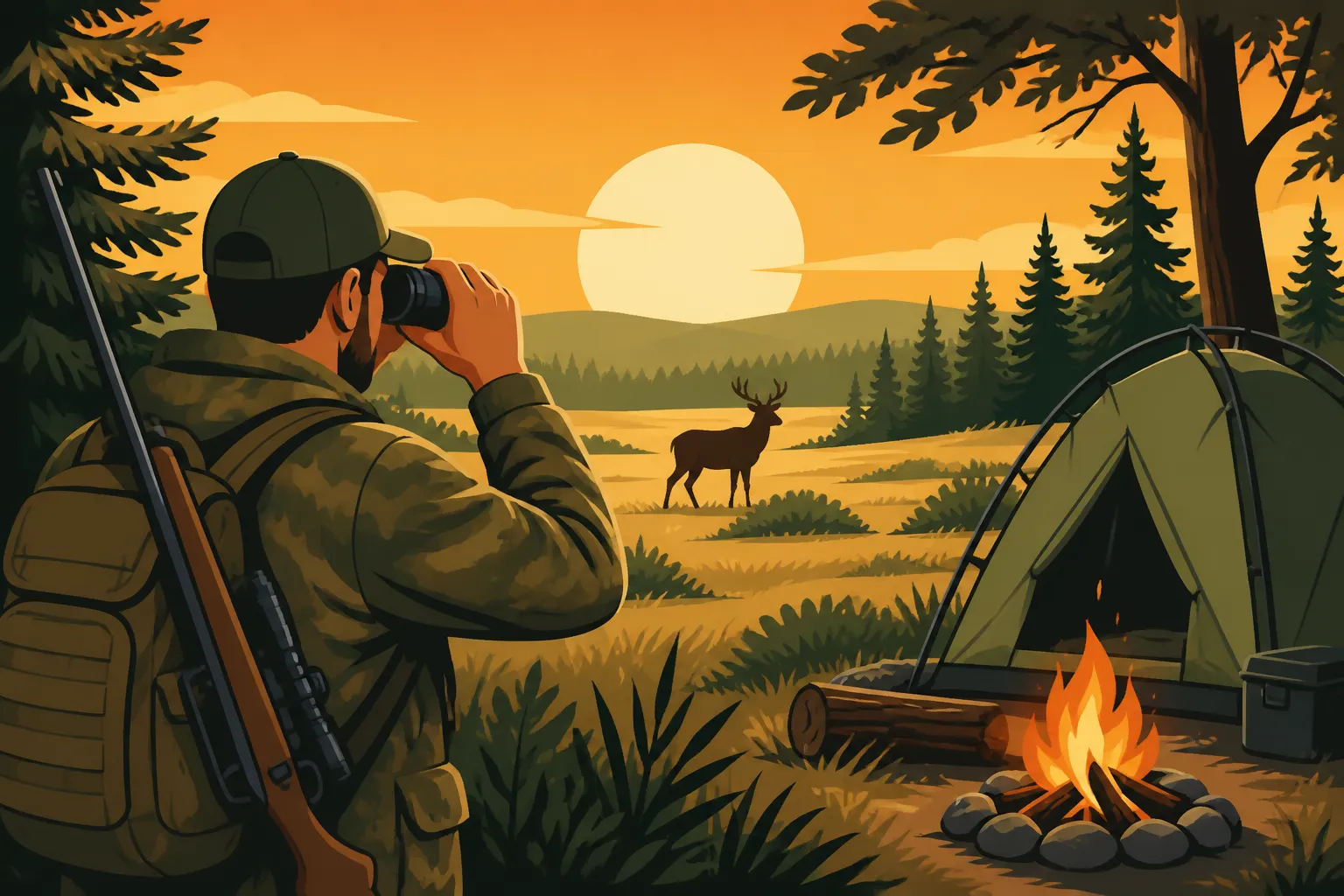
For many, camping on Crown land is synonymous with setting up a dedicated hunting camp. This could range from a simple tent pitched near a remote cutline to a more elaborate setup with a wall tent, wood stove, and gear drying lines. The goal here is functionality: a comfortable, warm, and dry place to return to after a long day of hunting. These camps are often strategically located to minimize travel time to prime hunting areas, such as a Hunting a Poplar Bluff at First Light or a key travel corridor.
When planning your hunting camp, consider the duration of your stay and the weather. For a multi-day late-season hunt, a robust wall tent with a stove can be a game-changer for staying warm and drying gear. Staying Warm in a Saskatchewan Stand is one thing, but having a warm camp to return to is another entirely. For shorter, warmer season hunts, a good quality backpacking tent might suffice. Remember that even if you're setting up a more substantial camp, all structures and waste must be removed when you leave. The goal is to leave no trace that you were ever there, preserving the wilderness feel for the next person and respecting the land.
Ethical Considerations and Best Practices for Crown Land Camping
Hunting and camping on Crown land is a privilege, not a right. To ensure this access continues for everyone, it's absolutely crucial that we, as hunters and outdoor enthusiasts, adhere to a strong code of ethics and best practices. These aren't just polite suggestions; they are vital for minimizing our impact and promoting responsible use of these shared resources.
Leave No Trace Principles
The Leave No Trace (LNT) philosophy is the cornerstone of ethical outdoor recreation, and it's especially critical when you're camping on Crown land. It boils down to seven core principles:
- Plan Ahead and Prepare: Know the regulations, pack appropriate gear, and anticipate conditions.
- Travel and Camp on Durable Surfaces: Stick to existing trails, roads, and established campsites. When primitive camping, choose a spot where your impact will be minimal.
- Dispose of Waste Properly: Pack it in, pack it out – every single piece of garbage.
- Leave What You Find: Don't disturb historical artifacts, natural objects, or plant life.
- Minimize Campfire Impacts: Use established fire rings, keep fires small, and ensure they're completely extinguished. During fire bans, use a stove.
- Respect Wildlife: Observe from a distance, don't feed animals, and store food securely.
- Be Considerate of Other Visitors: Respect their privacy and quiet enjoyment of the outdoors.
Adhering to these principles ensures that the beautiful landscapes we cherish for hunting remain pristine and welcoming for all users, now and in the future. Camping Rules on Saskatchewan Crown Land are often built on these very ideas.
Respecting Other Users and Wildlife
Crown land is a shared resource, used by hunters, hikers, birdwatchers, trappers, and recreational vehicle enthusiasts. While you might be focused on your hunt, remember that others are out there trying to enjoy the wilderness in their own way. This means being mindful of noise, especially early in the morning or late in the evening. Don't set up camp right on top of another party, and always maintain a friendly, courteous demeanor. A simple wave or nod goes a long way in fostering good relationships between different user groups.
Beyond human interactions, respecting wildlife is paramount. This includes proper storage of food and scented items to avoid attracting bears or other animals into your camp. Secure your coolers, hang food in bear bags if in bear country, and keep a clean campsite. Understanding Wildlife Safety in Saskatchewan Bear Country is non-negotiable. Furthermore, be aware of nesting birds or sensitive wildlife habitats when choosing a camp spot. Our presence can inadvertently disrupt animal patterns, so being stealthy and low-impact is key to minimizing disturbance.
Safety and Emergency Preparedness
Venturing into remote Crown land, especially during hunting season, requires a robust approach to safety. Cellular service can be spotty or non-existent in many areas, particularly in the northern regions or deep within forested blocks. This means you need to be prepared for self-reliance. Always inform someone of your itinerary, including your exact route, planned camp location, and expected return time. This is critical for any search and rescue efforts should you fail to check in.
Your emergency kit should be comprehensive: a first-aid kit, fire-starting supplies, extra layers of clothing, sufficient food and water, navigation tools (map, compass, GPS/satellite communicator like a Garmin inReach), a headlamp, and emergency shelter. Hunting Saskatchewan Winter Weather Safely emphasizes the need for specialized gear to handle sudden drops in temperature. For late-season hunts, consider a Winter Truck Kit for a Saskatchewan Hunt with extra fuel, recovery gear, and severe weather clothing. Being prepared means you can handle minor issues yourself, preventing them from escalating into life-threatening emergencies.
Gear and Preparation for Crown Land Camping
Successfully camping on Saskatchewan Crown land, especially for hunting, hinges heavily on your gear and how well you prepare. The right equipment can make the difference between a miserable, cut-short trip and a comfortable, productive hunt. From shelter to sustenance, every item in your pack plays a role.
Essential Camping Gear List
Think of your gear as an extension of your preparedness. Here’s a general rundown of what you’ll need, keeping in mind that the exact items will shift based on the season, duration, and specific location of your hunt:
- Shelter: A durable tent suitable for the expected weather, a tarp for extra rain/snow protection or a cooking area, and a ground sheet. For late-season hunts, a canvas wall tent with a wood stove can be a game changer.
- Sleeping System: A sleeping bag rated for temperatures well below what you anticipate, a sleeping pad for insulation and comfort, and a pillow (inflatable ones are great for saving space).
- Cooking: A reliable camp stove (propane or white gas), fuel, cooking pot/pan, eating utensils, biodegradable soap, and a sponge. Don’t forget a cooler for food storage.
- Navigation: Physical maps of your WMZ and Crown land, a compass, and a GPS device or a smartphone with a mapping app like onX Hunt downloaded with offline maps.
- Safety: A comprehensive first-aid kit, headlamp or flashlight with extra batteries, fire starters (waterproof matches, lighter, fire steel), a whistle, and a personal locator beacon (PLB) or satellite messenger if in remote areas.
- Clothing: Layers are key! Base layers (wool or synthetic), mid-layers (fleece or down), an outer shell (waterproof and windproof), extra socks, a warm hat, gloves or mitts, and sturdy, waterproof boots. Dressing for Saskatchewan's November Cold is critical.
- Tools: A sharp knife, multi-tool, small axe or saw (for firewood if permitted), rope or cordage, and duct tape.
- Hygiene: Toiletries, toilet paper, and a trowel for burying human waste.
This list is a starting point, of course. For those Hunting Saskatchewan's November Rut, you'll need even more robust clothing and cold-weather rated gear.
Water, Food, and Supply Planning
One of the biggest mistakes hunters make is underestimating their water and food needs, especially when going deep into Crown land where resupply isn't an option. Water is heavy, but essential. Plan for at least 3-4 litres per person per day for drinking, cooking, and basic hygiene. If there are reliable water sources nearby (lakes, rivers), bring a high-quality water filter or purification tablets. Do not rely on finding potable water without a purification method.
For food, aim for calorie-dense, non-perishable items that are easy to prepare. Dehydrated meals are great for backcountry, while a cooler full of fresh meat and vegetables might be feasible for a drive-in camp. Plan each meal, and then add extra for emergencies or unexpected delays. Don't forget snacks like energy bars, nuts, and dried fruit. Consider a variety of drinks beyond water, like instant coffee, tea, or powdered drink mixes. Remember to store all food securely to prevent animal encounters.
Winter Camping Specifics
Camping on Saskatchewan Crown land during late fall or winter hunting seasons presents unique challenges and requires specialized preparation. The cold can be extreme, demanding different gear and safety protocols. Your sleeping system, for instance, needs to be rated for at least -30°C to -40°C, and a quality insulated sleeping pad is as important as the bag itself. Boots for Sitting Still in Deep Cold are essential, as are multiple layers of clothing, including a heavy parka and insulated pants.
Beyond clothing, shelter becomes critical. A well-insulated tent, preferably a four-season model, or a canvas wall tent with a portable wood stove, can make winter camping manageable, even enjoyable. Firewood management becomes a daily chore if you're using a stove. Snow is a blessing and a curse: it's a source of water (melted, of course), but it also means more gear to manage, potential for getting stuck, and more energy expended just moving around. Consider snowshoes or skis for deep snow access. Ensure your vehicle is equipped with a Winter Truck Kit for a Saskatchewan Hunt and you know What to Do If You Get Stuck in the Bush. Cold weather can turn minor inconveniences into serious hazards very quickly, so preparedness is paramount.
Disclaimer
This article is for general informational purposes only and does not constitute professional advice. Laws, prices and regulations vary by location and change over time. Consult a qualified professional for guidance on your specific situation.