Crop Damage Permits for Farmers
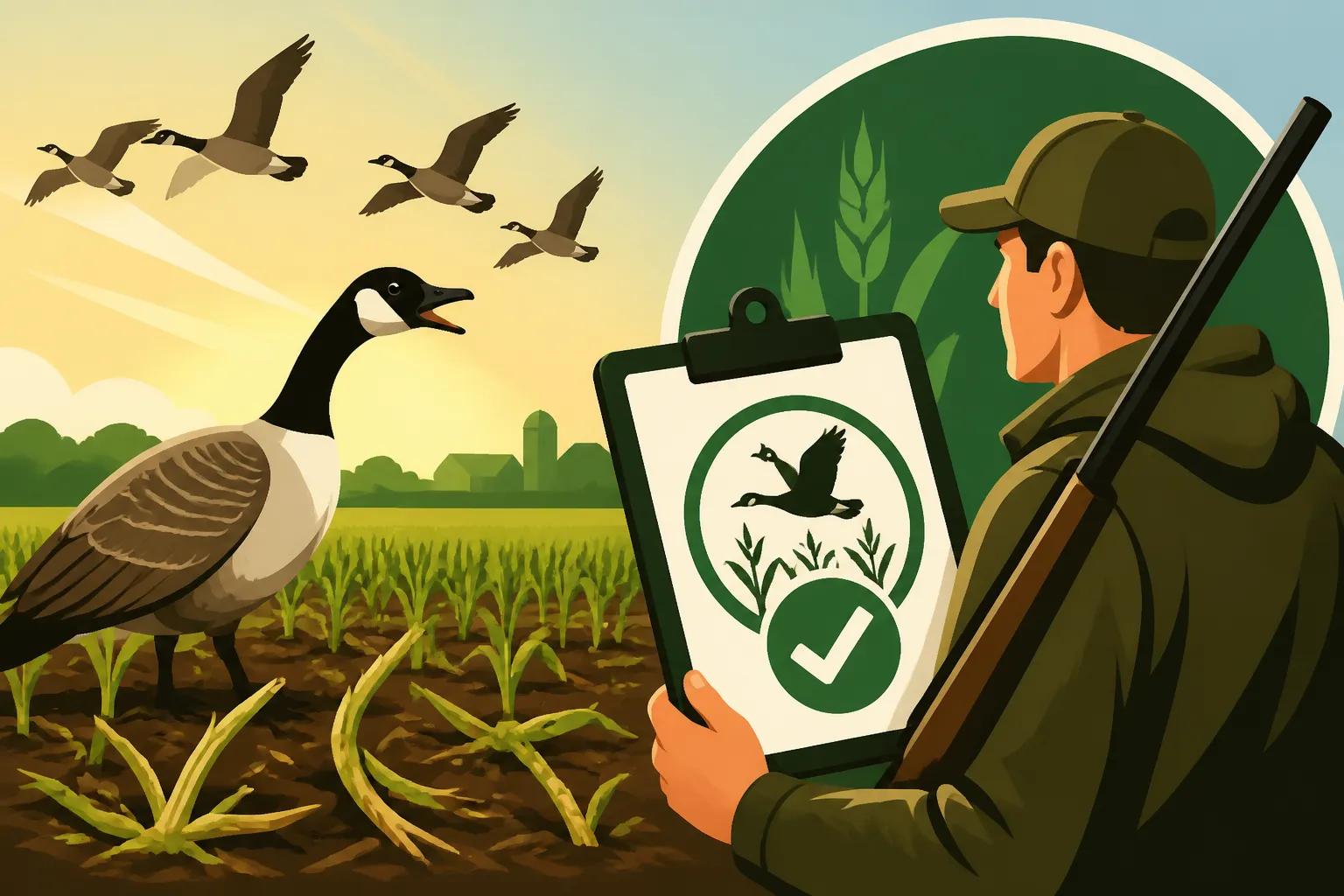
It's an age-old battle, isn't it? You spend countless hours tilling the soil, planting the seed, and nurturing your crops, only to watch a herd of deer, a rogue group of elk, or even a flock of geese move in and start helping themselves. The frustration is real, the financial impact tangible. This guide is all about helping Saskatchewan farmers navigate the complexities of crop damage permits, offering practical advice on how to manage persistent wildlife issues and protect your hard-earned livelihood.
Understanding Saskatchewan's Crop Damage Permit System
Dealing with wildlife feeding on your crops isn't just an annoyance; it's a significant economic drain. Farmers across Saskatchewan know this struggle intimately. That’s why the province has a system in place to help alleviate some of that pressure through crop damage permits. These permits are a vital tool, offering a legal pathway for landowners to manage wildlife causing agricultural damage outside of regular hunting seasons or bag limits.
Why These Permits Exist
At its core, the crop damage permit system in Saskatchewan is an attempt to strike a balance. On one side, we have the incredible wildlife populations that are a source of pride and a draw for hunters. On the other, we have the agricultural producers who feed the world, and whose farms often sit right in the middle of prime wildlife habitat. When deer, elk, or moose decide your canola field is a five-star buffet, or a flock of cranes makes short work of your peas, it’s not just an inconvenience; it’s a direct hit to your bottom line. These permits acknowledge that sometimes, regular hunting seasons aren't enough to manage localized problems, providing a necessary, legal recourse for farmers to protect their investment. It's about protecting livelihoods while still upholding the principles of wildlife management.
Who Can Apply and For What Species
Generally, bona fide farmers and landowners directly impacted by wildlife damage are eligible to apply for these permits. It’s not a tool for general hunting, but rather a targeted measure for specific damage situations. The species most commonly associated with crop damage permits are those large herbivores that can decimate fields in short order: white-tailed deer, mule deer, elk, and moose. However, permits can sometimes be issued for other nuisance species like black bears causing damage to beehives or livestock, or even sandhill cranes and certain waterfowl species that can cause widespread devastation in specific crops like peas or lentils. Each situation is assessed individually by the Ministry of Environment. They're looking for clear evidence of significant damage directly attributable to wildlife, not just a few tracks in the mud. Knowing your land and understanding the local wildlife patterns, perhaps even using tools like GoHunt to visualize wildlife management zones (WMZs) and habitat types, can help in identifying the source of the problem.
The Application Process for Farmers
The process to obtain a crop damage permit usually starts with a call to your local Ministry of Environment office. This isn't a simple online form you fill out; it's a direct engagement with wildlife biologists or conservation officers. Here’s a general rundown of what to expect:
- Contact Your Local Ministry Office: Reach out to the provincial Ministry of Environment office nearest you. Explain your situation, detailing the type of crop, the species causing damage, and the extent of the problem.
- Initial Assessment: A conservation officer or wildlife professional will likely schedule a visit to your property. They need to verify the damage firsthand, assess its severity, and confirm the species responsible. This might involve looking at tracks, droppings, browse lines, or actual crop destruction. They'll want to see evidence that the damage is indeed caused by wildlife and not, say, poor crop management or other environmental factors.
- Discussion of Mitigation: The officer will discuss potential mitigation strategies with you. This could range from non-lethal methods like hazing, scare cannons, or temporary fencing, to the possibility of a shooting permit. The goal is often to find the least impactful solution first.
- Permit Issuance (if applicable): If a shooting permit is deemed necessary, it will come with very specific conditions. These conditions are critical and must be strictly adhered to. They typically specify:
- Species and Number: Which animals can be taken and how many.
- Location: The specific field or area where shooting is permitted.
- Timeframe: The dates during which the permit is valid.
- Method: Legal firearms or bows, often with restrictions on night hunting unless explicitly stated.
- Reporting Requirements: What information you need to report back to the Ministry after animals are harvested.
- Who Can Harvest: Often, the landowner or designated individuals can carry out the harvest. This is where engaging trusted hunters can come into play.
It's important to remember that these permits are issued at the discretion of the Ministry, based on their assessment of the damage and the overall wildlife population health in that specific zone.
The Practicalities of Using a Crop Damage Permit
Once you've secured a crop damage permit, the real work begins. It’s not just about getting the piece of paper; it’s about implementing the solution effectively and responsibly. This involves understanding the nuances of the permit, knowing how to work with others, and acknowledging the inherent challenges.
Permit Conditions and Restrictions
Every crop damage permit is a legal document, and deviating from its terms can lead to serious consequences. These conditions are put in place to ensure ethical hunting practices, public safety, and responsible wildlife management. For instance, a permit might allow you to remove a certain number of antlerless white-tailed deer from a specific quarter section during a period when regular hunting season is closed. It will often stipulate that Legal Firearms and Bows for Big Game must be used, ensuring humane kills. You might also be limited to Saskatchewan Shooting Hours for Big Game, typically from one-half hour before sunrise to one-half hour after sunset, unless special permission for night hunting is granted for specific nuisance animals.
Consider a scenario where elk are devastating a swath of standing grain. Your permit might be for three antlerless elk within that specific field. You cannot decide to take a bull elk, or harvest them from an adjacent pasture where they aren't causing damage. You certainly can't exceed the number specified. The permit is precise, and it's your responsibility to understand and abide by every detail. Violating these conditions is a serious offence, just as if you were hunting out of season or without a proper licence.
Working with Hunters to Mitigate Damage
Many farmers, while needing to address the problem, don’t have the time, equipment, or desire to carry out the hunting themselves. This is where local hunters can become invaluable partners. If your permit allows for designated individuals to harvest animals, engaging responsible hunters from your community can be a win-win situation.
Here's how this often plays out:
- Communication is Key: Be clear about the permit's specifics: species, number, location, and timeframe. Discuss safe hunting practices, including Saskatchewan Blaze Orange Rules, and ensure they understand the boundaries of your property and any sensitive areas.
- Vetting Hunters: Just as a hunter seeks Saskatchewan Landowner Permission Law and builds trust, a landowner needs to vet the hunters they allow on their land. Look for individuals with a proven track record of safety, respect for land, and ethical hunting practices. Local Joining a Saskatchewan Wildlife Federation Branch can be a good way to connect with reputable hunters.
- The Benefit for Hunters: For hunters, assisting with a crop damage permit can be a unique opportunity to access land and harvest game, especially outside of regular seasons. This builds strong Saskatchewan Landowner Relations for Hunters, which are crucial for future hunting access. They get meat, and you get your problem animals removed.
- Logistics: Coordinate logistics like access routes, where to park, and how to contact them. Discuss carcass retrieval and ensure animals are properly handled, including Meat Care in Saskatchewan's Cold Snaps if the weather is cold.
Challenges and Frustrations for Farmers
Even with a permit, dealing with wildlife damage remains challenging. It's not a magic bullet, and many farmers experience ongoing frustrations.
- Time and Effort: The application process itself takes time, and then coordinating hunters or doing the shooting yourself adds to an already packed schedule.
- Persistent Problem: Removing a few animals often doesn't solve the long-term problem, especially with highly mobile species like White-Tailed Deer, Saskatchewan's Signature Animal or Moose in Saskatchewan's Farmland and Forest. New animals can quickly move in to exploit the same food source.
- Public Perception: While necessary, shooting animals outside of regular season can sometimes draw negative attention from those who don't understand the realities of agricultural damage.
- Limited Impact: A permit might allow for a handful of animals, but if a large herd of Elk in the Moose Mountain Country is routinely moving through, the permit might only offer temporary, localized relief rather than a comprehensive solution.
- Wildlife Adaptability: Animals are smart. They learn to avoid pressure. Hazing might work for a while, but eventually, they might just shift their feeding times or routes slightly.
Despite these frustrations, crop damage permits are a crucial tool in a farmer’s arsenal for direct, immediate wildlife management.
Beyond the Permit: Long-Term Strategies for Wildlife Damage Control
While crop damage permits offer immediate relief, they’re often just one piece of a much larger puzzle. For sustainable and effective wildlife damage control, farmers need to think beyond the immediate kill and consider long-term, proactive strategies that integrate with their farm operations and local ecosystems.
Proactive Measures on the Farm
Implementing proactive measures can significantly reduce the need for recurring crop damage permits by making your fields less appealing targets for wildlife.
- Strategic Fencing: For high-value crops or smaller areas, electric fencing can be highly effective against deer and elk. While costly, it can pay for itself over time by preventing repeated losses. Permanent fences along field edges adjacent to known wildlife travel corridors can deter movement into crops.
- Hazing and Scare Devices: Propane cannons, effigies, strobe lights, and even radios can deter wildlife temporarily. The key is to move them frequently and vary the deterrents so animals don't become habituated. A farmer might use these in combination with Hunting a Standing Canola Field Edge at specific times to reinforce the deterrent with actual pressure.
- Crop Selection and Placement: Where possible, plant less palatable crops along field edges bordering bush or shelterbelts, reserving more attractive crops for interior fields. Consider early-maturing varieties to harvest before peak wildlife pressure periods.
- Habitat Modification: While counterintuitive to some, creating alternative food plots (like clover or alfalfa) in non-crop areas away from valuable fields can sometimes divert deer and elk. Also, managing adjacent cover can influence how animals move. Sometimes, Hunting a Shelterbelt Between Two Fields or Hunting a Slough Edge for Whitetails helps to reduce pressure closer to the field.
Community-Based Solutions
Wildlife management is often more effective when approached collaboratively. No farmer is an island, especially when dealing with mobile wildlife populations.
- Local Wildlife Federations: Engage with your local Joining a Saskatchewan Wildlife Federation Branch. These groups often have members eager to help with damage mitigation and are passionate about responsible hunting. They can also act as intermediaries, connecting landowners with ethical hunters.
- Government Programs and Research: Stay informed about any provincial programs or research initiatives focused on wildlife damage compensation or prevention. The Ministry of Environment continuously monitors wildlife populations within Saskatchewan's Wildlife Management Zones and adjusts strategies based on data. Sometimes, larger-scale wildlife management plans are implemented across a region.
- Neighborly Cooperation: Work with neighboring landowners. If several farms in an area are experiencing similar problems, a coordinated approach to hazing, fencing, or even Hunting Whitetails on Saskatchewan Farmland can be far more impactful than individual efforts. Wildlife move between properties, so a united front is often more successful.
Understanding Wildlife Behavior in Agricultural Zones
To effectively manage wildlife damage, it's crucial to understand why certain species are attracted to your farm and how they move through agricultural landscapes. This knowledge allows for more targeted and efficient mitigation efforts.
- Deer: White-Tailed Deer, Saskatchewan's Signature Animal are highly adaptable. They often use Hunting a Saskatchewan Bush Bluff or shelterbelts for cover during the day and move into fields at dusk and dawn. Understanding their travel corridors from bedding areas to feeding grounds is key. Areas like Hunting a Willow Run for Whitetails or Hunting a Frozen Slough Crossing can be prime travel routes.
- Elk: Elk herds can cause immense damage quickly. They often prefer larger blocks of cover adjacent to open fields. Knowing Where Saskatchewan's Elk Herds Winter and how they transition into summer range can help anticipate problems. Hunting Elk on Saskatchewan Grain Land requires understanding their herd dynamics.
- Moose: While primarily boreal forest animals, Moose in Saskatchewan's Farmland and Forest have increasingly moved into agricultural areas, especially near treed bluffs or river valleys. They can be particularly damaging to specific crops like peas or standing grain. Hunting Farmland Moose in Saskatchewan often means focusing on the fringes of treed areas close to water.
- Waterfowl and Cranes: Saskatchewan's Ducks and Geese and Sandhill Cranes Passing Through Saskatchewan can decimate fields, particularly swathed grain or pea fields. Scouting fields daily and understanding migration patterns, as well as the appeal of Hunting a Swathed Grain Field at Dusk, is vital for effective management.
By combining the immediate relief of crop damage permits with long-term, proactive, and community-based strategies, Saskatchewan farmers can better protect their crops and foster a more harmonious, albeit challenging, coexistence with the province's abundant wildlife. Tools like GoHunt can be invaluable here, helping you scout your WMZ, analyze terrain, and identify potential wildlife pathways, allowing you to implement these strategies more effectively.
| Species Commonly Covered | Typical Damage Caused | Permit Considerations | Long-Term Mitigation Strategies |
|---|---|---|---|
| White-tailed Deer | Browse on new growth, grazing, trampling | Antlerless, specific fields, numbers limited | Fencing, hazing, alternative food plots, hunting pressure |
| Mule Deer | Grazing in prairie crops, damage to standing grain | Antlerless, specific fields, numbers limited | Habitat modification, strategic planting |
| Elk | Extensive grazing, trampling, eating silage/hay bales | Antlerless, specific fields, herd management | Fencing (electric), hazing, herd dispersal |
| Moose | Browse on broadleaf crops (peas), trampling grain | Antlerless, specific areas near bush/sloughs | Habitat modification, targeted hunting |
| Sandhill Cranes | Eating peas, lentils, germinating grains | Specific fields, limited numbers, often hazing first | Scare devices, early harvest, crop rotation |
| Black Bear | Damage to beehives, livestock, grain bins | Specific problem animals, trap & relocate, shooting | Electric fencing around bins/hives, proper attractant storage |
Disclaimer
Please note that hunting regulations, permit requirements, and wildlife management policies in Saskatchewan are subject to change. This guide provides general information and should not be considered a substitute for the official Saskatchewan Hunters' and Trappers' Guide or direct consultation with the Saskatchewan Ministry of Environment. Always confirm current regulations and permit conditions before taking any action.