Shooting Distances on a Saskatchewan Hunt
One of the biggest anxieties many hunters bring with them to Saskatchewan, especially if they're coming from areas with different terrain or hunting styles, is wondering what kind of shot distances they can expect to encounter. It’s a completely valid concern – you want to be prepared, confident in your equipment, and absolutely ethical in your shot placement. This guide aims to shed light on the realistic shooting distances you might face across Saskatchewan's diverse landscapes and for various game animals, helping you prepare for a successful and responsible hunt.
Understanding the Variables That Influence Your Shot Distance
Saskatchewan is a vast province, stretching from wide-open prairie grasslands in the south to dense boreal forest in the north. This incredible diversity means there's no single answer to "how far will I shoot?". Several key factors come into play, and understanding them is crucial for setting your expectations and preparing properly.
The Impact of Terrain and Habitat
The landscape itself dictates much about potential shot distances. Imagine trying to thread a bullet through thick jack pine versus across an expansive stubble field. It's night and day.
In the southern prairie regions, where you might be Mule Deer Hunting Saskatchewan's Prairie or pursuing Pronghorn on Saskatchewan's Southwest Grassland, distances can stretch out significantly. Open fields, rolling coulees, and shelterbelts offer little cover, forcing longer shots. Here, 200 to 300 yards isn't uncommon, and having the ability to shoot accurately beyond that range can certainly open up more opportunities. The sightlines are long, and animals often detect you long before you can get close.
As you move north into the aspen parkland and especially the Hunting Saskatchewan's Forest Fringe or deeper Hunting Saskatchewan's Boreal North, the dense cover drastically shortens shot distances. Here, shots on White-Tailed Deer, Saskatchewan's Signature Animal or Moose in Saskatchewan's Farmland and Forest might be 50 yards, 30 yards, or even closer. Trees, brush, and thick undergrowth limit visibility, and often, your first clear shot might be your only shot. This requires a very different approach, focusing on quick target acquisition and tight-quarters accuracy.
Species and Their Typical Behavior
Different game animals in Saskatchewan have different flight distances and habitat preferences, which directly influence how close you might get. A cautious whitetail buck in heavy cover is a different proposition than a herd of elk grazing in an open field.
Whitetail deer, especially older bucks, are incredibly wary and often hug thick cover. When hunting them in the forest fringe or dense bluffs, shots are generally tighter. You might be focused on Hunting a Saskatchewan Bush Bluff or a willow run, where deer pop out suddenly. However, whitetails on open farmland can be incredibly difficult to approach, often leading to longer shot requirements. Hunting Whitetails on Saskatchewan Farmland often involves glassing fields from a distance and waiting for an opportunity, which might be 200 yards or more.
Mule deer, often found in more open prairie environments, can tolerate human presence a bit more, but their keen eyesight makes spot-and-stalk challenging. You might see them bedded in a coulee a long way off. Spot-and-Stalk Mule Deer in Saskatchewan can lead to varied distances, from relatively close if you can use topography, to several hundred yards if the stalk falls apart or conditions are too open.
Moose and bear hunts, particularly Black Bear Hunting in Saskatchewan using bait, generally involve much closer shots. With baiting, you're setting the distance, often aiming for 30-50 yards. Still-hunting moose in the boreal can also result in very close encounters, as visibility is limited and the animals are focused on feeding.
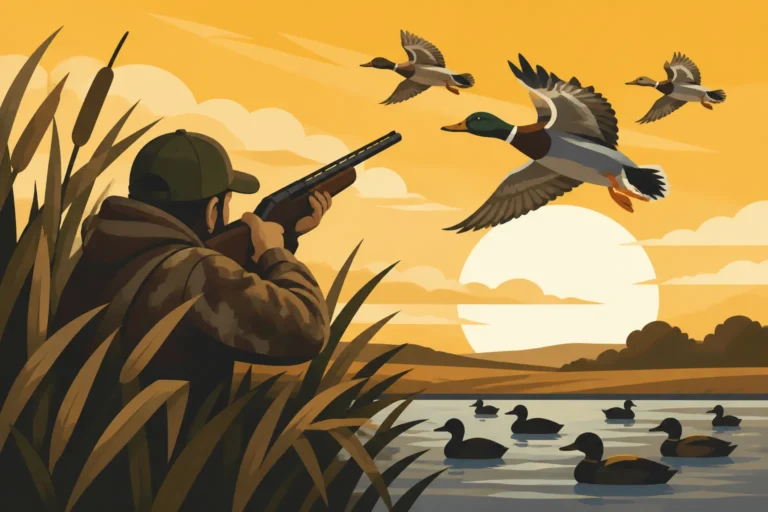
Waterfowl hunting, whether it's Field Hunting Geese in Saskatchewan Stubble or Pothole Hunting Prairie Ducks, tends to be at closer ranges, typically within 40-50 yards, as you're shooting at birds over decoys or jumping them from sloughs. Your choke and shot size selection are far more critical than extreme range.
Your Chosen Weapon and Caliber
The type of weapon you bring to Saskatchewan plays a massive role in realistic shooting distances. While modern rifles are capable of incredible accuracy at long ranges, not all weapons are suited for every scenario, nor is every hunter equally proficient with them.
Rifle hunters have the distinct advantage of greater effective range. Many popular calibers are more than capable of taking game ethically at 300-400 yards, provided the shooter has practiced extensively at those distances. Legal Rifle Calibres for Big Game in Saskatchewan means you have a lot of powerful options. However, even with a high-powered rifle, shot placement is paramount, and pushing beyond your personal comfortable ethical range is never advisable.
Archery hunters, including those using crossbows (where legal and applicable), operate within much tighter windows. Bow Draw Weight Rules in Saskatchewan are in place, but regardless of power, the inherent limitations of archery equipment mean typical shot distances for big game usually fall within 20-60 yards. This demands an intimate understanding of animal movement, exceptional concealment, and often, incredible patience to let the animal close the distance. Hunting Saskatchewan's September Archery Opener means focusing on getting extremely close to your target.
Muzzleloader hunting offers a unique blend, generally falling between archery and modern rifles in terms of effective range. Depending on the setup and projectile, ethical shots are often in the 75-150 yard range. This still requires getting relatively close but offers a bit more flexibility than a bow. Saskatchewan Muzzleloader Rules outline the legal considerations for this method.
Typical Shooting Ranges for Different Saskatchewan Game
While every hunting scenario is unique, there are some general expectations for shot distances based on the species you're pursuing in Saskatchewan. These are averages, not hard and fast rules, and individual circumstances can always lead to closer or farther opportunities.
Big Game: Whitetail, Mule Deer, Moose, Elk, Bear, Pronghorn
When you're out chasing Saskatchewan's large animals, being ready for a variety of distances is key. Knowing the typical ranges can help you select the right gear and practice effectively.
Whitetail Deer:
For whitetails, especially during Rifle Hunting Saskatchewan's Whitetail Rut in November, shot distances are highly dependent on the habitat. In thick bush or the forest fringe, you might be looking at 50-150 yards. Deer can appear quickly and vanish just as fast. However, if you're hunting open parkland, big grain fields, or Hunting Whitetails on Saskatchewan Farmland, those distances can easily stretch to 200-300 yards. It's not uncommon to see a buck at 400 yards across a field; the challenge is often getting closer or waiting for it to move.
Mule Deer:
Mule deer are creatures of the open prairie and coulee country, which inherently means longer sightlines. If you're Hunting Mule Deer in Prairie Coulees, you might get a 100-150 yard shot in a deep draw. But spotting a mule deer on a distant hillside or trying a Stalking Mule Deer in Open Prairie approach often means preparing for 250-400 yard shots. Sometimes, the only ethical shot available will be at these longer ranges, making proficiency with your rifle and rangefinder indispensable.
Moose & Elk:
These larger animals are often found in mixed forest and farmland, or deeper in the boreal. For moose, particularly when Calling Moose in Saskatchewan's Bush, shots can be incredibly close, sometimes under 50 yards, as they come into thick cover. Hunting Farmland Moose in Saskatchewan can present shots from 100-200 yards, especially if they are feeding in the open but quickly retreating to bluffs. Elk are similar; Bugling Elk on a Farm Edge might bring them to 75-150 yards, but open country elk can require 200-300 yard shots as well, particularly if they are herd animals and wary.
Black Bear:
Most Black Bear Hunting in Saskatchewan is done over bait, which allows you to pre-determine the shooting distance. Outfitters often set up stands for 20-60 yard shots, ensuring a clear and ethical opportunity. For those still-hunting or spot-and-stalking bears, distances can vary widely depending on cover, from under 50 yards in dense bush to 100-150 yards if you spot one feeding in an open cutline or berry patch.
Pronghorn:
Pronghorn are the speedsters of the prairie, and their habitat is almost exclusively wide-open grassland. They are incredibly alert and can see for miles. Stalking Pronghorn Across Open Ground is notoriously difficult. Expect shots to be generally long, from 200 to 400 yards. Having confidence and proficiency with your rifle at these extended distances is almost a prerequisite for a successful pronghorn hunt in Saskatchewan.
Upland Birds and Waterfowl
Bird hunting often involves different equipment and closer ranges, focusing on pattern density and quick reflexes rather than extreme precision at distance.
Waterfowl (Ducks, Geese, Cranes):
Whether you're after Field Hunting Geese in Saskatchewan Stubble or Pothole Hunting Prairie Ducks, shots are generally within shotgun range. This typically means 20-50 yards. Your decoys and calling are designed to bring the birds in close, so shooting much beyond 50 yards is usually considered pushing it, risking wounded birds. Good non-toxic shot and proper choke selection are far more important than a long-range rifle scope.
Upland Birds (Grouse, Partridge):
Walking Up Sharp-Tailed Grouse in Saskatchewan or Hunting Hungarian Partridge on Saskatchewan Farms usually means flush shots at close range, 15-35 yards. These birds explode from cover, and you need quick reflexes with a shotgun. Even with Ruffed Grouse Hunting Saskatchewan's Bush Trails, the dense cover keeps shots tight, often under 25 yards.
Here's a quick reference table for typical shot distances:
| Species | Typical Archery Range (yards) | Typical Muzzleloader Range (yards) | Typical Rifle Range (yards) | Typical Shotgun Range (yards) | Primary Habitat |
|---|---|---|---|---|---|
| Whitetail Deer | 20-50 | 50-125 | 75-300+ | N/A | Forest Fringe, Parkland, Farmland, Bush |
| Mule Deer | 25-60 | 75-150 | 150-400+ | N/A | Open Prairie, Coulees, Sand Hills |
| Moose | 20-40 | 50-100 | 75-250 | N/A | Boreal Forest, Parkland, Farmland Edge |
| Elk | 25-50 | 75-125 | 100-300+ | N/A | Forest Fringe, Parkland, River Valleys |
| Black Bear | 15-40 | 30-75 | 50-150 | N/A | Boreal Forest, Thick Bush |
| Pronghorn | N/A (extremely rare) | 100-200 | 200-400+ | N/A | Open Grasslands, Rolling Prairie |
| Waterfowl (Ducks/Geese) | N/A | N/A | N/A | 20-50 | Stubble Fields, Potholes, Lakes, Rivers |
| Upland Birds | N/A | N/A | N/A | 15-40 | Grasslands, Shelterbelts, Bush Trails |
Note: "+" indicates that shots can extend beyond the listed range depending on conditions and hunter skill, but these are common ethical ranges.
Preparing for Ethical Shots: Practice Makes Perfect
No matter what species you're chasing or what weapon you're carrying, the responsibility for an ethical shot rests solely on you. Saskatchewan's game animals deserve our respect, and that means only taking shots within your personal, proven effective range.
Mastering Your Equipment
Your rifle, bow, or shotgun is only as good as the person operating it. Too often, hunters spend thousands on gear but neglect the most important part: practice.
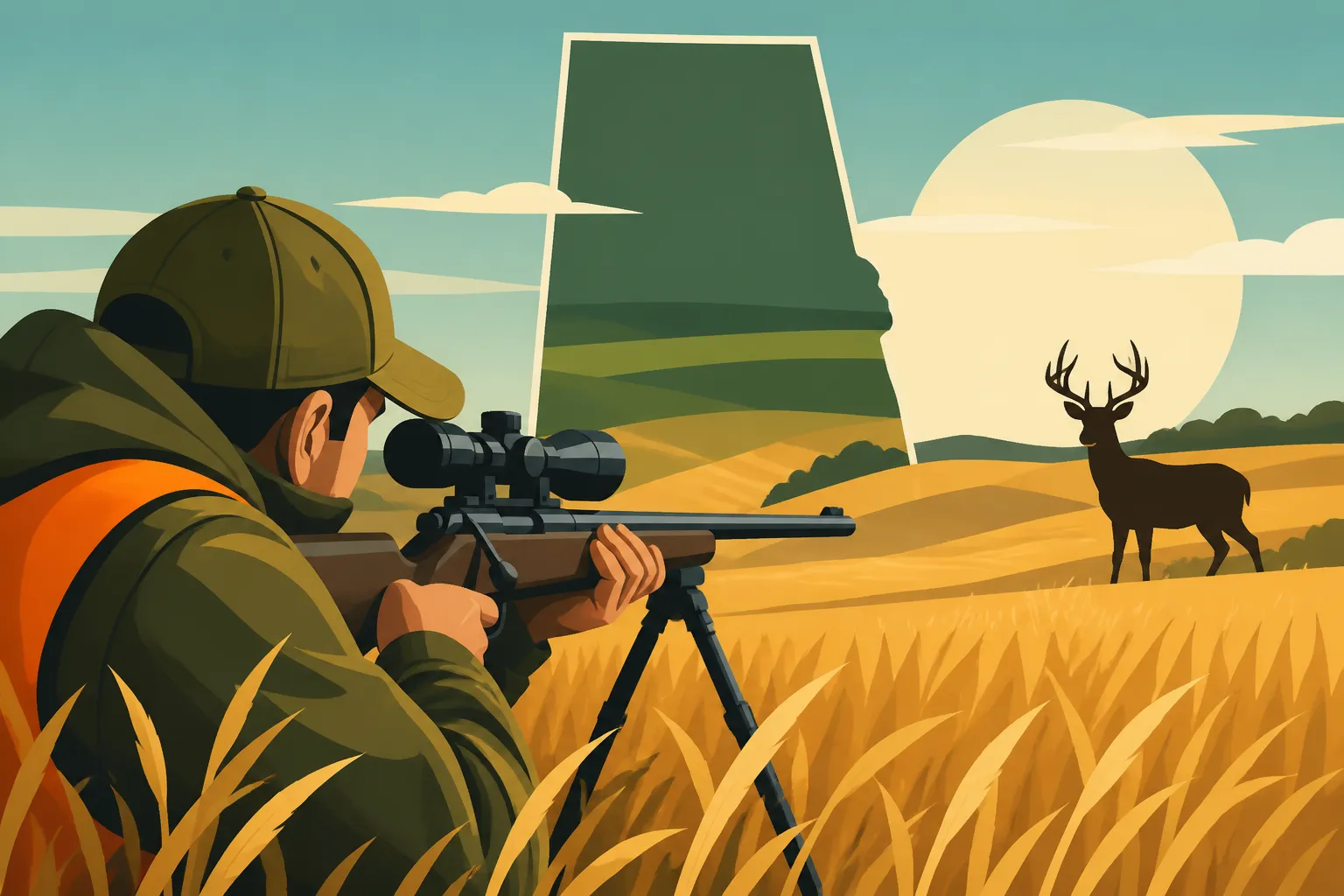
For rifle hunters, this means spending significant time at the range, not just zeroing at 100 yards, but practicing at 200, 300, and even 400 yards. Don't just shoot from a bench; practice from positions you'd actually use in the field – off a bipod, with shooting sticks, or even kneeling. Understand how wind drift affects your bullet at various ranges. Knowing your ballistic drop is critical, which is where a good rangefinder and ballistic calculator become invaluable. You should be able to consistently hit a target the size of an animal's vital zone at your maximum ethical distance. If you plan to go after prairie species like mule deer or pronghorn, serious long-range practice is non-negotiable.
Archers need to be equally diligent. Practice regularly, focusing on smooth draw cycles, consistent anchor points, and clean releases. Know your pin gaps intimately. Practice from elevated stands or ground blinds if that's how you'll be hunting. The ability to estimate range accurately without a rangefinder (or to use one quickly and silently) is a skill developed through countless hours of repetition. Remember, an arrow covers ground much slower than a bullet, so animal movement after the shot is a bigger factor.
Understanding Your Personal Limitations
It’s easy to get caught up in the excitement of the hunt and feel pressured to take a shot that might be at the edge of your abilities. Resist that urge. Your personal ethical range might be shorter than what your rifle or bow is technically capable of, and that's okay.
Factors like adrenaline, cold weather, wind, and unsteady shooting positions will all reduce your effective range in the field compared to a calm day at the range. Be realistic about what you can achieve under stress. If the shot doesn't feel right, don't take it. A missed shot is always better than a wounded animal. A good outfitter will always support you in this decision, understanding that Saskatchewan Outfitters Who Guarantee Nothing uphold ethical hunting above all.
Utilizing Scouting Tools for Advantage
Modern technology offers incredible advantages for understanding the terrain and potential shot distances before you even set foot in the field. Tools like GoHunt can provide detailed satellite imagery and topographical maps of Hunting Saskatchewan's Wildlife Management Zones. This allows you to identify open areas, dense cover, and potential bedding or feeding locations.
By studying these maps, you can anticipate where you might encounter longer shots and where closer quarters are more likely. This kind of preparation helps you mentally prepare and decide on appropriate gear. For example, knowing you'll be hunting a wide-open quarter section might lead you to choose a rifle and practice at longer distances, while a heavily treed section suggests archery or a muzzleloader might be more effective.
The Outfitter's Role in Managing Shot Opportunities
For many non-residents, and even some residents looking for a specific experience, Hunting Guides and Outfitters in Saskatchewan are an integral part of the hunting journey. They play a significant role in helping hunters understand and prepare for expected shot distances.
Setting Expectations and Providing Opportunities
A reputable outfitter will be upfront about the typical shot distances you can expect on their specific hunting grounds for the species you're pursuing. They know their territory and the animals within it intimately.
When you're Booking a Saskatchewan Whitetail Hunt or Booking a Saskatchewan Black Bear Hunt, don't hesitate to ask about expected shot ranges. They can tell you if their stands are set at 30 yards or 100 yards, or if their hunting style involves open country where 200+ yard shots are common. This information is crucial for you to practice appropriately and ensure your equipment is dialed in. They might also share insights into Why Saskatchewan Bucks Grow So Large and how that influences their behaviour and where they might present a shot.
Outfitters want you to be successful, but more importantly, they want you to be ethical. They'll often take hunters to the range before the hunt to confirm their zero and observe their shooting proficiency. This isn't a test to make you feel bad; it's a safety and ethical precaution. If a guide sees you struggling at 150 yards, they will actively work to get you a closer shot opportunity.
Guided Situations and Hunter Support
In a guided hunt, your outfitter and guide are there to help you maximize your chances of an ethical shot. They'll position you, call animals, and advise on when and where to shoot.
For instance, if you're Sitting All Day in a Saskatchewan Blind during the rut, your guide might have placed that blind based on prevailing winds and deer travel patterns, anticipating a shot within a certain range. If an animal appears at an extreme distance, they might advise patience or suggest trying to reposition. Their local knowledge of Reading Sign After Fresh Saskatchewan Snow or understanding Where Saskatchewan Whitetails Bed in Snow helps them put you in the best spots for reasonable shot distances.
An outfitter's goal isn't just to put you on an animal, but to help you execute a clean, ethical harvest. They will never push you to take a shot you're not comfortable with. This kind of partnership is what makes a guided hunt valuable, especially if you're new to the specific conditions of Saskatchewan. Many hunters use services like BookYourHunt to find reputable outfitters and compare their offerings, including their typical hunting methods and expected shot ranges.
Disclaimer
This article is for general informational purposes only and does not constitute professional advice. Laws, prices and regulations vary by location and change over time. Consult a qualified professional for guidance on your specific situation.